Locations:
Search IconSearch

Four Essential Qualities for a Successful CEO

My advice for leadership success

16-GEE-1676-CEO-650×450

By Toby Cosgrove, MD

Advertisement

Cleveland Clinic is a non-profit academic medical center. Advertising on our site helps support our mission. We do not endorse non-Cleveland Clinic products or services. Policy

More than once, I’ve been asked what qualities make for a successful CEO. Here are four: decisiveness, communication, team building, and intuition. I work in healthcare, but these hold true for any industry. Let me discuss each, then give an example of a leader who embodied all four.

1. Decisiveness

A modern medical center is one of the most complex organizations on earth. There are many competing interests, all with worthy agendas, but resources are limited. Someone has to do the apportioning. Being able to make the hard choices is a great service to any organization in any business, even if that means that sometimes you have to take some heat.

2. Communication

Your vision sets the tone for the whole institution — but not if you keep it a secret. I meet with every work group at Cleveland Clinic at least once a year. I want every one of our 43,000 caregivers to hear from me personally, to share key financial, operational, and quality and safety metrics, and our expectations for the year ahead. We present quarterly video presentations to all caregivers, publish a State of the Clinic annual report, and maintain an extensive in-house intranet – including a CEO blog. You can’t communicate with your organization enough.

3. Team Building

Collaboration is critical in any industry. Medicine in particular is becoming a team sport. We hire people for collegiality as well as medical excellence. A superstar may come walking through the door, but if she or he doesn’t play well with others, the cost could exceed the benefits. You need to be comfortable working in a team, and empowering others to do so.

Advertisement

4. Intuition

A “sixth sense” about the organization is essential, because people won’t always tell you things to your face — especially when you’ve made a mistake. Nobody wants to give the boss bad news. So CEOs needs to get out of their offices and see and learn what’s working and what isn’t for themselves. We’ve all heard of “emotional intelligence;” this is “organizational intelligence.”

Healthcare urgently needs great leaders

We in healthcare are facing our own historic moment in the 21 century. Relying on decisiveness, communication, team building, and intuition to guide us, we can rise to the occasion.

Dr. Cosgrove is CEO and President of Cleveland Clinic.

Advertisement

Related Articles

Physician showing patient the phone-based AI scribe
Less Typing, More Talking: How Ambient AI Is Reshaping Clinical Workflow at Cleveland Clinic

Advanced software streamlines charting, supports deeper patient connections
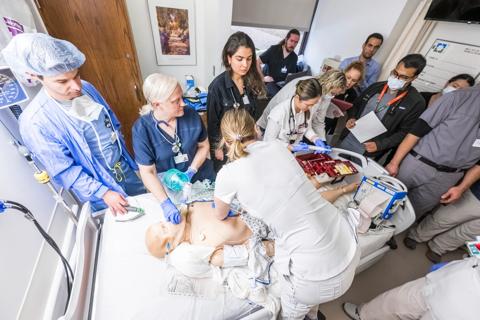
Medical team stands around manikin in hospital bed
January 21, 2025/Leadership
In Situ Simulation With Human Factor Design Enhances Patient Care

How holding simulations in clinical settings can improve workflow and identify latent operational threats

Image of characters and scenes in Zen Quest
June 13, 2024/Leadership
Cleveland Clinic Enters the Metaverse to Support Mental Wellbeing

Interactive Zen Quest experience helps promote relaxing behaviors
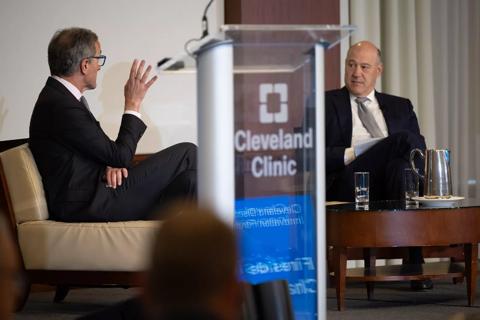
Photo of Tom Mihaljevic, MD, and Gary Cohn
A Fireside Chat about Digital Technology in Healthcare

Cleveland Clinic and IBM leaders share insights, concerns, optimism about impacts

Computer screen graphic
How AI Assists With Staffing, Scheduling and Once-Tedious Tasks

Cleveland Clinic partners with Palantir to create logistical command center

Physician leaders
Research Guides Programs to Build Stronger Leaders

A Q&A with organizational development researcher Gina Thoebes

Health insurance, Doctor working in office at hospital and visual screen technology concept life insurance medical and heal care insurance concept
Finally: A Way to Measure Health Systems’ Investment in Quality

Cleveland Clinic transformation leader led development of benchmarking tool with NAHQ

Raed Dweik, MD
Effective Leadership Requires Listening (Podcast)

Raed Dweik, MD, on change management and the importance of communication

Ad