Locations:





When parents can’t be present, virtual visits ease their worry
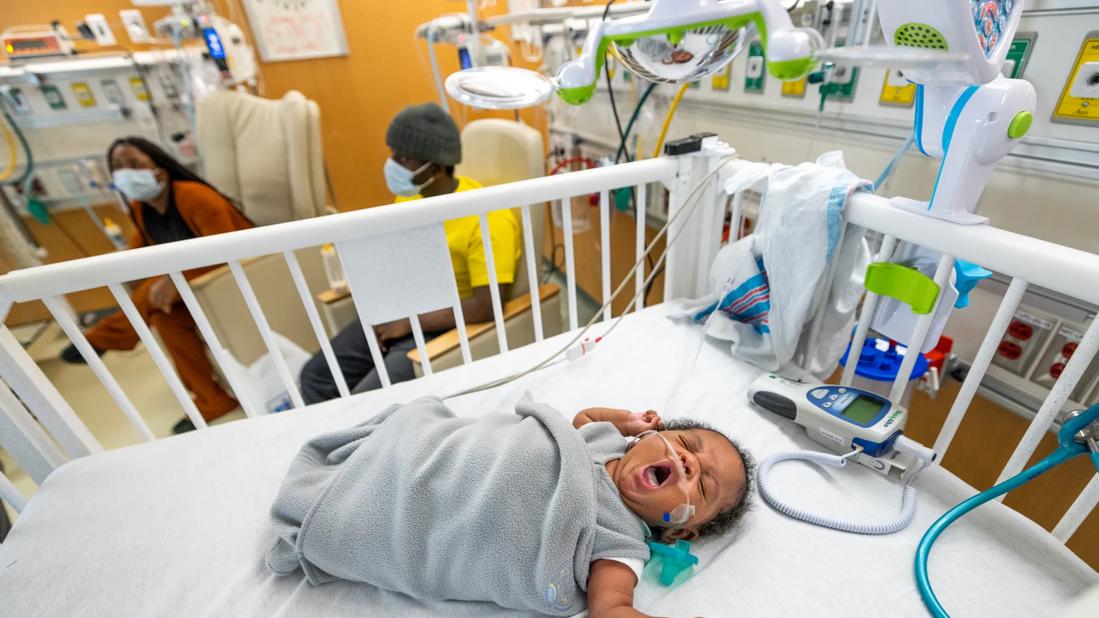
Image content: This image is available to view online.
View image online (https://assets.clevelandclinic.org/transform/911a1a55-06f7-48f1-802a-73c93ee27121/CCC_3660083_02-27-23_1267_AMO-jpg)
neonate in neonatal intensive care unit
In 2017 Cleveland Clinic Children’s installed webcams in their Neonatal Intensive Care Unit (NICU) to enable parents to view their infant 24/7. The use of these webcams has steadily risen. Now, one of the first studies of NICU webcam usage has revealed the technology is most widely used by parents who are unable to be physically present in the NICU.
Advertisement
Cleveland Clinic is a non-profit academic medical center. Advertising on our site helps support our mission. We do not endorse non-Cleveland Clinic products or services. Policy
“Many premature babies stay in the NICU for three months or more, which is very a stressful time for parents,” says Cleveland Clinic Children’s neonatologist Anirudha Das, MD. “It also presents a unique challenge as they struggle to balance their desire to be present at their infant’s bedside with the need to return to work or the care of other children at home. It’s clear that webcams can bridge that gap.”
The retrospective study was designed to determine patterns of webcam logins by NICU parents in the first weeks of life and evaluate how these patterns might correlate with maternal mental health and in-person visitation.
The study included 59 infants, whose parents had logged into the bedside webcam system at least once in the first seven days of their infant’s NICU stay. Visitation data were collected for weeks two, three, four and five starting on the eighth day of life.
“We omitted the first week, because this is an unstable period for parents, and they may not have time to set up the system and log in,” says Dr. Das.
As is usual practice at Cleveland Clinic Children’s, NICU parents completed a Depression, Anxiety and Stress (DASS-21) questionnaire during week two. This helps the staff identify parents in mental distress, so they can be quickly referred for help, if the parents desire.
“This is an important aspect of our program, because if the parents have mental distress, it affects parental bonding, with a potentially unfavorable outcome for the infant,” says Dr. Das. “Also, communication with the parents is difficult.”
Advertisement
In the second week of their infant’s stay, parents logged in on an average of 94% of the days they were unable to visit. The higher the parents’ DASS-21 score, the less likely they were to visit the NICU in person. However, they still logged onto the webcam. “This means having the webcams really helped those parents,” he says.
During the first few weeks of the study, the number of days parents logged in or visited the NICU remained steady. However, both methods of visitation began to decline sharply in week three and continued to drop throughout the study period, with a sharper decline observed in in-person visitation. “We found this most interesting,” says Dr. Das.
He correlates this behavior with parents returning to work and, possibly, gradual resolution of anxiety.
“Initially, parents are anxious and mentally distressed over having their baby in the NICU, so their visits are more frequent. But as the baby settles in, grows and has fewer acute issues, changes are rare and insignificant. Parents may then feel less compelled to visit, either virtually or in person,” he says.
The webcams were very useful during the first four months of the COVID-19 pandemic, as they became an essential way for parents to remain in touch with their babies. During this time period, only one parent was permitted to the NICU, and visits after 9 p.m. were not allowed.
Now that pandemic rules have loosened, Dr. Das says that webcams remain essential for parents with limited time or resources.
This study will be presented at this year's virtual meeting of the Pediatric Academic Societies. Meanwhile, Dr. Das is examining whether webcam use was more helpful to parents with fewer economic resources or was influenced by their distance from the hospital or their insurance coverage. He also plans to explore whether high utilization rates correlated with increased breast milk production.
Advertisement
Advertisement
Key takeaways from the newest STS-Pedimacs report

Pediatric Syncope Clinic helps rule out serious disease and guide next steps
Cleveland Clinic findings highlight gains in stability, chest wall contouring and correction

What the discovery means for clinicians and patients
Why preparedness matters right now

Early diagnosis, specialized assessment and high-frequency motor-based therapy can improve outcomes
Transplant centers vary substantially in how they assess, document and follow patients after allogeneic transplantation

Helping pediatricians and families make safer, more individualized activity decisions
 Search