Locations:





Technology-based program helps build personal connections from the first day
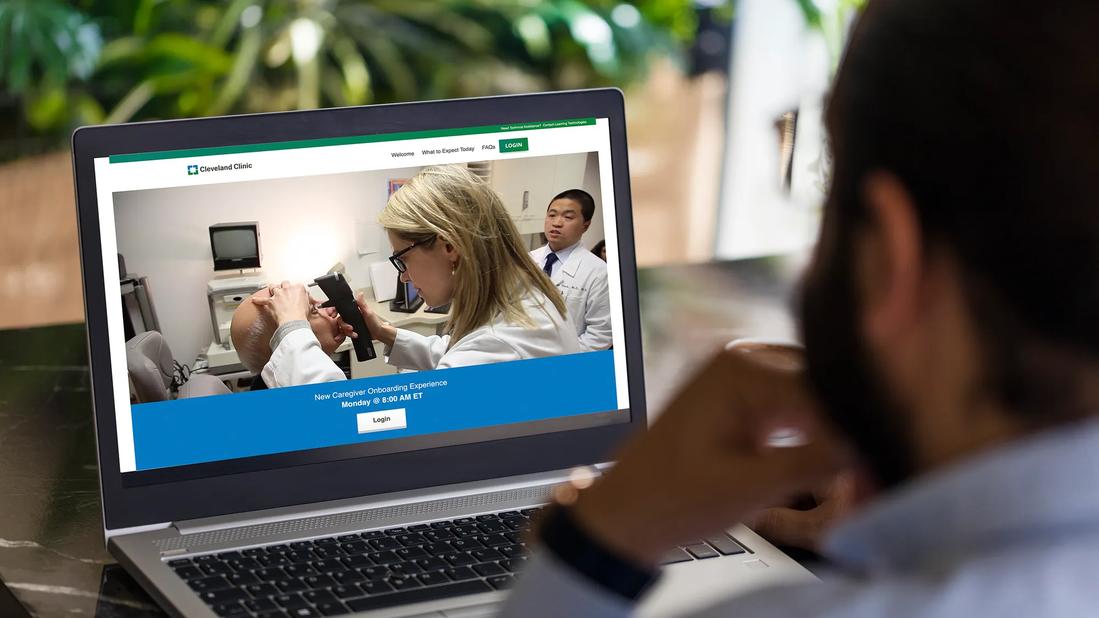
Image content: This image is available to view online.
View image online (https://assets.clevelandclinic.org/transform/7cb40b20-24ee-4952-a721-982fae90ae30/computer-screen-training-CC-1308279111)
Virtual onboarding
Orientation offers a pivotal moment for healthcare organizations to welcome new caregivers and help them forge connections with their new team and work environment. When the process is rooted in connection and extends beyond onboarding logistics, it can also foster early retention by building morale and reinforcing a collaborative workplace culture.
Advertisement
Cleveland Clinic is a non-profit academic medical center. Advertising on our site helps support our mission. We do not endorse non-Cleveland Clinic products or services. Policy
“From the very first day, organizations should make new hires feel like they are part of something meaningful,” explains Jill Muencz, who has been facilitating new caregiver orientations at Cleveland Clinic for the past 15 years.
New Cleveland Clinic caregivers begin forming connections with each other and the organization on the first day of orientation. Although the COVID-19 pandemic initially prompted the healthcare enterprise to forgo in-person onboarding in 2020, overwhelmingly positive feedback has inspired hiring leaders to permanently adopt a virtual process, says Kim Brisky, Organizational Development Consultant, Global Leadership & Learning Institute, Cleveland Clinic Caregiver Office.
Known as the Global New Caregiver Experience, the organization’s online orientation is offered every Monday to all new clinical and non-clinical staff. Onboarding activities are either housed or accessed through a virtual platform and include a 90-minute live welcome session, a self-directed learning experience, compliance training modules and resourceful information booths.
“New hires for every role from every location across North America, Abu Dhabi and London all gather for the Day One welcome,” Brisky says. “We may have individuals with no prior work experience training alongside those who have extensive experience and credentials. We do this intentionally because we want all new caregivers to know that no matter where they come from or what job they do, they are part of the same team.”
Advertisement
In addition to reviewing the day’s agenda and orientation requirements, the live welcome provides remarks from a member of the executive team.
“This further creates an environment of respect and support and shows how much our organization cares about its people,” Muencz says. “Executives often share insight into their own career journey, talk about finding the power of purpose in one’s work, or offer genuine, compelling words — the ‘wow’ factor.”
Throughout the live session, participants are encouraged to share their thoughts and ask questions through an online chat that provides real-time responses. “We invite ideas and open the space for questions so everyone can have clarity on what they need to do throughout their first day and beyond,” Brisky explains.
To close the live interaction, Muencz asks participants to describe what they hope to gain through their work: “What are you most excited about as you start at Cleveland Clinic — what is your why, your purpose?” She says new caregivers often share inspirational, deeply personal stories.
“One caregiver shared that she wanted to work for our organization because of the care her grandmother received for polio in 1921,” Brisky notes. “That was the year Cleveland Clinic was founded, so you can imagine the impact her statement had on those who heard it. It really took us back to our beginning.”
Muencz adds, “I tell everyone to remember their why, to write it down and reference it. These stories are what people remember. They offer hope and instill purpose in one’s work.”
Advertisement
Following the live session, caregivers complete self-directed, culture-based learning modules on Cleveland Clinic’s mission, vision, values, care priorities and history, and take a virtual global tour.
“The culture modules build a connection to our organization by introducing the things that matter most, including our foundational values, which were recently refreshed to: ‘Serve with heart, Succeed as one team, Shape the future,’” Brisky says.
To conclude the orientation process, participants are required to complete eight compliance training modules on topics such as safety and emergency protocols and sign a personal attestation. Interactive signage, an information toolbar aid, a responsive help desk and a chatbot are available 24/7 to address questions and provide additional support.
In addition to the global virtual orientation process, Cleveland Clinic also provides regional hospital onboarding, an in-person program designed to welcome new caregivers and introduce them to the unique culture and opportunities available at their local facility. The course, which provides a location-specific overview of current operations and key strategic initiatives, is intended to complement the broader virtual onboarding experience and support a smooth transition into the organization.
Since introducing virtual onboarding, program leaders say they have gained valuable insights about creating a successful experience that promotes interpersonal and organizational connections. They offer the following tips for others who want to provide similar opportunities:
Advertisement
Keep it simple. “Make the end-user experience as seamless and as easy as possible,” Muencz advises. Cleveland Clinic’s platform users can return to the self-directed components as often as they’d like, and information is easily accessible.
The addition of a one-click button has simplified access to the compliance modules. “We made the process more efficient to ensure caregivers have a great first experience,” Brisky notes.
New hires are also given a guide document that outlines the entire orientation process.
Provide helpful, current content. Cleveland Clinic’s well-received virtual information booths provide resources on benefits, caregiver well-being, onboarding, health system locations and more.
“Our caregivers learn what it means to be part of our organization, and they receive personalized information pertaining to their own career journey,” Muencz says. “The materials are designed to be informative but not overwhelming.”
She suggests conducting a thorough content review annually to address necessary updates.
Collect feedback and listen to it. “We recently unveiled a new networking opportunity — a monthly 45-minute virtual session for those who want to reflect on their experiences together,” Brisky says, adding that the idea was inspired by caregiver feedback provided in a post-orientation survey.
Offer tech support. Tech support is imperative when using any online platform. In addition to using a chatbot or connecting to the help desk, Cleveland Clinic hires can also scan a QR code to receive a prompt response from a technical support representative.
“We’ve made substantial enhancements in this space and have removed several barriers that arose when we first launched our virtual orientation process,” Brisky explains.
Advertisement
Showcase what’s coming next. “Orientation marks the beginning of a journey, and we want people to leave that experience feeling excited that they’ve joined us,” Muencz says. She adds that leaders can drive ongoing momentum by painting a clear picture of what’s to come following the orientation.
“I’ve been doing this for a long time — every week of the year — and I’ve been a part of the growth and progression that is required for a solid orientation experience,” Muencz shares. “Organizations that create connections and take these tips into consideration will see successful results.”
Advertisement

Leveraging technology while preserving the human touch
Regular team discussions give caregivers the information, confidence and support they need to identify threats
How Cleveland Clinic’s facility dog is enhancing caregiver wellness
Mentoring Resource Center expands opportunities for professional growth through new technology and peer learning

Specialized advocacy program provides care, compassion and essential community connections

Program teaches communication and leadership skills

Promoting a culture that values honest communication and psychological safety

Using trust, communication and purpose to help caregivers thrive
 Search