Locations:





Using trust, communication and purpose to help caregivers thrive
Podcast content: This podcast is available to listen to online.
Listen to podcast online (https://www.buzzsprout.com/2253118/19128109)
In an era of unrivaled technology, rapidly evolving patient needs and increasing professional demands, healthcare leaders play a critical role in fostering trust and collaboration among their caregivers. This special podcast series by Beyond Leadership introduces L.E.A.D., an innovative, action-oriented framework built on four human-centered behaviors: Listening, Empathizing, Adapting, and Developing. Here, we explore how Cleveland Clinic leaders apply these behaviors to build enduring, authentic connections with their teams.
Advertisement
Cleveland Clinic is a non-profit academic medical center. Advertising on our site helps support our mission. We do not endorse non-Cleveland Clinic products or services. Policy
“I’m a firm believer that our caregivers are our greatest asset,” says K. Kelly Hancock, DNP, RN, NE-BC, FAAN, Executive Vice President, Chief Caregiver Officer and Chief Administrative Officer at Cleveland Clinic. “They consistently demonstrate resilience, compassion and commitment — qualities that have been especially evident during recent periods of unprecedented change. As leaders, our goal is to help them live out their purpose while advancing our institution’s shared mission.”
In this episode of Beyond Leadership, Hancock and Sarah Vogler, MD, MBA, Chief of Staff for Cleveland Clinic’s Florida Region, explore how enterprise leaders are redefining team dynamics and provide insight into the strength and empathy that caregivers bring to their work every day.
Click the podcast player above to listen to the episode now, or read on for a short, edited excerpt. Check out more Beyond Leadership episodes at https://my.clevelandclinic.org/podcasts/beyond-leadership or wherever you get your podcasts.
Podcast host Jim Pae, MSOD: How do we – as an organization – keep a pulse on our caregivers’ well-being and ensure their ongoing engagement?
Hancock: I think it’s especially important that leaders show up and continue to be present – and we can do that in a variety of ways. We send out an annual survey [designed to help us] understand what matters most to our caregivers, what we should continue to do, and where there are opportunities for change. We also host a variety of [leader-guided] events, including leadership rounding, town halls and one-on-one discussions. We take the feedback we receive and use it to inform programmatic changes [designed to] better support our organizational culture.
Advertisement
When our caregivers come to work, we want them to be professionally fulfilled…resilient…highly engaged...and their truest, best selves. We want people to live out their purpose and [remain aligned with] Cleveland Clinic’s mission. We understand the impact these things have on our patients as well.
Most recently, our caregivers indicated how much they value transparent, authentic communication…so we’re [evaluating] different, more timely ways to share messaging with our staff. We're deeply invested in programs that…equip our leaders to have the types of conversations that are so critical to the health of our teams.
Dr. Vogler: Intentional listening has been key to keeping a good pulse on what our caregivers are experiencing every day. Cleveland Clinic leaders are being present by meeting regularly …joining hospital rounds…holding town halls…and having informal conversations with caregivers throughout the day. It’s important to be out on the wards, in the clinic and in the operating room.
We're excellent at collecting data, which is a great place to start – surveys and retention metrics tell a story. But, what really matters is what we hear in those one-on-one moments…that’s how we learn about the challenges our teams are facing and what's giving them the energy they need to excel.
Pae: If you could offer one piece of advice to healthcare leaders seeking to keep their teams energized, connected and supported, what would it be?
Dr. Vogler: Lead with empathy, clarity and consistency. Caregivers are taking onincreasingly difficult jobs in our fast-paced healthcare system, so [it’s critical] for them to trust their leader’s intentions and expectations and know they have their support. That confidence leads them to…find their why and push forward to accomplish goals that align with the mission and vision we all share.
Advertisement
Hancock: I couldn't agree more with you, Sarah. Show up as your authentic self and be clear about the direction you're setting – how your vision supports the organization’s overall mission. I think new and novice leaders in healthcare need to keep those things front and center in their minds. At the end of the day, it's very simple: Leaders show up – and that means you must show up at all times. You show up to listen, lend your support, gather feedback and use it wisely. And don't underestimate the power of your presence. It's important.
Advertisement
Advertisement

Leveraging technology while preserving the human touch
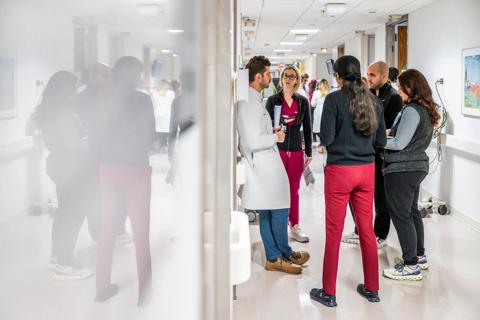
Regular team discussions give caregivers the information, confidence and support they need to identify threats
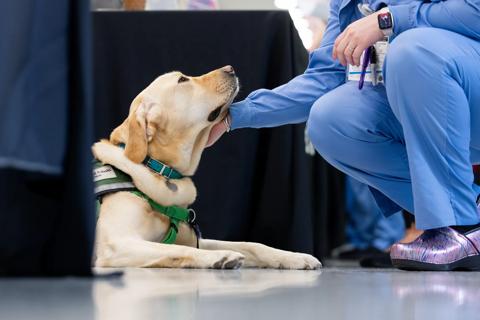
How Cleveland Clinic’s facility dog is enhancing caregiver wellness

Mentoring Resource Center expands opportunities for professional growth through new technology and peer learning

Specialized advocacy program provides care, compassion and essential community connections

Program teaches communication and leadership skills

Promoting a culture that values honest communication and psychological safety

Technology-based program helps build personal connections from the first day
 Search