Locations:





Clinicians and researchers with unique expertise
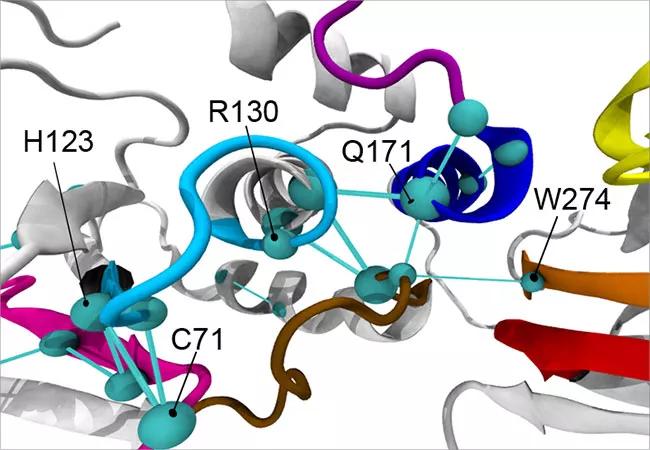
Image content: This image is available to view online.
View image online (https://assets.clevelandclinic.org/transform/19a196b2-ad33-41e1-9e11-2f0f08888418/PTEN-flip-Lerner_jpg)
PTEN flip-Lerner
The PTEN Hamartoma Tumor Syndrome Foundation has designated Cleveland Clinic as one of only three PTEN Clinical Centers of Excellence (CCOE) in the United States. Cleveland Clinic’s PTEN Multidisciplinary Clinic provides clinical services and support for children and adults with a confirmed or possible diagnosis of PTEN hamartoma tumor syndrome (PHTS) and other disorders within the PHTS spectrum, including Cowden syndrome (CS) and Bannayan-Riley-Ruvalcaba syndrome.
Advertisement
Cleveland Clinic is a non-profit academic medical center. Advertising on our site helps support our mission. We do not endorse non-Cleveland Clinic products or services. Policy
PHTS refers to a group of genetic disorders defined by germline mutations of the tumor suppressor gene PTEN. Individuals with PHTS are at increased risk for certain cancers, cognitive and behavioral deficits, benign growths and tumors (i.e., hamartomas) and macrocephaly as well as autoimmune diseases (e.g., Hashimoto thyroiditis and eosinophilic esophagitis) and other signs of immune dysregulation, including recurrent upper respiratory infections and lymphopenia. However, development of these outcomes is highly variable and difficult to predict.
“Cleveland Clinic’s designation as a PTEN Clinical Center of Excellence recognizes our longstanding efforts to discover and characterize the spectrum of PTEN-related issues, and signals to patients and referring physicians that we provide outstanding, evidence-based PHTS multidisciplinary care,” says Charis Eng, MD, PhD, the inaugural Chair of Cleveland Clinic Lerner Research Institute’s Genomic Medicine Institute and inaugural Director of the Center for Personalized Genetic Healthcare, which includes the PTEN Multidisciplinary Clinic. Dr. Eng was the first to link PTEN to CS and subsequently to ASD.
The PTEN Hamartoma Tumor Syndrome Foundation requires a CCOE site to have on staff at least one genetic counselor, surgical breast expert, endocrinologist, endocrine surgeon, dermatologist, gastroenterologist, gynecologist, urologist and neurologist. The PTEN Multidisciplinary Clinic also houses a psychologist with expertise in hereditary syndromes, a vascular surgeon, a social worker, a medical breast expert and a patient care coordinator. The clinic sees approximately 100 patients per year. Patients can also benefit from provider collaboration with the Sanford R. Weiss, MD, Center for Hereditary Colorectal Neoplasia at Cleveland Clinic’s Digestive Disease & Surgery Institute.
Advertisement
An ongoing focus of Dr. Eng’s lab in the Genomic Medicine Institute is to utilize multidisciplinary approaches — genomic modifiers, immune, microbiome, interrogation of cell fate and cellular phenotype, mouse models, etc. — to dissect the mechanism of PTEN alterations and how and why they can predispose to seemingly disparate clinical signs, such as cancer and autism, and to identify novel targets for therapy and prevention.
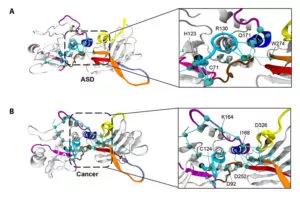
Image content: This image is available to view online.
View image online (https://assets.clevelandclinic.org/transform/45cfdab2-9db8-466a-889c-4ea9d0b312a2/805x-Inset-Lerner-Research-002-300x198_jpg)
The global metapaths of the ASD-associated mutant PTEN phenotype (top) and cancer-associated mutant PTEN phenotype (bottom).
Advances in the study of PHTS include Dr. Eng and team’s 2020 study suggesting that copy number variations may act as genomic modifiers that influence the risk of ASD and/or developmental delay versus cancer risk in individuals with PTEN mutations.
Her team also recently uncovered a potential link between autoimmunity in patients with PHTS and the gut microbiome. Their pilot clinical study suggests that the gut microbiome, regulated in part by its interaction with key immune system molecules, may contribute to the development of autoimmune diseases and immune dysregulation in PHTS patients.
“We are on a grand mission to identify targets for prevention and early treatment for PHTS,” says Dr. Eng. “Knowledge is power, and knowledge of factors that determine ‘who will get what’ is important to guide proactive, preventative actions rather than reactive treatment of full-blown disease.”
Clinicians and researchers from Cleveland Clinic and other institutions across the world recently gathered via livestream at the Genomic Medicine Institute and Center for Personalized Genetic Healthcare’s 4th Annual International PTEN Symposium: From Patient-Centered Research to Clinical Care.
Advertisement
“The symposium was a unique opportunity to learn the latest on advances in the diagnosis, management and treatment of patients with PHTS,” says Dr. Eng. “We were honored to feature esteemed colleagues from national and international guest institutions, as well as many of the people who make Cleveland Clinic a Clinical Center of Excellence.”
To refer a patient to the PTEN Multidisciplinary Clinic, call 216-444-4044 or visit the Center for Personalized Genetic Healthcare’s website.
Advertisement
Advertisement

Adding 177Lu-PSMA-617 to ADT plus an ARPI cut the risk of radiographic progression or mortality by 28%

New program will help patients improve fitness and manage weight after cancer treatment

Cleveland Clinic hematologist highlights new guidelines and treatment advances in immune thrombocytopenia
NIMBLE replaces weekly tumor board delays with same-day multidisciplinary recommendations
Cleveland Clinic study provides validation for the test, which combines AI and pathological data to predict outcomes in postoperative patients
Advanced imaging technology catches metastases much earlier, allowing treatment with fewer side effects

Reduced radiation for lymph node areas reduces side effects

Large Cleveland Clinic analysis may help resolve a longstanding question over optimal fractionation
 Search