Locations:





Real-time case discussion connects IBD specialists across disciplines, institutions and countries
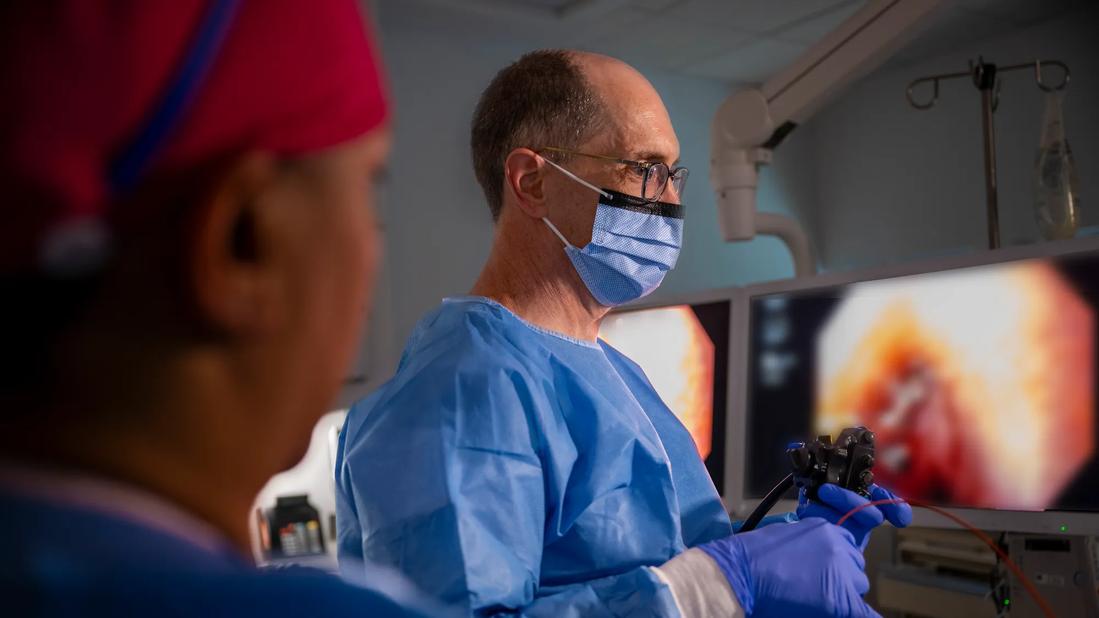
Image content: This image is available to view online.
View image online (https://assets.clevelandclinic.org/transform/97dcd1dd-92ca-41c6-817e-ca5a243bcea2/Regueiro-ibd-live)
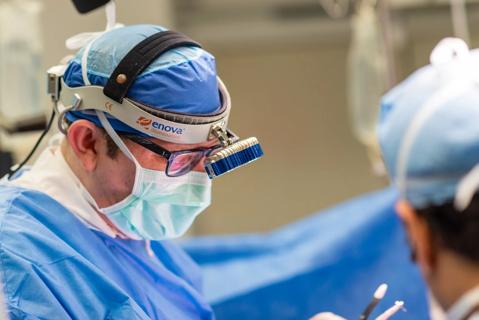
Dr. Regueiro in Operating Room
IBD LIVE, Cleveland Clinic’s virtual multidisciplinary conference series, has grown from a local forum created to connect pediatric and adult IBD specialists into a global educational program built around real-time, case-based discussion.
Advertisement
Cleveland Clinic is a non-profit academic medical center. Advertising on our site helps support our mission. We do not endorse non-Cleveland Clinic products or services. Policy
As the series marks its 15th anniversary, its creator, Miguel Regueiro, MD, spoke with Consult QD about how IBD LIVE began, how the format has evolved and how the model could inform education in other clinical areas.
Q. Can you talk about the creation of IBD LIVE and the gap you were trying to fill with it when you first created the series?
Dr. Regueiro: Initially, this series was something that I created years ago when I was in Pittsburgh. When the Children's Hospital opened up across the city, we were no longer in the same room as our pediatric counterparts. With IBD LIVE, we were trying to create a stronger connection between pediatric and adult IBD specialists, and this series came out of a need for that connection.
Interestingly, at the time, the concept of Zoom and Teams calls wasn't really there, which is hard for us to even think about now. Even though it was a little clunky at first, other sites that I knew in Maryland and North Carolina reached out expressing interest in joining the calls. So, it just started from there.
Q. How has IBD LIVE changed or expanded since you brought the series from Pittsburgh with you to Cleveland Clinic?
Dr. Regueiro: Coming to Cleveland Clinic really amplified the series, and the expansion has been beyond my wildest dreams. When I was leaving Pittsburgh, we had a handful of sites that would log on to an episode, so it was a small but nice-sized conference.
When we decided to move forward with bringing IBD LIVE to Cleveland Clinic, I worked very closely with Rita Rys, who is the Director of CME for Cleveland Clinic. Her help across so many aspects of the program has just been invaluable. Ditto for Tim Dalzell and Steve Lamb, who are in the room every week and help us on the AV side. We could not do this each week without these three. They are the lifeblood of IBD LIVE, and I am very appreciative of all their help.
Advertisement
But around the beginning of the COVID-19 pandemic, we started talking more seriously about how to grow IBD LIVE. Because everyone was forced to go virtual, the logistical barriers were lower, and that helped IBD LIVE — along with other virtual CME programs at Cleveland Clinic — expand significantly. Today, I believe we have about 27 Live-style programs within the Digestive Disease Institute alone, with IBD LIVE being the oldest and most established.
(Editor’s note: IBD LIVE currently offers AMA, ANCC, AAPA and IPCE credit, along with ABIM, ABP and ABS MOC points.)
Q. Why did a case-based, interactive format with presenters from multiple sites feel like the right model for IBD education?
Dr. Regueiro: I think anybody in medicine, including myself, probably has a fixed notion of how to treat a patient based on the science. But much of the art of medicine lies in interpreting what we see and making decisions when the evidence doesn’t point to one clear answer. That's where these different opinions and perspectives are important.
What I have found incredibly valuable about the series is how much each discipline has learned from the others. Colorectal surgeons have gained a deeper understanding of medical management, including the biologic therapies now used in IBD care, while gastroenterologists have gained valuable insight into surgical decision-making and techniques. That multidisciplinary, team-based approach is invaluable, and it is really what IBD LIVE captures. The series has also created a sense of community, with lively discussion, back-and-forth exchange and good-natured banter that have become part of the IBD LIVE experience.
Advertisement
Q. How is each session structured, and how do you select cases for discussion?
Dr. Regueiro: The format has been refined over time based on what keeps people engaged. Currently, each one-hour session features two cases from two different sites, with about 30 minutes devoted to each case. Presenters are asked to keep the case concise and build in stopping points so the group can discuss the clinical decisions in real time.
When it comes to case value, I think any case can be a good case. Sometimes people say, ‘oh, this is a bread-and-butter case that’s too straightforward.’ I believe those are sometimes the best cases. We tend to have a lot of trainees who log on — residents, interns and fellows in surgery and medicine — so those “bread-and-butter” cases can be very valuable for them as well.
The selection process itself is intentionally open. If someone reaches out about presenting on IBD LIVE, we can usually find a place for them on the schedule. We are not overly prescriptive because not knowing exactly what will come in is part of the value. It is similar to clinic in that respect — you do not know who the next patient coming through the door will be.
Sometimes, when a clinician has a particularly challenging case coming up, we try to make room for them to present it and hear perspectives from colleagues around the world. There are expectations around presentation length, slide count and CME requirements, such as avoiding trade names, but otherwise the case types are intentionally broad.
Advertisement
Q. You mentioned that residents frequently attend IBD LIVE. How else has the audience changed over time — geographically, professionally or in terms of engagement?
Dr. Regueiro: What began as a regional audience concentrated in the Northeast and Mid-Atlantic has grown into a national — and increasingly global — community of participants. We now have presenters and attendees from around the world, including many who may not appear on screen but participate by listening in or contributing through the chat.
The audience has also become broader professionally. In addition to gastroenterologists and colorectal surgeons, we have pediatric GI specialists, trainees, dietitians, nutritionists, hepatologists, behavioral health specialists, and, depending on the case, colleagues from areas such as rheumatology, pulmonology, transplant, pathology and radiology. We also archive the sessions, so people can watch or listen later when they are unable to attend live.
Q. Do differences in how IBD is managed around the world come through during these sessions?
Dr. Regueiro: They do. Some of those differences are related to healthcare systems, payment structures and medication availability. There are also differences in surgical approaches and in how clinicians evaluate and manage patients. That exchange is one of the program’s strengths: It helps participants learn from different systems while also moving toward more standardized and guideline-based care.
Q. As IBD LIVE marks 15 years, what has stood out to you most about its impact?
Advertisement
Dr. Regueiro: Several things stand out. First, when we started 15 years ago, we had no idea IBD LIVE would grow into what it has become. Seeing that growth has been incredibly meaningful. Second, the collegiality and sense of community that have developed around the series have been remarkable. It has led to research collaborations, visiting professorship invitations and a renewed global connection among our peers. Third, the educational value has been greater than we anticipated. Through case-based, multidisciplinary discussion, we are helping the specialty stay more aligned and current as new publications and approaches emerge.
Q. How do you see IBD LIVE evolving in the years ahead?
Dr. Regueiro: Looking ahead, one area we are beginning to explore is how AI and other digital technologies might enhance the virtual conference experience. We are still in the very early stages, and I suspect that five years from now, we may look back and realize there were possibilities we had not yet anticipated. Technology will continue to shape the series, just as advances in medications, surgical approaches and the overall management of IBD will continue to shape the discussions we have. In many ways, the series will continue to change as the field changes.
Q. Could the IBD LIVE model be adapted for other Cleveland Clinic Institutes?
Dr. Regueiro: I think it could be adapted for virtually any clinical area. We have already seen the power of this model within the Digestive Disease Institute across general surgery, colorectal surgery and gastroenterology, with participation from Cleveland Clinic sites in London, Abu Dhabi and Florida. In my current role as Chief of Staff, I now oversee all of the institutes, and I see a real opportunity to bring this kind of case-based, multidisciplinary education to other areas across Cleveland Clinic.
Advertisement
Findings suggest insurance coverage alone may not ensure timely specialty care and treatment

Why it's a key strategy to optimize biologic therapies and improve outcomes in pediatric IBD

An integrated approach to care
Elevated risk persists for more than a year after surgery, plus more insights from the first study to quantify risk specifically for CRC surgery
Insights from Dr. de Buck on his background, colorectal surgery and the future of IBD care
Findings help close the knowledge gap around VTE practice patterns
The Integrated Program aligns IBD care and research across Cleveland Clinic locations

Diet has a profound impact on how the intestine functions
 Search