Locations:





 Search
Caregiver feedback focused on help in managing communication, conflict resolution and more
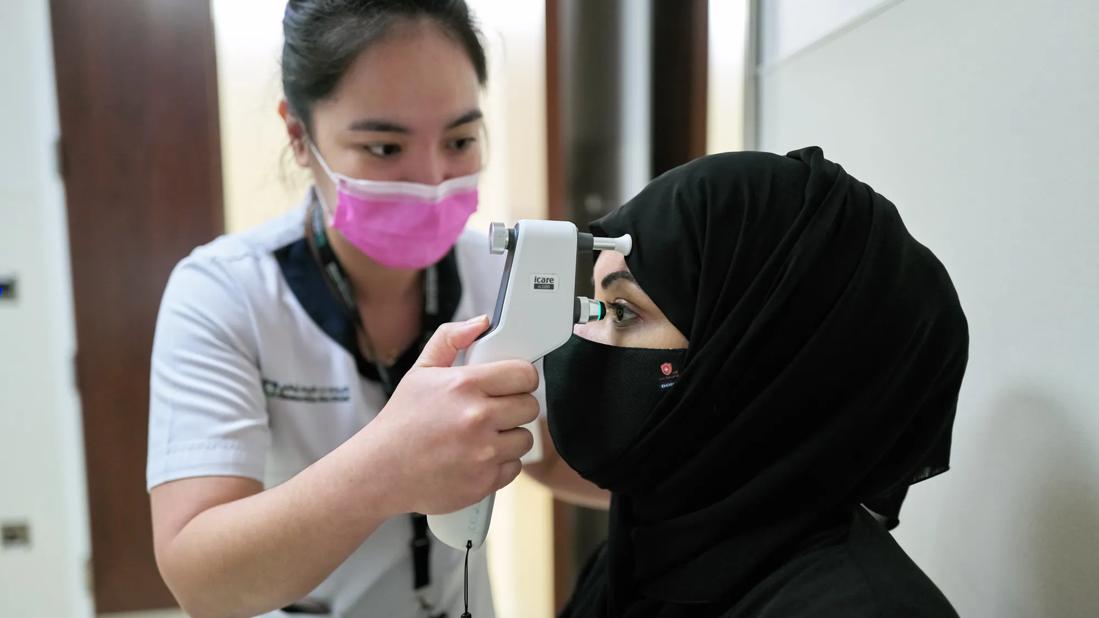
Image content: This image is available to view online.
View image online (https://assets.clevelandclinic.org/transform/62834d73-95cf-4092-99f6-5d9dcd25e250/2021_CCAD_128-jpg)
charge nurse training program
A new training program at Cleveland Clinic Abu Dhabi aims to teach communications and management skills that will help charge nurses become stronger leaders. The program was developed by an Emirati nurse who studied in Cleveland and wants to expand to young nurses in Abu Dhabi the leadership strategies she experienced as a U.S. student.
Advertisement
Cleveland Clinic is a non-profit academic medical center. Advertising on our site helps support our mission. We do not endorse non-Cleveland Clinic products or services. Policy
Abeer AlBlooshi, DNP, RN, Executive Director of Medical & Surgical Services at Cleveland Clinic Abu Dhabi, founded the Charge Nurse Leadership Development Journey in part out of gratitude for her own education.
“I am the first in the United Arab Emirates to hold a doctor of nurse practice, and I earned my degree from Case Western Reserve University,” Dr. AlBlooshi says. “I was mentored and coached by top leaders in the U.S. This program was my way of paying back the investment that Cleveland Clinic has made in me, and for being exposed to the Cleveland Clinic culture.”
Seventy-six nurses are enrolled in the Charge Nurse Leadership Development Journey, which AlBlooshi conceived while she was preparing her doctoral defense at CWRU. She continued to work on it as one of 11 inaugural fellows in the Miller Foundation Executive Leadership Post-Doctoral Program, which she completed this year.
Over the course of six months, participants take part in eight learning modules that focus on communication, influencing, emotional intelligence, conflict management and feedback. The course combines in-person and virtual learning as well as simulation. (The demands of COVID-19 meant that nurses could not spend more than three hours at a time on classwork.)
In the UAE, AlBlooshi explains, “We represent 87 nationalities; leadership traditions vary across cultures," AlBlooshi says. Not all young UAE nurses have training in topics such as conflict resolution or the speak-up culture. The nursing caregivers in the program have an average of five years of experience, she says.
Advertisement
AlBlooshi believes Cleveland Clinic providers expect nurses to be partners in caregiving and to offer their expertise with confidence. Her hope for the course, which began in June and will end in December, is to help participants achieve new levels of competence in problem-solving.
Ultimately, the goal is to improve safety and quality around patient care. “Our charge nurses are the first layer of leadership in nursing, and they are the ones who interact with the rest of the team,” AlBlooshi says.
Development of the program began with about 45 face-to-face conversations with nurses about how they perceive their roles and what kind of training they sought. The program team also surveyed 43 nurses.
The curriculum, developed from those responses, was created in support of these goals.
AlBlooshi worked with project manager Noor Sattam, Cleveland Clinic Senior Business Analyst, and engaged a leadership consult as well. “We wanted to mix clinical expertise with the best, evidence-based leadership skills on the market,” she says.
Advertisement
Success will be measured by nurses’ satisfaction with the program, and also by examining incident and quality metrics. That data is updated and visible via the CNO dashboard, Sattam says. The program is credentialed through the American Nurses Credentialing Center, so participants who complete the work earn CME credits.
So far, the feedback from participants has been positive, AlBlooshi says. “They are so excited, because they do believe we are paying attention to what they need and we are investing in them.”
Advertisement
Advertisement
Initiative provides hands-on opportunities to promote early, progressive activity
Continuing to grow by following the right path at the right time
Teaching caregivers to recognize warning signs, de-escalate difficult situations and maintain professional boundaries

Veteran caregivers offer practical wisdom for building confidence and practicing with purpose
Skill, dedication and a passion for women and children inspire this joy-filled specialty

Nurses use flexibility, strong clinical judgment and teamwork to manage increasingly complex patients
Creativity and perseverance help scrub tech transform a simple surgical cup into a patented medical device

Nurse-led program helps patients navigate childbirth, pregnancy loss and the postpartum period