Locations:





Simple ideas have big impact on patient care
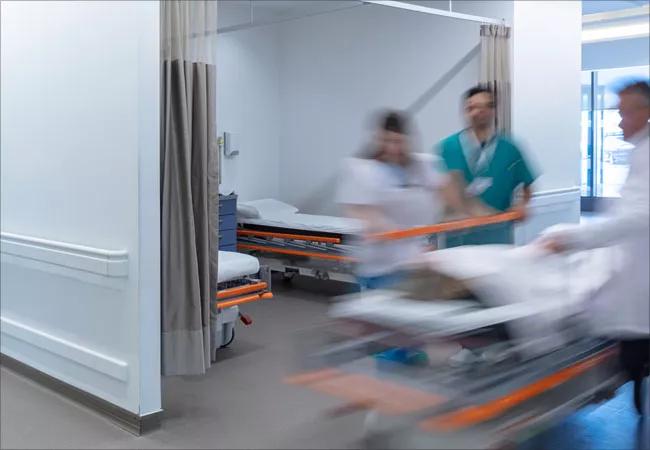
Image content: This image is available to view online.
View image online (https://assets.clevelandclinic.org/transform/1cc5ba8d-90f2-441c-9695-29a8c028d018/18-NUR-4080-crashCart-650x450_jpg)
18-NUR-4080-crashCart-650×450
In Cleveland Clinic’s culture of continuous improvement (CI), nurses are empowered and expected to make improvements in their workplace. Some CI projects require time, planning and resources, and others are quick fixes. “Just do it” – or JDI projects – are simple solutions that can be put into place quickly to make immediate improvements.
Advertisement
Cleveland Clinic is a non-profit academic medical center. Advertising on our site helps support our mission. We do not endorse non-Cleveland Clinic products or services. Policy
Last year, nurses throughout the Cleveland Clinic health system implemented many JDIs. Two of them led to new best practices when medical emergency response teams are called to nursing units for cardiac arrhythmias, acute respiratory changes and other emergencies.
Cleveland Clinic’s main campus has three 24-bed medical/cardiovascular stepdown units. Following a code blue last spring on one of the units, the caregiver team participated in a routine post-code review and analysis that led to creation of an emergency pacer bundle kit.
“The Adult Medical Emergency Team (AMET) did great, and the patient was fine,” says Mia DiChiro, BSN, RN, PCCN, interim nurse manager of the units. “But the nurses thought why not take the extra step in preparing for and having all the equipment right where you need it during an emergency?”
Previously, external pacers, wires and 9-volt batteries were stored in the medication room. Nurses would grab the pacer from a drawer, then enter a code to retrieve the wires and battery from a supply cart and place the batteries in the pacer. The staff believed they could streamline this process. “Time is critical, especially in a code situation,” says DiChiro. “Two minutes can feel like two hours.”
Now, thanks to the JDI suggested by Assistant Nurse Manager Michelle Chaffin, BSN, RN, PCCN, all external pacemaker components are hanging in one area in the medication room, ready to use. Implementing the emergency pacer bundle kit has resulted in an average 2.5-minute time savings during codes.
Advertisement
Another JDI improved care when AMETs were called to the transplant-specialty care unit on Cleveland Clinic’s main campus. “Nurses were concerned about delays in care during medical emergencies when they had to run from the patient’s room to the supply cart or medication room to get equipment and supplies,” says Peter Rozman, BSN, RN, CMSRN, nurse manager of the unit. “Nurses also saw opening the full crash cart as a waste of time, steps and resources if the emergency isn’t a code blue,” adds Rozman.
Jamie Stellmar, BSN, RN, a clinical nurse on the transplant-specialty care unit, spearheaded creation of an AMET supply cart. The three-drawer cart includes commonly used supplies, including a bag of saline, test tubes, IV start kits, flushes and suction tubing. Each of the drawers is labeled so nurses can easily access items. In addition, a defibrillator sits on top of the cart. “We can use the resources we have on the unit without having to access other equipment and supplies related to cardiac or respiratory arrests,” says Rozman. “It’s a win for us to have what we need at the bedside during emergencies.”
Both of these medical emergency JDIs improved response times. “Bringing simple ideas forward has a big impact on patient care, improving nursing practice and our patient outcomes,” says DiChiro.
Advertisement
Advertisement
Using meticulous preparation and teamwork to manage critically ill patients in constantly changing environments

Translating clinical questions into meaningful, sustainable change
Guidance for creating a relevant framework that reflects organizational values, supports professional practice

Helping patients recognize respiratory changes, navigate treatment barriers and stay connected to their clinical team
Initiative provides hands-on opportunities to promote early, progressive activity

Continuing to grow by following the right path at the right time

Teaching caregivers to recognize warning signs, de-escalate difficult situations and maintain professional boundaries

Veteran caregivers offer practical wisdom for building confidence and practicing with purpose
 Search