Locations:





Systematic review of MOON cohorts demonstrates a need for sex-specific rehab protocols
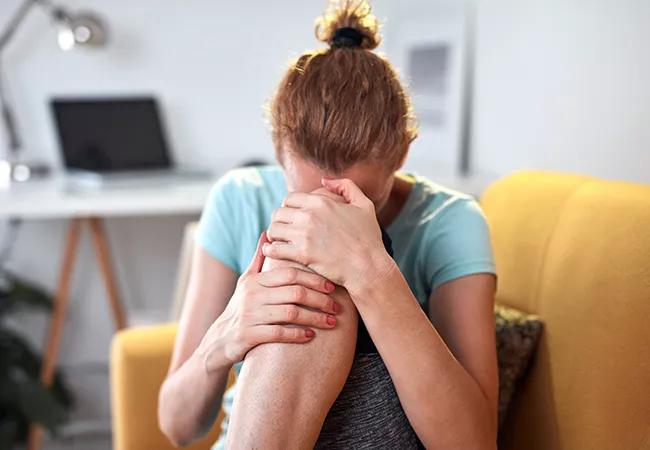
Image content: This image is available to view online.
View image online (https://assets.clevelandclinic.org/transform/482e8d6a-5e8d-49eb-b881-9318fb36eff5/22-ORI-3179518-CQD-650x450-1-jpg)
Woman holding knee
Although males have higher rates of ACL injuries, the relative risk of ACL injury is actually much higher in females. Despite increased understanding of ACL injuries and prevention, injury rates among females have remained consistent, while rates have simultaneously decreased among males. As female participation in youth sports continues to increase, along with the expansion of college and professional athletic programs, identifying the underlying causes of this increased risk becomes increasingly important.
Advertisement
Cleveland Clinic is a non-profit academic medical center. Advertising on our site helps support our mission. We do not endorse non-Cleveland Clinic products or services. Policy
This was an area of research about which Cleveland Clinic Lerner College of Medicine fifth-year medical student, Martina Hale, became passionate about exploring with her mentors, Michael Scarcella, MD, and Kurt Spindler, MD, both orthopaedic surgeons in Cleveland Clinic’s Orthopaedic and Rheumatological Institute.
“There has become a growing trend in looking at the female athlete and the female ACL recovery,” says Dr. Scarcella. “Depending on which manuscript you read, females are two to eight times more likely to sustain an initial ACL tear than males, which is quite a high rate. Women do not experience higher rates of graft failure, but they consistently report lower return-to-sport and activity levels post-operatively. We believe that the primary reasons for this discrepancy in risk are due in part to complex interactions between the general anatomical differences between a female and a male.”
Martina Hale made this the focus of her thesis year. She remarks, “I noticed early on that there was a dearth of orthopaedic research that specifically analyzed female patients. Our understanding of what the female athlete needs is limited by the questions we have asked thus far, so I wanted to change the narrative by understanding where, and, more importantly, why, female athletes lag behind their male counterparts for ACL-specific outcomes.”
In a new systematic review article (accepted for publication in the American Journal of Sports Medicine), Dr. Scarcella and his team explore the high-level evidence on sex-related differences in ACL repair (ACLR)-related outcomes.
Advertisement
“Our paper reviews studies from the Multicenter Orthopedic Outcomes Network (MOON), an initiative originally conceived and developed by my colleague and co-author, Kurt Spindler, MD,” says Dr. Scarcella. “MOON is one of the largest, multicenter, prospective cohort databases in the world, and it includes all clinically relevant patient-reported outcome measures (PROMs). There are larger ACL registries in the world, but MOON is the largest one to maintain ~80% follow-up at two, six and 10 years for over 3,000 ACLRs.”
The systematic review included a total of 26 studies from MOON literature, which were used to identify the gaps in outcomes. The group hypothesized that outcomes would not differ between sexes for odds of graft tear or contralateral tear, but that female sex would correlate with worse outcomes for postoperative activity level and return to play.
“Our primary aim with this study was to evaluate where sexes differ for graft failure, contralateral native ACL tear, cartilage-specific surgical outcomes, Marx activity score, return to play, IKDC score, KOOS pain, QoL, and sports and rec sub-scores, and post-traumatic osteoarthritis (PTOA) radiographic findings,” says Dr. Scarcella.
The group found that the Marx activity score demonstrated the most significant difference between males and females.
“In all six studies related to Marx activity, female sex correlated with worse scores, and this was true at two-, six-, and 10-year follow-ups,” he says. “So that tells us we are not getting our female athletes back to the same level we're getting our male athletes back to.”
Advertisement
Dr. Scarcella notes that one of the group's theories for this discrepancy could be related to psychological components. The Anterior Cruciate Ligament-Return to Sport After Injury (ACL-RSI) instrument is a tool that looks at fear, anxiety and avoidance after an ACL injury.
“All athletes – regardless of sex – experience something akin to post-traumatic stress disorder after an ACL injury,” he explains. “These athletes play at such a high level, and then, in their mind, they experience a catastrophic injury, and it takes time to adjust and trust that their knee won’t fail them again. We know that females initially have lower ACL-RSI scores. They tend to catch up, but they catch up at a slower rate.”
Hale adds, “I think patient priorities and expectation management are also important aspects to consider. Prior literature has shown that in the first two postoperative years after ACL reconstruction, females are more likely to change their expectations for returning to sport. We still do not know why this is, and I hope our tools for measuring priorities and expectations evolve to help us answer these questions.”
Following an ACL reconstruction, quadricep strength is typically one of the biggest markers for return to sport. The recent systematic review shows data that women typically experience a delayed recovery in quadriceps strength. This is clinically important as quadricep strength is closely linked to functional performance as well as injury prevention. Female patients also demonstrate altered neuromuscular patterns, such as dynamic knee valgus.
Advertisement
“We expect that future studies are going to be looking much more closely at why females are lagging in quadricep strength,” says Dr. Scarcella. “In the meantime, though, physical and rehab therapists should be encouraged to identify females with strength needs earlier to perform targeted training.” Hale hopes that physical therapists can also consider how males and females approach physical therapy with different emotional and mental headspaces – using these differences to their advantage.
Dr. Scarcella says that he also hopes that providers will eventually start moving away from one-size-fits-all rehab protocols towards sex-specific rehab protocols.
“I believe we’ve reached a point where we have a strong, evidence-based protocol — yet it remains a broadly applied, general framework,” he explains. “I think we now know that we need to treat different athletes differently. Females absolutely deserve their own rehab protocol to address some of these deficits and gaps — this may include earlier sports psychology, earlier isokinetic testing and earlier use of modalities, as well as understanding which patients are at higher risk.”
Building on their work, the team had been selected to present this topic as an Instructional Course Lecture at the upcoming American Orthopaedic Society for Sports Medicine (AOSSM) Annual Meeting in Seattle.
Advertisement
Advertisement

Cleveland Clinic’s Global Peak Performance Center and PGA TOUR partnership pair advanced assessment with longitudinal follow-up to enhance clinical decision-making
Innovations and practical insights for safe return to sport after lower-limb injury
With a better understanding of timelines and contributing factors, clinicians can help athletes undergoing TKAs set realistic expectations

Clinical complexity demands personalized care strategies

Research by Cleveland Clinic and Sports Data Labs to improve health and function in everyday patients as well as elite athletes

Cleveland Clinic’s Esports Medicine team weighs in on importance of multidisciplinary care

Gamers are athletes who can benefit from athletic training

A behind-the-scenes look at Cleveland Clinic’s role as medical services provider of the 2023 Summer Series
 Search