Locations:





Findings may have implications for understanding the disorders’ pathophysiology
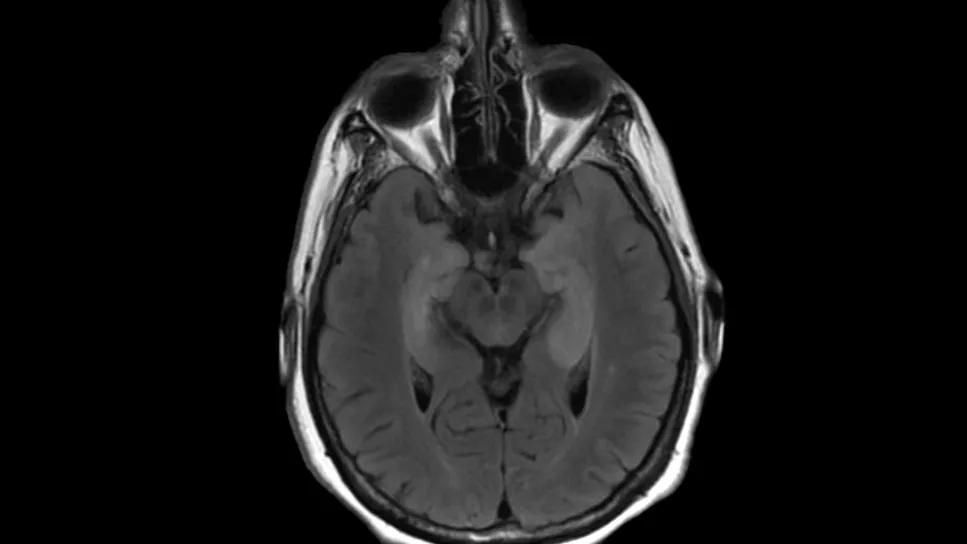
Image content: This image is available to view online.
View image online (https://assets.clevelandclinic.org/transform/592bb933-f7c7-4e23-b6fa-b7ecbabc6ac7/human-brain-scan-paraneoplastic-neuro-symptoms)
scan of a human brain
Type 1 antineuronal nuclear antibody (ANNA1, or “Hu” antibody) is associated with paraneoplastic neurological syndromes (PNS) and often with small cell lung cancer (SCLC). Although ANNA1/Hu-IgG PNS frequently cause severe disability and early mortality, they also paradoxically appear to confer improved cancer survival, according to a single-center observational cohort study from Cleveland Clinic.
Advertisement
Cleveland Clinic is a non-profit academic medical center. Advertising on our site helps support our mission. We do not endorse non-Cleveland Clinic products or services. Policy
The investigation characterized 45 patients with ANNA1/Hu-IgG PNS and compared those with SCLC to more than 1,500 SCLC patients without a paraneoplastic neurological syndrome. The study was published in Journal of Neurology (2026; 273[6]:361).
“Patients with PNS are often understudied and underrepresented in neuroimmunology research due to the rarity of their disease,” says the study’s senior author, Amy Kunchok, MD, PhD, staff neurologist in Cleveland Clinic’s Mellen Center for Multiple Sclerosis Treatment and Research. “There is a great need to study patients with PNS to understand their disease course and factors that influence it. We also need better treatments to minimize the disability that they experience.”
“Our description of PNS can help us educate patients about what they can expect, as well as guide clinicians about treatment and surveillance priorities,” adds first author Kimberly DiMauro, DO, also a staff neurologist with the Mellen Center. “In addition, the suggestion that paraneoplastic autoimmunity is associated with survival outcomes may have implications for understanding the pathophysiology of these disorders.”
PNS are uncommon autoimmune-mediated conditions that have become increasingly recognized thanks to more widespread availability of antibody testing. ANNA1/Hu-IgG PNS (also known as anti-Hu PNS) can present with one or more central or peripheral neurological phenotypes, and many patients, but not all, have cancer at presentation.
Although the prognosis for patients with cancer and PNS is considered poor, how they fare relative to other patients with cancer has not been rigorously studied. It has been hypothesized that paraneoplastic autoimmunity may improve tumor control and lead to better survival.
Advertisement
The cohort of patients with ANNA1/Hu-IgG PNS (n = 45; mean age of 63 years; 73% female) were identified from the Cleveland Clinic autoimmune clinic registry and electronic medical records from 2002 to 2023. All patients had ANNA1/Hu-IgG identified in serum and/or cerebrospinal fluid. Cancer was identified in 35 patients (78%), as follows: SCLC (n = 26), non-SCLC (n = 4), colon cancer (n = 2), gallbladder (n = 1), prostate (n = 1) and neuroendocrine cancer (n = 1). Two-thirds of the patients with cancer were diagnosed with malignancy after the onset of ANNA1/Hu-IgG PNS, with 9% diagnosed more than two years later; the remaining one-third were diagnosed with cancer before ANNA1/Hu-IgG PNS was identified.
The comparison group (n = 1,513) consisted of patients from the Cleveland Clinic Cancer Center database who had SCLC without ANNA1/Hu-IgG PNS.
Of the 45 patients with ANNA1/Hu-IgG PNS, 22 (49%) had neuropathy, 11 (24%) had limbic encephalitis, 10 (22%) had cerebellar ataxia, three (7%) had gastrointestinal dysmotility, two (4%) had myelopathy and one (2%) had myoclonus (some patients had multiple phenotypes).
Two years from neurologic symptom onset, among the full ANNA1/Hu-IgG PNS cohort, 45% had died, 41% were wheelchair dependent and 53% had reached a modified Rankin Scale (mRS) score of more than 2 (indicating at least moderate disability).
Compared with patients with a different phenotype, patients with limbic encephalitis were at greater risk of the following:
Advertisement
Among patients with SCLC, those with ANNA1/Hu-IgG PNS had a 41% reduced risk of death compared with those without a paraneoplastic neurological syndrome after adjusting for age, sex, cancer stage and cancer therapy (HR = 0.59; 95% CI, 0.37-0.96; P = .033).
Comparisons of survival between SCLC + ANNA1/Hu-IgG PNS patients and SCLC-only patients were as follows, respectively:
Drs. DiMauro and Kunchok note that they undertook this study because they were increasingly encountering patients with PNS but had little evidence to guide their advice to these patients.
The study’s findings prompted several adjustments to their clinical practice, including the following:
What accounts for the increased cancer survival of patients with ANNA1/Hu-IgG PNS is the source of much speculation. A possible explanation is that patients who develop PNS have greater anti-tumor immunity.
However, another possible explanation for the survival advantage is lead-time bias: i.e., patients may be identified earlier in the disease process, resulting in an apparently longer disease course and perhaps access to earlier and more effective treatment.
Advertisement
“Research using a larger cohort from multiple institutions would help answer the question of whether increased survival is an anti-tumor effect inherent to the syndrome or a result of lead-time bias — or if there are elements of both,” Dr. DiMauro notes.
Image at top: MRI from a patient with limbic encephalitis.
Advertisement
Advertisement

Multidisciplinary teams bring pathological and clinical expertise

Genetic variants exist irrespective of family history or other contributing factors

Use of GLP-1s and improving cardiovascular health lowers risk of hematologic malignancies

Leaders of the Pediatric Cancer Committee discuss new accreditation

Slower drug elimination from the body among females may impact safety and efficacy

Integrated program addresses growing need for comprehensive cancer care among adolescents, young adults and adults under 50 with early onset cancers
Study demonstrates potential for improving access

Gene editing technology offers promise for treating multiple myeloma and other hematologic malignancies, as well as solid tumors
 Search