Locations:





Phase 1 study demonstrates immune response in three quarters of patients with triple-negative breast cancer
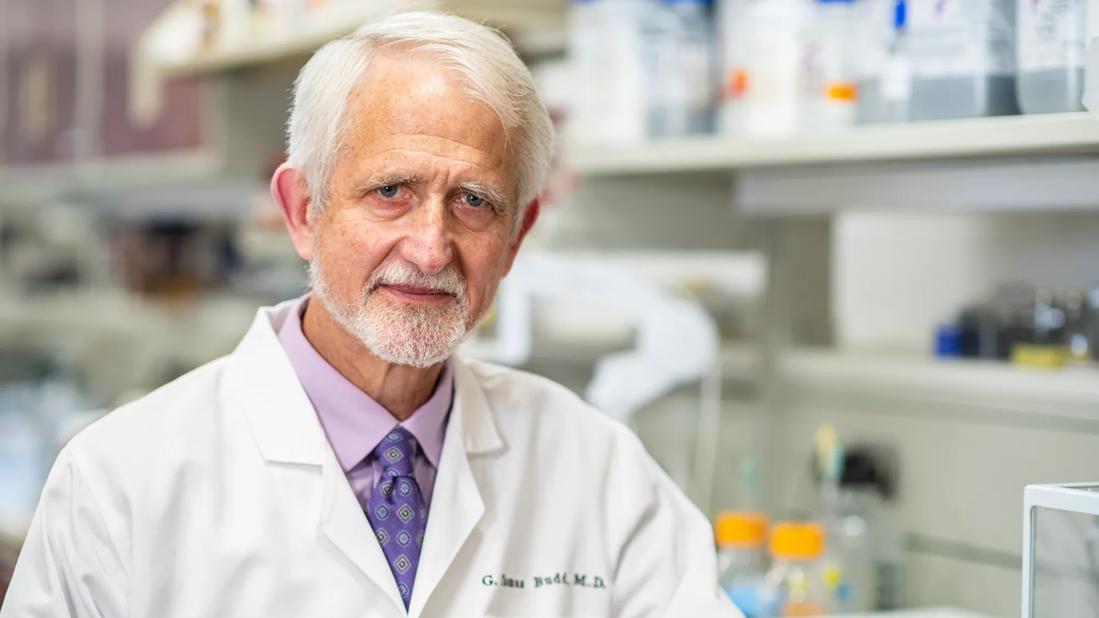
Image content: This image is available to view online.
View image online (https://assets.clevelandclinic.org/transform/d758f9bd-506a-49c5-b4d4-b3434558e536/CCC_2254008_07-13-21_019_SG-jpg)
Dr. Thomas Budd
The alpha-lactalbumin (aLA) vaccine demonstrated an immune response in 74% of patients who presently have or are at high risk for triple-negative breast cancer (TNBC), according to research from Cleveland Clinic Cancer Institute. The study revealed a safe and tolerable dose for patients. The findings were presented at the 2025 San Antonio Breast Cancer Symposium.
Advertisement
Cleveland Clinic is a non-profit academic medical center. Advertising on our site helps support our mission. We do not endorse non-Cleveland Clinic products or services. Policy
Triple-negative breast cancer continues to be the most difficult-to-treat form
of breast cancer, which doesn’t typically respond to hormonal or targeted treatments. Approximately 10-15% of patients with breast cancer have this aggressive variant of the disease.
The study was based on pivotal research led by the late Vincent Tuohy, PhD, who was the Mort and Iris November Distinguished Chair in Innovative Breast Cancer Research at Cleveland Clinic. Dr. Tuohy found that certain proteins are expressed in only certain tissues at certain times, and that these could be potential immunotherapy targets.
The protein aLA is over-expressed in the tumors of roughly 70% of patients with TNBC as well in the normal breast tissue of women who are lactating. Dr. Tuohy postulated that a “retired protein hypothesis” vaccine targeting aLA could protect against tumors that express aLA. He demonstrated that this technique could inhibit growth of 4T1 transplantable breast tumors in murine models.
Building on Dr. Tuohy’s work, a clinical trial funded by the U.S. Department of Defense considered the safety and immune response of 35 patients across three cohorts:
Advertisement
Patients enrolled in the study received a total of three aLA vaccinations, administered once every two weeks. They had blood draws at days 14, 28 and 56 after the first vaccination to gauge cellular response using enzyme-linked immunosorbent spot (ELISpot) and antibody response using enzyme-linked immunosorbent (ELISA) assays. Researchers also examined the breast tissue of patients in the phase 1b cohort to check for inflammatory or occult lactational foci changes.
DL1 (10 (mcg) is the maximum tolerated dose. This dosage produced an immune response in most patients. Of the patients who received this dose, all experienced grade 1 toxicity, which were injection site reactions. Study co-author G. Thomas Budd, MD, noted that the research team set a low bar for an acceptable level of side effects since adverse events need to be low for vaccines that may be used as a preventative strategy.
“We’ve demonstrated that giving this drug with immunotherapy and at least one type of chemotherapy can produce an immune response, and that the drug is tolerable,” says Dr. Budd.
“I foresee two potential paths forward,” says Dr. Budd. “One is using the vaccine for patients with early triple-negative breast cancer who have operable disease and are receiving standard treatment but remain at risk for recurrence. The longer path and more promising one is using the vaccine to prevent triple-negative breast cancer. That’s a long-term goal on the horizon.”
Based on the results of the phase 1 trial, the new study sponsor Anixa Biosciences, Inc. plans to open the phase 2 study late in 2026. Cleveland Clinic plans to support the trial sponsor in providing input on trial design and potentially enrolling patients in the trial at its main campus. Dr. Budd notes that if the vaccine is approved as a preventive, the first candidates for its use would be patients with BRCA1 and other mutations that put them at high risk of developing breast cancer.
Advertisement
“As more people have access to multi-gene panels, hopefully we’ll be able to identify people at higher risk of developing cancer and one day offer preventative strategies like this vaccine to potentially take the place of prophylactic mastectomy,” says Dr. Budd. He notes that we’re still a long way away from delivering on this vision, but completion of the phase 1 study is an important milestone.
The research is based on extensive collaboration across multiple teams. “This project involved many people from the immunology lab as well as nurses and other professionals in clinical research,” says Dr. Budd. “It took a coordinated team to enroll patients in the study, assess patients, ensure follow through and partner with the patient advocate community. Working together toward this goal of moving the vaccine closer to clinical use has been a gratifying experience.”
“Finding a candidate target to attack with the immune system is an exciting proposition,” says Dr. Budd. “There's great interest in the breast cancer survivor and patient advocate community for this type of approach. Many people recognize it as a valid and interesting approach for cancer treatment and prevention.”
If this treatment modality is successful, the underlying “retired protein hypothesis” could be applied to potentially treat and perhaps prevent other types of cancer.
Advertisement
Advertisement

Clinical trials and de-escalation strategies

Reconsidering axillary lymph node dissection as well as depth of surgical margins

Ultra-Hypofractionated Whole Breast Irradiation and Partial Breast Irradiation Reduce Many Toxicities

Best practices for reducing toxicities

Partnerships with local social service agencies key to program success

Ongoing clinical validation refine breast cancer risk substratification
Phase 3 trial found no survival differences between weekly or biweekly doxorubicin/cyclophosphamide or between weekly or biweekly paclitaxel
Findings strengthen evidence for risk-reducing procedures
 Search