Locations:





Tumor factors are more significant, says new study
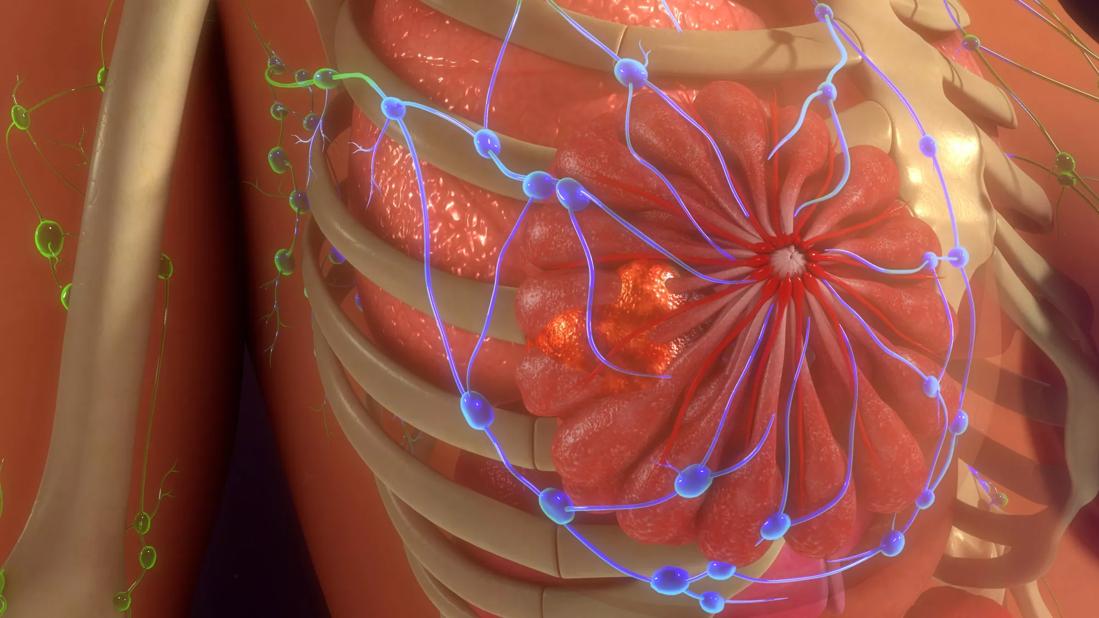
Image content: This image is available to view online.
View image online (https://assets.clevelandclinic.org/transform/71858259-d0ed-4b95-a227-26ab68726613/BreastCancerAnatomy-scaled-jpg)
Breast cancer
Immediate breast reconstruction (IBR) after mastectomy is gaining popularity, with approximately 40 percent of breast cancer patients today opting for this approach. While research indicates that IBR has no direct effect on overall or disease-free survival, wound complications following IBR are suspect.
Advertisement
Cleveland Clinic is a non-profit academic medical center. Advertising on our site helps support our mission. We do not endorse non-Cleveland Clinic products or services. Policy
Wound complications can delay adjuvant chemotherapy and radiation therapy, potentially increasing the risk of cancer recurrence. The wound itself also may increase risk — perhaps due to inflammatory response.
At least that’s what some studies indicate.
However, a new study by Cleveland Clinic breast surgeon Stephanie Valente, DO, begs to differ. Recently published in The American Journal of Surgery, Dr. Valente’s retrospective review of 458 women who had IBR at Cleveland Clinic between 2005 and 2010 found that wound complications, and the resulting delay in adjuvant therapy, were not associated with an increase in breast cancer recurrence.
“This study shows that offering a woman immediate breast reconstruction after a mastectomy does not put her at risk of breast cancer recurrence, even if she experiences a wound healing complication,” says Dr. Valente. “However, it also shows that surgical wound complications can delay subsequent treatment (chemotherapy or radiation). Therefore, evaluating patient risk factors for increased complications and making informed decisions is important.”
Of the 458 women (median age 49, median follow-up 7.6 years), 100 (22 percent) had one or more wound complications after mastectomy and IBR. That rate is consistent with other published reports, says Dr. Valente.
Complications included:
Advertisement
According to analyses, the factor most significantly associated with postoperative complication was being overweight. Patients with a body mass index (BMI) of 30 to 35 were 2.9 times more likely to have a complication than patients with a BMI less than 25. Patients with a BMI greater than 35 were 3.5 times more likely.
Patients who had a postsurgical complication did receive adjuvant therapy a median of 11 days later than patients without a complication (52 vs 41 days).
Breast cancer recurred in 42 (9.2 percent) of the study’s 458 women.
On multivariate analysis, the amount of lymph node involvement with metastatic disease was the only statistically significant factor associated with recurrence — not wound complication or delayed adjuvant therapy. Of the patients that had a wound complication, 12 percent had cancer recurrence, compared to 8.4 percent of patients who did not have a wound complication.
Also similar was time to treatment. Patients who had cancer recurrence after a wound complication received adjuvant therapy (either chemotherapy or radiation) a median of 43 days (33-57 days) after surgery. Those who had cancer recurrence but no wound complication received adjuvant therapy a median of 42 days (33-52 days) after surgery.
“Regardless of wound complications, patients in our study received adjuvant therapy within the advised 30- to 60-day treatment window,” says Dr. Valente. “That may explain why there was no difference in cancer recurrence despite the small delay in time to receive adjuvant therapy.”
Advertisement
“There are many factors that determine risk of breast cancer recurrence,” says Dr. Valente. “But our study suggests that the most significant predictor is lymph node involvement, specifically more than four nodes. Surgical wound complications delayed time to subsequent chemotherapy or radiation therapy, but patients were still able to receive treatment in an appropriate time period and, therefore, were not at an increased risk for cancer recurrence.”
Better management of smoking, diabetes and obesity can improve surgical healing outcomes, she says, noting that her study did not associate smoking and diabetes with increased complications because their presence in the cohort was quite small. Prior studies have shown that smoking increases wound complications, so Dr. Valente tends to be more cautious in offering immediate reconstruction to women who actively smoke.
“This study shows that immediate reconstruction after mastectomy for breast cancer is a safe oncologic option,” she says. “It highlights patient modifiable factors, such as obesity, that increase the risk of surgical wound complication, but is reassuring that complications themselves do not increase cancer recurrence.”
Advertisement
Advertisement

Adding 177Lu-PSMA-617 to ADT plus an ARPI cut the risk of radiographic progression or mortality by 28%

New program will help patients improve fitness and manage weight after cancer treatment

Cleveland Clinic hematologist highlights new guidelines and treatment advances in immune thrombocytopenia
NIMBLE replaces weekly tumor board delays with same-day multidisciplinary recommendations

Cleveland Clinic study provides validation for the test, which combines AI and pathological data to predict outcomes in postoperative patients
Advanced imaging technology catches metastases much earlier, allowing treatment with fewer side effects
Reduced radiation for lymph node areas reduces side effects
Large Cleveland Clinic analysis may help resolve a longstanding question over optimal fractionation
 Search