Locations:





An ICU pharmacist explains the impact of delirium on ICU patients and why there is a need for more research and improved screening tools
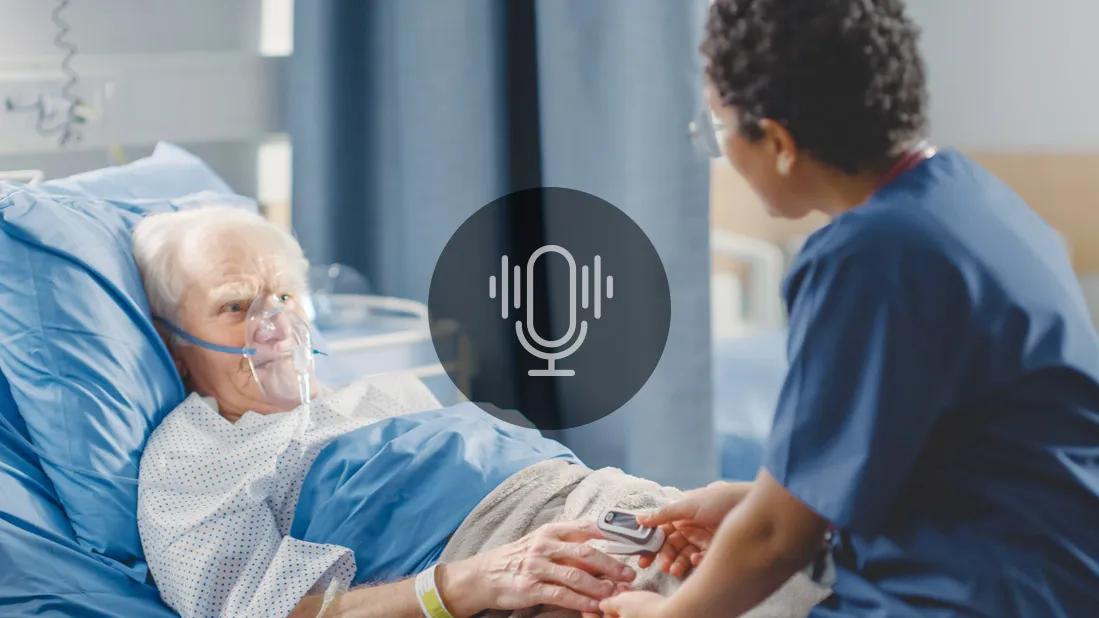
Image content: This image is available to view online.
View image online (https://assets.clevelandclinic.org/transform/6ad61d77-3363-4e8a-ad8c-ab0f6ed507da/Delirium-in-ICU)
Patient in ICU
Podcast content: This podcast is available to listen to online.
Listen to podcast online (https://www.buzzsprout.com/2250706/15924542)
Delirium, which is a fluctuating state of confusion in ICU patients or floor patients, can be challenging to diagnose, but it’s often a consequence of another medical condition. It’s believed to be the result of alterations in inflammation, which cause disruptions in neuromodulation across brain patterns.
Advertisement
Cleveland Clinic is a non-profit academic medical center. Advertising on our site helps support our mission. We do not endorse non-Cleveland Clinic products or services. Policy
A recent episode of Respiratory Exchange explores the different types of delirium, challenges associated with diagnosing and treating the condition, the need for a better understanding of delirium pathophysiology and more.
“It's difficult to tease out because we know that there are many inflammatory disease states that may put patients at a greater risk for delirium,” explains the episode’s guest, Heather Torbic, PharmD, a medical ICU pharmacist and program director for PGY2 Critical Care Pharmacy Residency Program at the Cleveland Clinic. “So it's challenging to distinguish whether that hyperinflammation is from delirium itself or some of the disease processes that may be predisposing patients to delirium.”
In the episode, Dr. Torbic explains the differences between the subtypes of delirium. Hyperactive delirium is typically the most recognizable since patients are very disoriented and display observable symptoms —they’re agitated, restless and potentially hallucinating, along with having sleep-wake cycle disturbances. Hypoactive delirium is the most common subtype, but it is also much harder to diagnose. Patients become more withdrawn and less responsive, though they may still have sleep-wake disturbances. Because patients are not necessarily agitated, it can be much harder to recognize. Patients can also have mixed subtypes with periods of both hyperactive and hypoactive delirium.
Patients with delirium may require additional and more extensive treatments during their hospital stay and after. Patients who develop ICU delirium tend to require higher levels of sedation, a longer ICU and hospital stay, and they have higher mortality and increased risk of long-term cognitive impairment.
Advertisement
“[Patients with delirium] go on to need additional support following an ICU stay, especially with the long-term cognitive impairment, increased risk of dementia and decreased functional status, so often requiring more support or need for a long-term care facility,” says Dr. Torbic. “Ultimately, this creates a bigger financial burden for the healthcare system with a longer hospital length of stay and need for more support following ICU discharge.”
Because of these consequences, Dr. Torbic stresses the need for more research and a better understanding of risk and treatment. While there are leads with neurotransmitter modulation and inflammatory markers, there is still a need for greater insight into the etiology and pathophysiology of delirium.
“I think we need more objective tools for screening,” says Dr. Torbic. “It would be helpful if we had laboratory values like biomarkers as well that we could send off to better understand a patient's risk of delirium, as well as their trajectory once they do have delirium.”
To learn more about diagnosing and treating delirium, click the podcast player above to listen to the episode now, or read on for a short, edited excerpt.
More Respiratory Exchange episodes are available at https://my.clevelandclinic.org/podcasts/respiratory-exchange or wherever you get your podcasts.
Abhijit Duggal, MD (podcast host): Now, you brought up the fact that delirium usually is a consequence of underlying medical problems, and also in your discussion about the pathogenesis, you again brought up the factor around inflammatory conditions kind of really causing things. What are the risk factors associated with delirium?
Advertisement
Heather Torbic, PharmD: When I think about risk factors for delirium, I think about patient-specific risk factors. There are patients who are presenting already with risk factors that are known to be associated with an increased risk of delirium. So, things like having dementia at baseline, older patients, a history of hypertension or alcoholism or other history of using illicit substances — those are automatically going to predispose patients to increased risk of delirium. But then we also know that patients have an increased risk of delirium due to certain medical conditions that they're now experiencing. So, patients who are experiencing respiratory failure and have lower oxygen levels, patients who have sepsis or an infection, patients with just an overall higher severity of illness, as I mentioned previously, are going to be at a greater risk of delirium.
And then of course, medications in and of themselves, so some of our sedative medications, benzodiazepines — these medications are going to predispose patients to increased risk of delirium. But on the flip side of things, if patients are using medications at home, there can also be withdrawal of these substances, which also predisposes patients to delirium as well.
Dr. Duggal: Thank you so much. Dr. Torbic, how do we diagnose delirium in our patients?
Dr. Torbic: We actually have a few validated bedside tools. The Intensive Care Delirium Screening Checklist and the Confusion Assessment Method for the ICU are two validated scores that we have available. The nurses or clinicians at the bedside will typically use these tools every eight to 12 hours in patients. But the challenge with using these tools is that we're just getting a snapshot at that time of whether the patient is delirious or not, and as I mentioned previously, it's a waxing and waning state of confusion.
Advertisement
I think that's another reason why the incidence of delirium is so variable, because we're only capturing small time periods where patients are being evaluated for delirium in the ICU.
Of course, as I mentioned previously, hyperactive delirium is going to be much more recognizable to clinicians, and so we may place a greater emphasis on evaluating those patients. Whereas the patients with hypoactive delirium may be just more withdrawn, and we may be less likely to evaluate those patients, often missing a delirium diagnosis. I think that can ultimately lead to long-term consequences, particularly in those patients with hypoactive delirium.
Dr. Duggal: Given that we have such a high prevalence of delirium, and we have a lot of risk factors that you just described that exist in a lot of our patients, how can we prevent delirium in our patients?
Dr. Torbic: That's a great question. Although data is limited, there have actually been a number of studies that have looked at medications to prevent delirium. These studies have primarily focused on looking at both first- and second-generation antipsychotics, which, again, as I mentioned, these medications are of interest because we believe that there are alterations in neurotransmitters, like dopamine, serotonin and histamine. And so, the thought process behind these studies was that if we use antipsychotics in this setting, we can alter neurotransmitter levels in these patients and potentially prevent delirium before it even occurs.
Unfortunately, the data were largely negative; these medications did not actually prevent delirium, and in fact, they're associated with many adverse effects and downstream effects of continuing these medications if not intended to be continued. So, ultimately, we rely on guidelines from The Society of Critical Care Medicine, which has evaluated this data that we do have available, and they recommend against the initiation of pharmacologic management to prevent delirium.
Advertisement
I think the greatest tool that we have available to us now is nonpharmacologic intervention. So making sure that we're evaluating patients' medication lists while they're in the ICU, minimizing medications that we know can increase the risk of delirium, lightening sedation, decreasing exposure to sedation within the ICU, trying to keep patients on a normal sleep-wake cycle, getting physical therapy involved early and working with physical therapy to early mobilize our patients. Also, trying to reorient the patient using hearing aids and eyeglasses, if that's something the patients use at baseline, those should be the things that we prioritize to prevent delirium in our patients, rather than pharmacologic interventions.
Advertisement

Free portal helps researchers classify and share data using the IC-CoDE framework

Initial results show good accuracy of scalable, low-cost tool for flagging cognitive decline

Cleveland Clinic Cognitive Battery identifies at-risk patients during Medicare annual visits

Structured data helps identify older adults at risk for poor outcomes, defines patients who require more comprehensive assessments

Self-administered tool can be completed in 10 minutes in waiting room

Collaboration with AI startup promises to reshape neurocritical care monitoring at scale

What hospital clinicians get right — and wrong — when diagnosing depression and delirium

Outpatient referral order connects care teams before patients’ ED arrival
 Search