Locations:





Implications for surgical decision-making and patient management
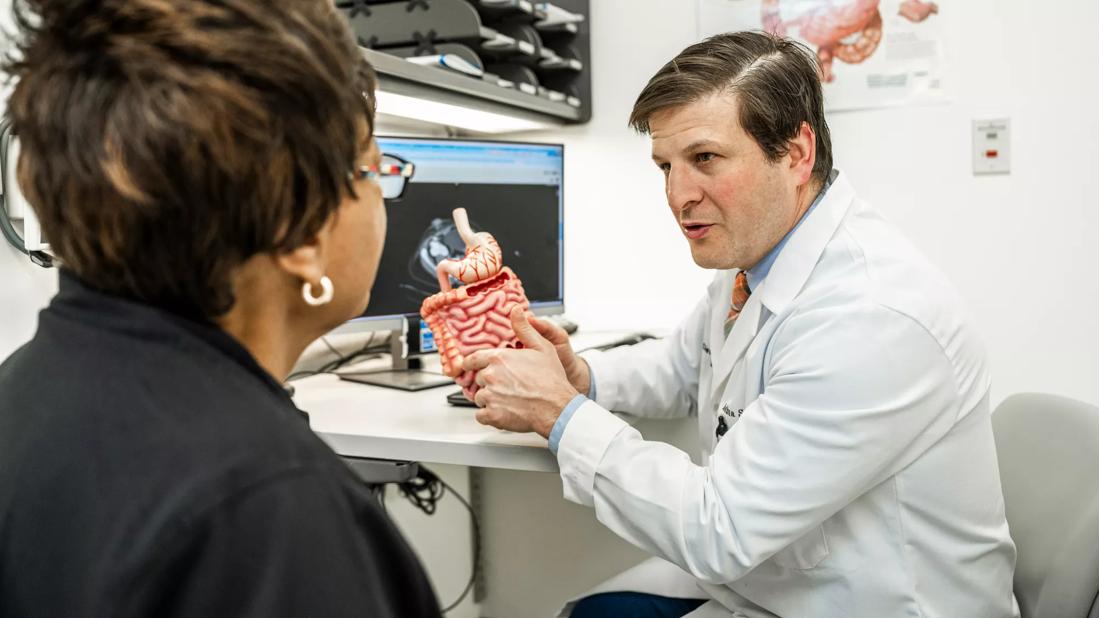
Image content: This image is available to view online.
View image online (https://assets.clevelandclinic.org/transform/d370e2f0-2f5d-4b1a-8cbc-1acd8e3bd390/DDI_4894461_05-29-24_044_MLC)
Dr. Sommovilla speaking with patient
When managing patients with familial adenomatous polyposis (FAP), much of the decision-making comes down to balancing surgical risk, quality-of-life preservation and minimizing cancer risk. But due to the near universal-risk of colorectal cancer if left untreated, almost all patients with FAP undergo surgery, typically either total abdominal colectomy with ileorectal anastomosis (TAC/ IRA) or total proctocolectomy with IPAA (TPC/IPAA).
Advertisement
Cleveland Clinic is a non-profit academic medical center. Advertising on our site helps support our mission. We do not endorse non-Cleveland Clinic products or services. Policy
Most colorectal surgeries are now performed via minimally invasive surgical (MIS) approaches. However, postoperative outcomes following TAC/IRA or TPC/IPAA are not fully understood. A new study from Cleveland Clinic, recently published in Diseases of the Colon & Rectum, compared 30-day and 90-day postoperative outcomes between TAC/ IRA and TPC/IPAA in the era of MIS.
“Although it’s clear with many patients with FAP that a protectomy is necessary due to disease severity, many others fall into a gray area where there may be debate over whether this treatment is needed,” explains Josh Sommovilla, MD, a colon and rectal surgeon at Cleveland Clinic and senior author of the study. “A better understanding of the short-term risk of these surgeries could give us better insight and help clinicians’ decision-making in certain situations. That’s what we hoped to achieve with our research.”
The study included 217 patients — 146 (67.3%) of whom underwent ileorectal anastomosis and 71 (31.7%) underwent IPAA. Of these 217 patients, 85.3% underwent minimally invasive surgery and 14.7% underwent open surgery. Most of the patients undergoing IPAA (87.3%) had an ileostomy performed. The median age at index surgery was 23 years, and the TAC/IRA group was older (26 years) than the TPC/IPAA group (20 years).
Most patients with an attenuated phenotype underwent TAC/IRA compared to TPC/ IPAA (13.7% vs 2.8%, P = .01), and the TPC/IPAA group had more patients with 20 or more rectal polyps preoperatively (24.6% vs 77.4%, P < 0.01). Patients who underwent TAC/IRA were also less likely to be current or former smokers compared to patients who underwent TPC/IPAA (16.4% vs 31%, P = .02).
Advertisement
The research group also reviewed postoperative information, which included length of hospital stay and complications, which followed the National Surgical Quality Improvement Program. They found no significant difference in median hospital length of stay between the groups (five days with TAC/IRA, and six days with TPC/IPAA). The group also did not find any significant difference in the number of patients who developed any complication within 30 days (P = .66) or 90 days (P = .31).
Among both groups, the most common complication within 90 days was postoperative ileus, occurring in 34.2% of TAC/IRA patients compared to 21.2% of TPC/IPAA patients. However, the comparison between groups was not statistically significant (P = .06). The most common 90-day severe complication between the groups was anastomotic leak (4.8% vs 7.0%).
Overall, there were 2 (1.4%) mortalities after TAC/IRA. One patient died of cardiac arrest within 30 days of index surgery due to an unknown cause, and the other patient died of sepsis related to pneumonia within 90 days of index surgery.
“There were no mortalities after TPC/IPAA, but patients were more likely to be readmitted within 30 days and 90 days following the procedure,” says Dr. Sommovilla. “The most common reason for readmission in this group was small bowel obstruction, which was also the most common reason for reoperation. Our results indicated that TPC/IPAA surgeries tend to be more complicated — they have significantly longer operative times, higher estimated blood loss, longer hospital stays, and unplanned readmissions and reoperations despite the wide use of ileostomies in the majority of IPAA patients.”
Advertisement
Multivariate analysis indicated that the odds of developing a 90-day complication significantly increased in patients who had a laparotomy (OR 6.8; 95% CI, 0.7–3.5). Additionally, patients with a smoking history had marginally decreased odds of developing a 90-day complication (OR 0.4; 95% CI, –1.8 to –0.1).
“At the end of the day, there is a lot to consider when having shared-decision-making conversations with patients with FAP,” says Dr. Sommovilla. “While our study focused on postoperative outcomes, that is just one part of the conversation. These conversations really need to be tailored to every patient, and all of the important factors, including cancer risk reduction, functional outcomes, colorectal polyp burden, genotype, desmoid disease, age and postoperative complications, need to be considered. Both of these surgical approaches have individual risks and benefits that should be considered during the surgical decision-making process.”
Dr. Sommovilla is also the senior author on related research around FAP that will be presented at this year’s ASCRS Annual Meeting in Washington D.C, “Progression of Rectal Polyposis following Ileorectal Anastomosis in FAP.”
Advertisement
Advertisement

Landmark trial data suggest appendectomy may reduce relapse and improve remission rates in select patients

The new appointee brings special expertise in hereditary and young-onset colorectal cancer

Although the number of surgeon-scientists in colorectal surgery is small, a Cleveland Clinic colorectal surgeon-scientist shares his thoughts on what surgeon-scientists bring to the table

Cleveland Clinic researchers developed an objective tool to assess response following total neoadjuvant therapy.

Elevated risk persists for more than a year after surgery, plus more insights from the first study to quantify risk specifically for CRC surgery

Key points highlight the critical role of surveillance, as well as opportunities for further advancement in genetic counseling

Simple score uses clinical factors to identify patients who might benefit from earlier screening

Radiation to the pelvis from cancer treatment made the traditional treatment path unavailable
 Search