Locations:





Landmark trial data suggest appendectomy may reduce relapse and improve remission rates in select patients
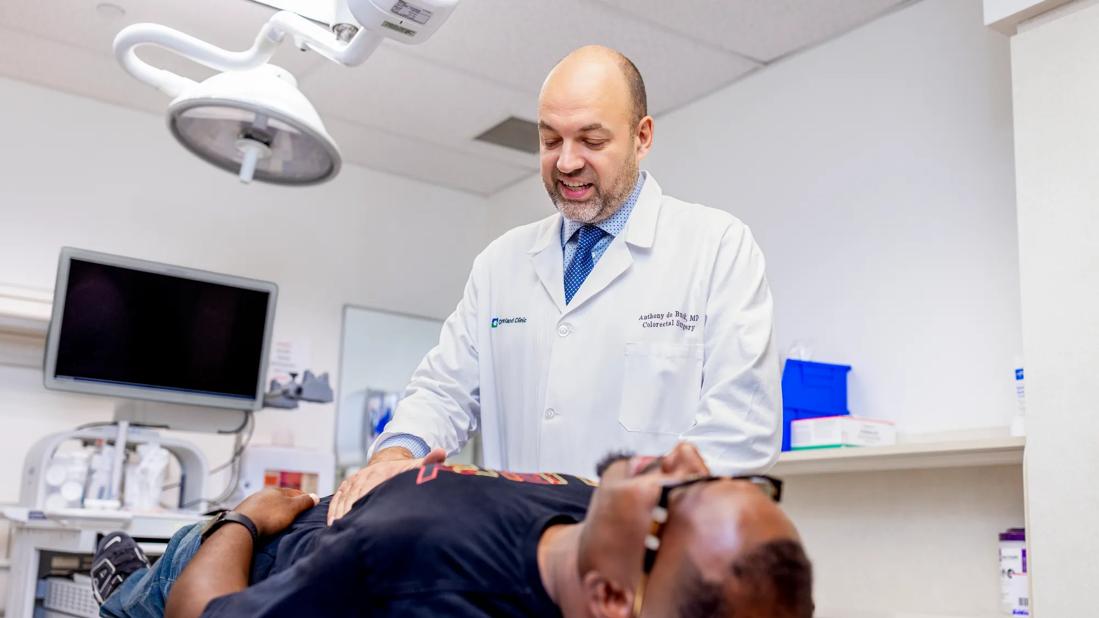
Image content: This image is available to view online.
View image online (https://assets.clevelandclinic.org/transform/a83f1472-1d0c-458f-9707-9e3ba8472c2b/DDI_7064608_10-09-25_010_LDJ)
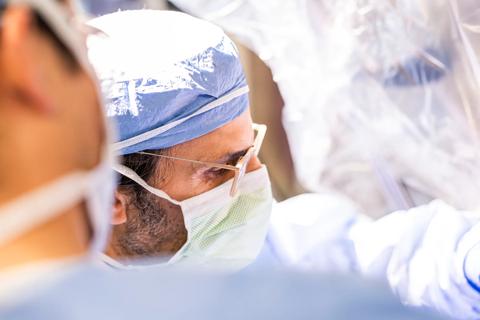
Dr. de Buck with patient
Following results of the COSTA and ACCURE trials, appendectomy has emerged as a potential treatment option for select patients with ulcerative colitis. Although intentional appendectomy remains extremely rare as an adjunctive UC treatment in the U.S., Cleveland Clinic is now among the first few medical centers offering it within a structured clinical protocol.
Advertisement
Cleveland Clinic is a non-profit academic medical center. Advertising on our site helps support our mission. We do not endorse non-Cleveland Clinic products or services. Policy
“Cleveland Clinic's decision to offer this puts them among a very small group of early adopters in the U.S.,” explains Anthony de Buck, MD, Section Head of Inflammatory Bowel Disease at Cleveland Clinic. “At present, only a very small number of centers in the United States appear to be offering appendectomy as a structured treatment option, so this is genuinely a forward-looking move.”
Dr. de Buck says that Cleveland Clinic’s decision to adopt appendectomy as a UC treatment came from the results of the two trials. The landmark ACCURE trial, published in The Lancet Gastroenterology & Hepatology in 2025, demonstrated that adding laparoscopic appendectomy to standard medical therapy significantly reduces clinical relapse at 12 months and improves quality of life — findings described as an important advance in UC treatment.
The multicenter, prospective COSTA trial, also published in The Lancet Gastroenterology & Hepatology, was released in early 2026. It compared UC remission rates between patients undergoing appendectomy and patients switching to a JAK inhibitor. It found that almost one-third of patients in the appendectomy group were in clinical remission without therapy failure, compared to 12% in the JAK inhibitor group.
“We reacted pretty quickly; we treated our first patient in early February, only a few weeks after the publication of the study,” says Dr. de Buck. “We came together as a multidisciplinary group, looked at the results, discussed them and put together a clinical protocol to see how we would treat those patients in a standardized and safe way.”
Advertisement
He adds, “Additionally, and this is for quality monitoring, we also record the outcomes of those patients to ensure they do well after the surgery. So, we have taken a very systematic and consensus-based approach with appendectomy and ulcerative colitis.”
Dr. de Buck says that while the biologic rationale for why appendectomy improves UC symptoms isn’t fully understood, the hypothetical answer is that the appendix plays a role in the immune response in the bowel, especially in the colon. When patients undergo an appendectomy, and the appendix is examined under the microscope, the appendix contains substantial immunologically active tissue.
“We think that the appendix either triggers or controls the immunological response in the colon,” he explains. “The other way we think that the appendix plays a role is in controlling the microbiome in the colon, which is usually dysregulated in patients with UC. So, while we still don’t completely understand the connection, we believe that the appendix plays some role in the disease course of UC, and according to those studies, it has an impact on the disease course in patients.”
While the potential of appendectomy is exciting for patients, clinicians need to remember that patient selection is still key for achieving the best outcomes.
“At Cleveland Clinic, our patients typically fall into one of two groups: those with active disease who are hoping for remission, and those already in remission who are hoping to maintain it,” explains Dr. de Buck.
Advertisement
Current evidence suggests that patients with moderate-to-severe ulcerative colitis who remain symptomatic despite medical therapy, have not undergone prior major abdominal surgery, and are not requiring immediate colectomy are the most likely to benefit from appendectomy. Patients may be on prednisone up to 20 mg daily, but higher doses are generally avoided because of the increased risk of surgical complications.
Not all patients with ulcerative colitis are candidates for appendectomy. Patients with disease severe enough to require colectomy, as well as those with dysplasia or precancerous lesions in the colon, are generally better served by other treatment approaches.
“Appendectomy is not intended to replace established medical therapies or colectomy when indicated, but rather to serve as an additional treatment option for carefully selected patients,” says Dr de Buck. “We’re still gathering data and collaborating with other medical centers to evaluate long-term outcomes and identify which patients benefit most.”
While Cleveland Clinic is among the first major medical centers to offer appendectomy for UC, Dr. de Buck expects that more medical centers will follow, even if there is some current apprehension.
“This is something that came up at our last colorectal surgery society conferences, and there was a debate about appendectomy for UC,” says Dr. de Buck. “When you look at why surgeons and even gastroenterologists are hesitant, the main reason they say is that they need better data. Well, the data we have is actually very good — it's a randomized, controlled trial (for the ACCURE trial) and a non-randomized prospective comparative trial (COSTA trial) done by highly reputable investigators.”
Advertisement
“I think widespread adoption hinges on continued validation of the available evidence and broader awareness of appendectomy as a treatment option for selected patients with ulcerative colitis,” says Dr. de Buck. “The procedure has already been recognized in major European guideline recommendations, and ongoing studies will help further define its place within the treatment algorithm.”
Appendectomy is a relatively inexpensive and straightforward procedure that may offer substantial value for selected patients with ulcerative colitis. Dr. de Buck notes that the procedure has the potential to reduce disease burden and expand treatment options for patients who might otherwise require escalation of medical therapy. Ongoing studies will help further define its role in the management of ulcerative colitis.
Dr. de Buck says more research is still needed to help optimize patient selection and timing when it comes to appendectomy for UC. Cleveland Clinic is in the process of collecting specimens and blood samples from appendectomy patients for research and is collaborating on a global study to identify which patients benefit most.
“Patients are understandably excited about the potential of appendectomy,” says Dr. de Buck. “But as surgeons, we need to be thoughtful. There’s still a lot we don’t fully understand, and not every patient will benefit. Some patients will still be better served by colectomy, so it’s unreasonable to think appendectomy can solve everything. For the right patients, however, it’s an exciting option. It’s a simple, cost-effective procedure that may help achieve remission or reduce reliance on medication, which is meaningful for both patients and surgeons.”
Advertisement
Advertisement
Implications for surgical decision-making and patient management
The new appointee brings special expertise in hereditary and young-onset colorectal cancer

Although the number of surgeon-scientists in colorectal surgery is small, a Cleveland Clinic colorectal surgeon-scientist shares his thoughts on what surgeon-scientists bring to the table
Patients have a significantly higher risk of developing fistulas and experiencing future Crohn’s-like changes
Cleveland Clinic researchers developed an objective tool to assess response following total neoadjuvant therapy.

Retrospective analysis looks at data from more than 5000 patients across 40 years

The Integrated Program aligns IBD care and research across Cleveland Clinic locations

Cleveland Clinic and Johns Hopkins collaboration could help meet need for new therapies
 Search