Locations:





Frontline listening and engagement are crucial
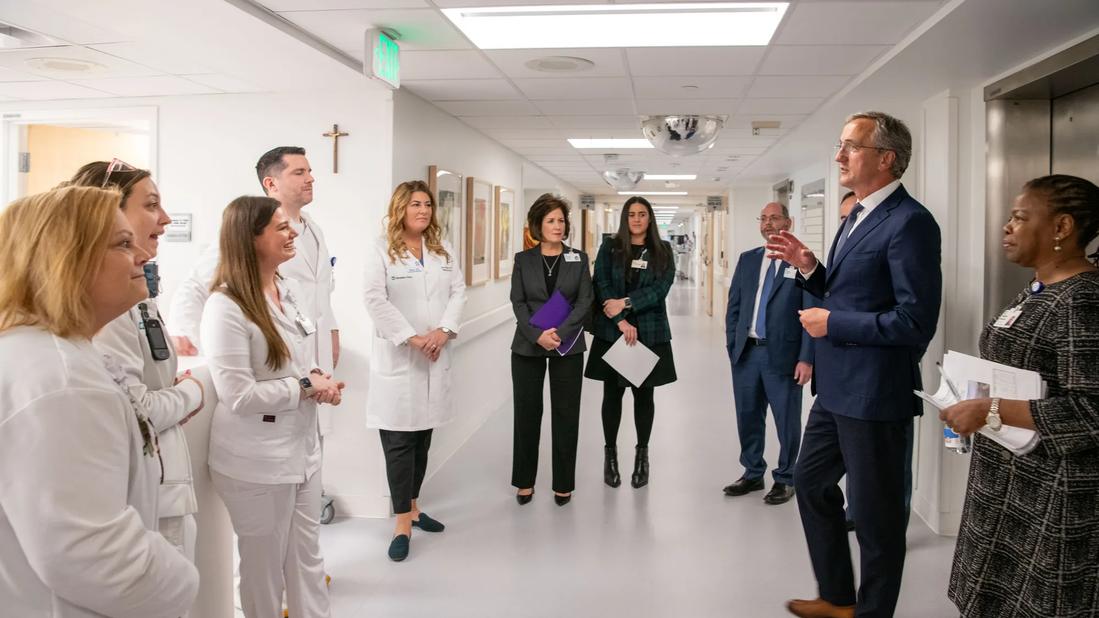
Image content: This image is available to view online.
View image online (https://assets.clevelandclinic.org/transform/e02127d7-f035-4bab-a228-5b235e50637c/CCC_4078997_11-06-23_024_DG-jpeg)
Leader rounding
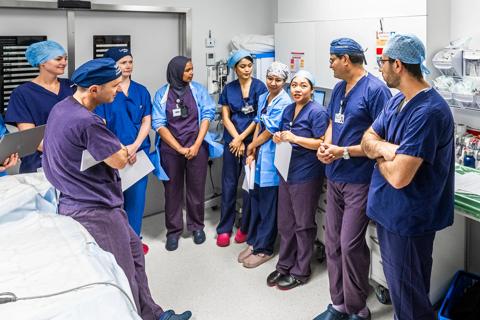
During leader rounding at Cleveland Clinic’s Main Campus, caregivers on one unit recently raised concerns about delays in bed alarms. Flagged as a potential safety issue, the shared information was immediately escalated, and steps were taken the same day to ensure proper alarm function on the unit — and all other hospital units.
Advertisement
Cleveland Clinic is a non-profit academic medical center. Advertising on our site helps support our mission. We do not endorse non-Cleveland Clinic products or services. Policy
This is one example of many that depict the benefits of leader rounding, which is used by healthcare organizations to foster connections and enhance care. Cleveland Clinic first introduced it in 2010 to help drive experience improvements for patients and frontline caregivers.
Today, leader rounding is offered in collaboration with safety, quality and the caregiver office to support and improve patient care, increase caregiver engagement and recognition, enhance patient and caregiver experience, and educate and engage the organization’s board members.
Rounds are held monthly across all global locations. On average, 250 leaders — who hold a director position or higher — participate. Leaders can also nominate high-potential caregivers with leadership aspirations to attend, and board members have an open invitation. Rounds are two-fold — with a patient and a caregiver component. In 2025, nearly 3,290 leaders conducted approximately 1,100 patient rounds and 1,800 caregiver rounds.
“The stories that are generated through these interactions are really powerful and reinforce why we do what we do every day,” one leader recently commented.
Standardizing across locations, including the week, day and time rounds are held, has amplified Cleveland Clinic’s program. “The standardization and rigor with which we conduct rounds differentiates our program,” says Kathleen Ann Robbins, Director of Patient Experience at Cleveland Clinic.
No matter where rounding is being held across the health system, the content theme and rounding process are the same. Every session includes a 30-minute presentation, 40 to 60 minutes of active rounding in a predetermined area, and a 15-minute debrief and discussion.
Advertisement
“We align our rounding themes to our organizational values or high-priority initiatives,” explains Robbins. “This lets us compare how different locations are doing, so we can spot the top performers and figure out where we need to focus more attention.”
As part of Cleveland Clinic’s caregiver listening strategy, rounding themes reflect other intentional discussions that leaders are having with caregivers across the organization.
“We also conduct monthly leader-guided discussions at all levels of the organization,” shares Robbins. “In these, leaders meet with their teams to discuss a specific topic and those align with the value or initiative at leader rounding.”
Depending on leader availability and unit size, anywhere from 10 to 70 leaders may round per month. Before they do, leaders meet in a conference room or other dedicated space for a presentation that helps familiarize them with the month’s rounding theme. They are provided tips on how to approach and garner insight on the theme during rounds.
“Presentation templates are sent in advance to the locations where rounds are being conducted to incorporate local details, but the core of the presentation reflects consistent messaging,” explains Robbins.
Empathy, which is a Cleveland Clinic value, was a rounding theme in 2025. Some of the key points included in the empathy presentation were:
Advertisement
“For this theme, spiritual care leaders shared an overview about how empathy supports patients and caregivers and talked about empathy training and ways leaders can demonstrate it to their teams and grow their skills,” says Robbins.
A questionnaire form is provided, which is also accessible via a mobile QR code, and guides leaders when rounding. “The questions asked are the same regardless of location,” explains Robbins.
For the empathy theme, some of the caregiver questions were:
Patient questions included:
When leaders commit to rounding, they have four primary goals:
“Leaders spend about half the round building connections, asking caregivers the outlined questions and learning about their days,” says Robbins. “The other half is spent connecting and building relationships with patients.”
Leaders speak with as many patients and caregivers as possible — with most finding the experience beneficial. One frontline caregiver recently stated, “It gives us a chance to voice out any concerns or any improvements that we need to run our floor really well.”
Advertisement
Patients who experience leader rounding often express appreciation for the extra attention to their personal needs and safety. One person remarked, “It makes me feel good that I’m a patient, but also that they’re still thinking about me.” Another said, “The top man coming and talking to you, that’s wonderful!”
Leaders aim to collect actionable items, including improvements. Findings are shared with all rounding leaders in a post-rounding debrief. “Because information is entered into the electronic form in real-time — and is done at all locations — the findings that are collated and displayed in the debrief represent all rounded units across the health system,” shares Robbins.
Depending on what is uncovered, leader response is either immediate or noted for follow up. “Possible safety issues get immediate attention,” she says. “Non-urgent matters like feedback that a wayfinding sign is confusing, gets recorded and we look for trends.”
While the concept of leader rounding isn’t new, there’s value in keeping programs fresh. At Cleveland Clinic, caregiver recognition has become a highly effective rounding component. During pre-round presentations, a caregiver at each location who has exuded excellence in the rounding theme is recognized for their efforts and presented with a certificate.
Healthcare partners are another successful enhancement. Partners are former patients who join in rounding experiences to offer an added perspective and help improve care. “This helps ensure that we are listening and learning from the patient’s perspective throughout,” shares Robbins.
Advertisement
The newest enrichment, which we introduced this year, is "Walk in a Patient’s Shoes". During those rounds, leaders will be given practical scenarios that are executed as they would be for a patient. They may be told they require a low-sodium diet and instructed to choose lunch from the patient menu, which is then delivered. They could act as a family member who has a complaint about caregiver-patient communication, and then spend an hour meeting with an ombudsman. The sister effort, “Walk in a Caregiver’s Shoes,” has been part of leader rounding for the past decade.
To garner insight on other experiences, Cleveland Clinic expanded its leader rounding in 2025 to non-clinical inpatient areas, such as billing and waiting rooms. “We’ve received positive feedback from caregivers in those areas and more patient insights,” says Robbins.
Leader rounding is all about building crucial connections that enable leaders to drive changes, improvements and positive results for patients, caregivers and organizations. As another rounding leader stated: “It allows me to connect to where the work is, so I know when I’m sitting around the table, I’m advocating for the right things.”
Advertisement

Interdisciplinary program fosters high-performance teams

1:1 guidance benefits individuals and organization
Strategies for building connections, staying present
Development leader harnesses shared purpose to fuel meaningful giving

Expert tips from Cleveland Clinic’s Chief Legal Officer

Dedicated leader shares her passion for quality, education and professional development
Groups move the metrics in environmental services and sterile processing
Certified coaches help hospital teams build trust, improve communication
 Search