Locations:





Research demonstrates cirrhosis regression in one-third of patients, with higher rates using alternative assessment
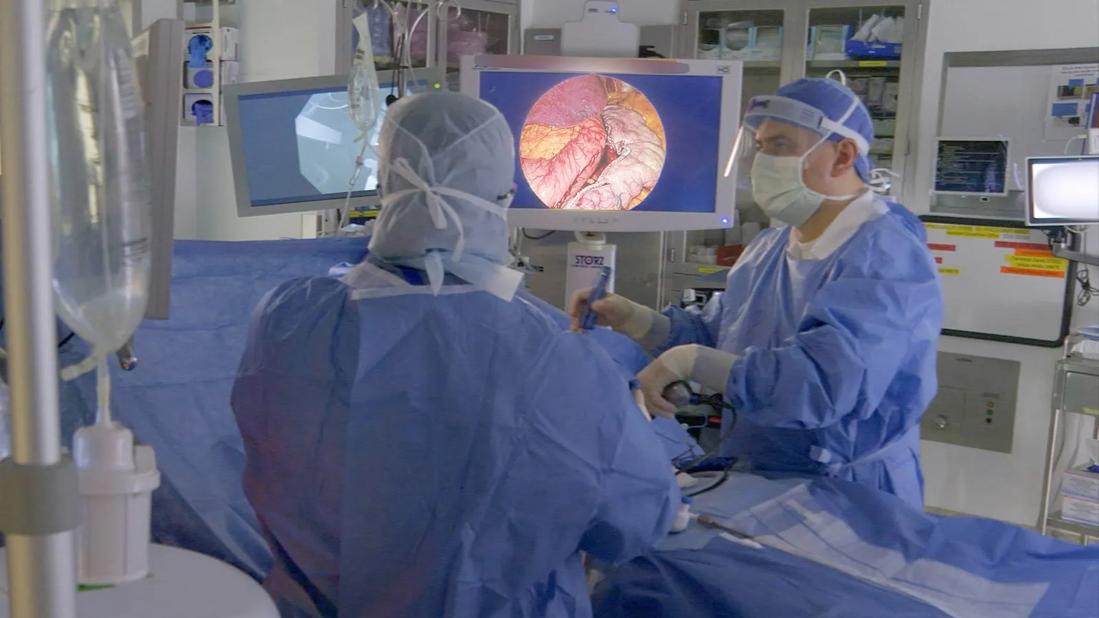
Image content: This image is available to view online.
View image online (https://assets.clevelandclinic.org/transform/440264a8-92fa-4a2b-b9ad-5d8f12c1d774/Dr-Aminian_surgery)
Dr. Aminian in OR
MASH cirrhosis has traditionally been considered irreversible. However, new data from investigators at Cleveland Clinic, presented at Digestive Disease Week 2026, demonstrate that cirrhosis regression can occur following metabolic and bariatric surgery (MBS).
Advertisement
Cleveland Clinic is a non-profit academic medical center. Advertising on our site helps support our mission. We do not endorse non-Cleveland Clinic products or services. Policy
In a retrospective cohort of patients with biopsy-proven compensated MASH cirrhosis undergoing MBS, investigators evaluated long-term outcomes using paired liver biopsies obtained at the time of surgery and at follow-up. Among 30 patients with a median follow-up of more than six years, cirrhosis regression, defined as improvement to a less advanced stage of fibrosis, was observed in one-third of patients.
“These findings challenge the long-held view that cirrhosis is a fixed, end-stage condition,” says Sobia Laique, MD, Director of the Multidisciplinary MASLD Center. “In selected patients, sustained metabolic intervention can lead to meaningful structural improvement in the liver.”
These findings build on prior work from the same investigative team demonstrating that MBS alters the clinical trajectory of MASH cirrhosis. In the SPECCIAL study, published in Nature Medicine, MBS was associated with a 72% reduction in major adverse liver outcomes, including liver transplantation, liver cancer, and liver-related death, and an 80% reduction in hepatic decompensation compared with nonsurgical management.
“These findings showed clear clinical benefit,” says Ali Aminian, MD, Director of the Bariatric and Metabolic Institute and senior author on the study. “This study helps contextualize those outcomes, suggesting that regression of cirrhosis may be occurring in a subset of patients.”
In addition to cirrhosis regression, patients showed marked improvement in steatohepatitis, including reduced fat accumulation and liver inflammation, reflecting improvement in the underlying disease process driving progression to hepatic decompensation. Importantly, the extent of observed cirrhosis regression varied by assessment method. Using the NASH Clinical Research Network (CRN) staging system, cirrhosis regression was identified in one-third of patients.
Advertisement
In contrast, alternative approaches that better capture regression within cirrhosis, such as the Beijing classification, suggested higher rates, with regressive features observed in up to 60% of patients. This suggests that traditional stage-based systems may underestimate the extent of recovery following metabolic intervention. Exploratory analyses further suggested that greater weight loss was associated with regressive features when assessed using these approaches, underscoring the importance of how fibrosis remodeling is measured.
Taken together, these findings suggest that MASH cirrhosis may be a dynamic, modifiable disease rather than an irreversible endpoint. Given the limited efficacy of current pharmacologic therapies in compensated MASH cirrhosis, these data support MBS as a disease-modifying strategy in carefully selected patients.
The study, “Can Metabolic Surgery Regress MASH Cirrhosis? Evidence From Paired Biopsies,” was presented at the 2026 Digestive Disease Week Annual Meeting.
The group has established a dedicated metabolic biorepository, comprising patient tissue and biospecimens, to better define the biological mechanisms underlying cirrhosis regression following MBS and to identify predictors of treatment response. Separately, planned studies include a head-to-head comparison of MBS and GLP-1–based therapy in patients with MASH cirrhosis, as well as expansion of surgical strategies in patients with compensated cirrhosis and esophageal varices, including evaluation of staged approaches such as transjugular intrahepatic portosystemic shunt followed by sleeve gastrectomy.
Advertisement
The inaugural Cleveland Clinic Multidisciplinary MASH Conference 2026 will be held in August 2026, bringing together experts across specialties to address the full spectrum of MASH and advance multidisciplinary care.
Advertisement
Advertisement

Multidisciplinary framework ensures safe weight loss, prevents sarcopenia and enhances adherence

Findings could help clinicians make more informed decisions about medication recommendations

Findings are first to provide underlying explanation, linking the diagnosis to high-immune activation and worse clinical outcomes
Histotripsy is noninvasive and may generate abscopal effect

IBAT inhibitors, elastography and more
New device offers greater tumor control for malignant liver lesions

Reviewing how the drug can be incorporated into care
Standardized and collaborative care improves liver transplantations
 Search