Locations:





Optimal well-being requires caregivers to leave work at work

Image content: This image is available to view online.
View image online (https://assets.clevelandclinic.org/transform/9ca7af6e-9267-4c38-8a55-508df4bce73a/nurses-give-yourself-950172760)
Gardening and wellness
For many nurses and other caregivers, the end of a shift does not always mean the end of the mental or emotional aspects of the shift. It can be difficult to turn off “work mode” and shut down stress when the day is done, but it’s worth the effort to hone that skill.
Advertisement
Cleveland Clinic is a non-profit academic medical center. Advertising on our site helps support our mission. We do not endorse non-Cleveland Clinic products or services. Policy
“Giving yourself permission to shift mentally from work to home is so important,” says Rose Hosler, BSN, HNB-BC, HWNC-BC, Healing Service Coordinator at Cleveland Clinic. “Make a conscious effort to tell yourself it is OK to leave it behind. Tell yourself you do not need to take your work home with you.”
Hosler’s advice corresponds to a helpful tool called the After Work Checklist, developed by the Well-Being Initiative, a partnership of the American Nurses Foundation and other leading nurse organizations to offer resources that focus on caring for nurses.
The Well-Being Initiative’s After Work Checklist outlines steps to decompress after work.
Review. Acknowledge a challenge you faced, take a deep breath and let it go.
Hosler says to think of this step as “releasing.” She suggests that as you leave work and head for home, think about how your day has been, acknowledge what happened in it and then let it go. A mantra such as “I am leaving work at work” can help you release the events of the day and transition your mindset.
Reflect. However small, consider and appreciate three positives in your day.
This step is about gratitude, Hosler says. Recite an affirmation, such as “I did the best I could with what I had today.” Take time to honor and appreciate your colleagues and the patients you cared for and that you were able to show up and do your work today.
Regroup. Offer support to your colleagues and ask for help when you need it.
Being willing to speak up and ask for help when you need it is big, Hosler says. She suggests thinking about ways you can support colleagues and how to ask them for help when you need it. Also, take time to learn about resources available through your workplace, such as employee assistance and wellness programs. They are there to support you.
Advertisement
Re-energize. Turn your attention to home. Focus on relaxing and resting.
In this step, Hosler says, it’s important to first be sure you have transitioned to a present mindset in which you are no longer at work. Process your day, even if you must talk to yourself in the car during your commute. When you get home, stop and take a few breaths after you walk in the door to allow peace and calm to settle within. Say something such as “I am home and it feels good,” or “This is where my focus is.” Then be present in your own space and do your best to enjoy it. Your mind and body will re-energize if you allow yourself to be fully aware and present.
Advertisement
Advertisement

Howley ASPIRE Program prepares caregivers for the professional road ahead

Specialized training prepares caregivers to address the unique physical and emotional needs of young patients

Using meticulous preparation and teamwork to manage critically ill patients in constantly changing environments

Translating clinical questions into meaningful, sustainable change

Guidance for creating a relevant framework that reflects organizational values, supports professional practice

Helping patients recognize respiratory changes, navigate treatment barriers and stay connected to their clinical team
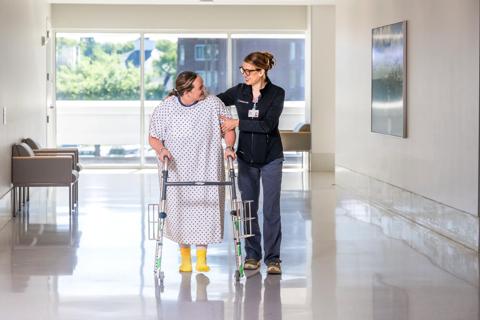
Initiative provides hands-on opportunities to promote early, progressive activity

Continuing to grow by following the right path at the right time
 Search