Locations:





How Cleveland Clinic’s facility dog is enhancing caregiver wellness
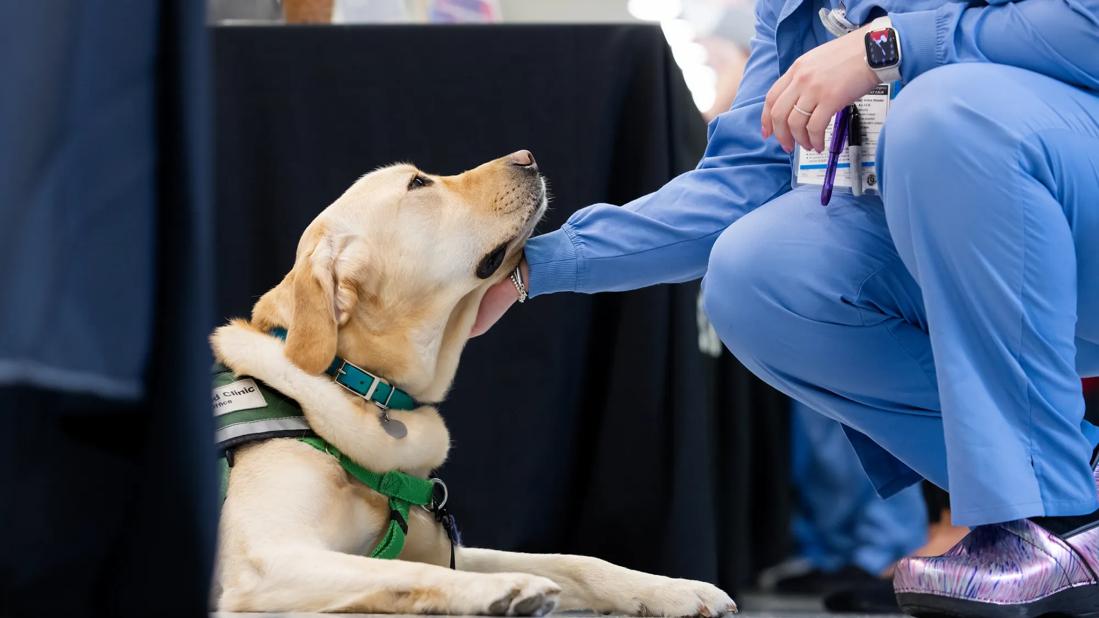
Image content: This image is available to view online.
View image online (https://assets.clevelandclinic.org/transform/2addca24-8904-411b-bac4-da4195fad68e/OPR_8154509_05-11_26_1138_AMO)
Walker the therapy dog
For caregivers navigating a demanding shift, a few minutes with Walker can provide a welcome change of pace. Cleveland Clinic’s facility dog is at the heart of Paws for Caregivers, a program launched in November 2024 to promote staff well-being and create moments of comfort, connection and joy during the workday.
Advertisement
Cleveland Clinic is a non-profit academic medical center. Advertising on our site helps support our mission. We do not endorse non-Cleveland Clinic products or services. Policy
“The program is a collaborative endeavor focused on affirming caregivers and providing them with an opportunity to separate from their immediate duties,” explains Michael Curry, Walker’s handler and a Canine-Assisted Support Specialist. “The interaction might only be two minutes or 30 seconds, but it’s amazing to see the positive impact even brief interactions can make.”
Unlike volunteer therapy dogs, facility dogs are specifically trained to work in professional settings, including hospitals. Walker was raised and trained through Canine Assistants in Atlanta, Georgia, where he became accustomed to the sights, sounds and demands of a healthcare environment from an early age.
Although Curry and Walker spend their days visiting caregivers across Main Campus, where they attend a variety of special events, some of their most meaningful work happens during daily rounds.
“Walker has an innate ability to find the person who needs him the most that day,” says Curry. “When visiting some of our highest-acuity units, he’ll quietly lean into someone or curl up at their feet. It’s incredible to watch.”
Curry says it’s common for clinical teams to request the dog’s presence following emotionally difficult events, challenging patient situations or high-stress shifts. The inseparable pair, who first met when Walker was an 18-month-old puppy, has completed more than 3,200 caregiver visits to date. Walker also holds early morning “Paw-ffice Hours” at Main Campus entrances, where he greets caregivers as they make their way into work through dedicated employee doors.
Advertisement
“There’s not a day that goes by that I don’t hear someone say, ‘This is exactly what I needed,’” he notes.
Walker has also built a community of more than 2,400 Instagram followers. What started as a fun way for Curry to document their daily adventures has become another avenue for caregiver engagement.
Research suggests that therapy and facility dogs may enhance mood, reduce caregiver burnout and strengthen resilience following traumatic events. To better understand the impact of the Paws for Caregivers program, Cleveland Clinic recently launched its own study to evaluate how caregivers perceive their interactions with Walker. Caregivers who spend time with Walker are encouraged to complete a survey designed to capture how the experience affected their mood and stress levels.
Curry hopes the research will help quantify what many caregivers already share anecdotally – that even a few minutes with Walker can build morale. He urges organizations interested in launching a similar program to begin with a few key steps:
“My advice is to dive in and do it,” he says. “Healthcare workers spend much of their day giving to others. But by providing access to facility dogs like Walker, organizations demonstrate that they recognize the emotional needs of their employees and are invested in supporting them — not just as caregivers, but as people.”
Advertisement
Advertisement

Leveraging technology while preserving the human touch
Regular team discussions give caregivers the information, confidence and support they need to identify threats

Mentoring Resource Center expands opportunities for professional growth through new technology and peer learning

Specialized advocacy program provides care, compassion and essential community connections

Program teaches communication and leadership skills

Promoting a culture that values honest communication and psychological safety
Technology-based program helps build personal connections from the first day

Using trust, communication and purpose to help caregivers thrive
 Search