Locations:





Regular team discussions give caregivers the information, confidence and support they need to identify threats
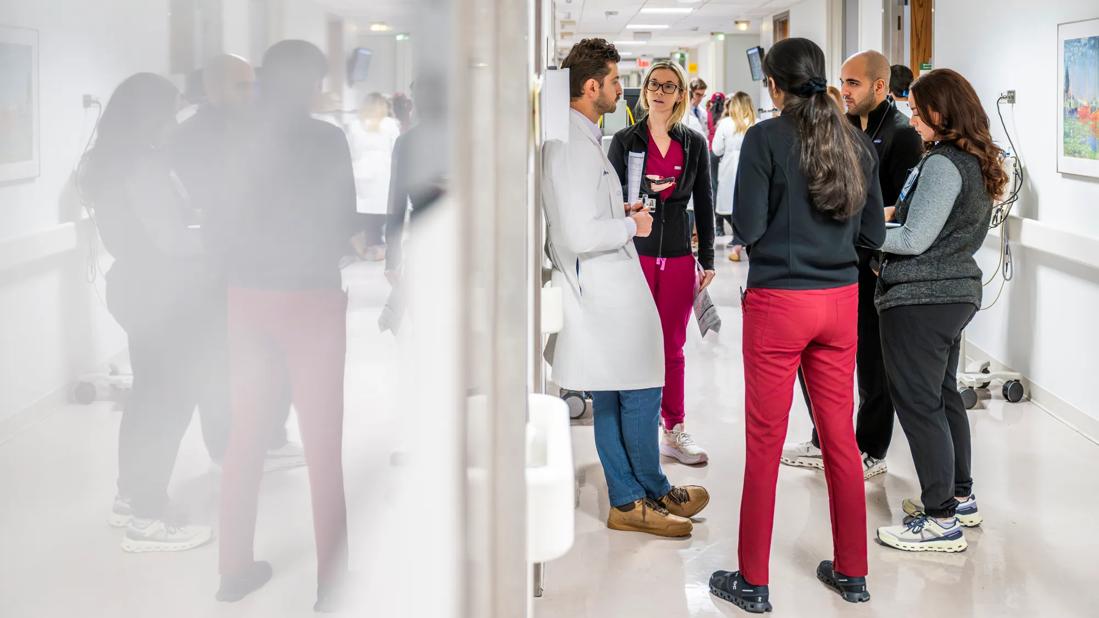
Image content: This image is available to view online.
View image online (https://assets.clevelandclinic.org/transform/a98ebef4-7f57-4bee-b913-b06414b5bef7/PUL_7423261_12-11-25_138_MLC)
Caregiver huddle
Healthcare organizations continue to face a troubling rise in workplace violence – an ongoing concern that highlights the importance of effective prevention efforts. Although robust reporting systems and security protocols play vital roles in hospital safety, one important tool may already be built into the daily workflow: the team huddle.
Advertisement
Cleveland Clinic is a non-profit academic medical center. Advertising on our site helps support our mission. We do not endorse non-Cleveland Clinic products or services. Policy
Whether conducted at the beginning of a shift or during routine staff meetings, workplace violence discussions create opportunities to identify potential safety risks, review successful de-escalation strategies and coordinate proactive interventions that foster a safe environment, says Ashley Withrow, PhD, Director of Cleveland Clinic’s Center for Workplace Violence Prevention and Caregiver Well-being (CWPVP-CWB).
"Preventing workplace violence begins with awareness and communication," she explains. "When caregivers talk openly about safety, they are more prepared to recognize risks, respond appropriately and support one another."
During huddles, caregivers are encouraged to discuss concerns about patients or visitors who pose a potential safety risk, Withrow says. This awareness allows caregivers to establish expectations, coordinate care plans and determine whether additional support may be needed.
For example, teams may decide that a particular patient's care should be delivered in the presence of two caregivers or that security personnel or the ombudsman office should be notified in advance.
"Huddles allow us to move from isolated observations to shared awareness," she explains.
Withrow notes that huddles also provide a forum for exchanging practical lessons learned from previous encounters.
“Experienced caregivers often understand what communication techniques and de-escalation interventions work best in different situations,” she says. “Sharing those experiences enables everyone to approach clinical situations with greater confidence and consistency.”
Advertisement
These conversations can also identify trends that warrant additional support from the CWPVP-CWB, security personnel, the ombudsmen or the behavioral health team. Early collaboration with these experts often diffuses stressful situations, Withrow adds.
She emphasizes that huddles also create space for caregivers to voice opinions that they might otherwise keep to themselves.
"We want every caregiver to know their instincts matter," she says. "If something doesn't feel right, it’s important to speak up. The huddle allows everyone to problem-solve together before a situation escalates."
Believing that huddles are most effective when integrated into a broader workplace violence prevention program, Withrow and her team coordinate organization-wide efforts focused on prevention, response and recovery. Using a collaborative "team of teams" approach, subject matter experts work together to develop education, improve safety practices and connect employees with support resources.
In particular, the enterprise has implemented the Safety Check-in (SCI) icon, a visual cue placed outside patient rooms when established criteria indicate a potential safety risk. During daily huddles, teams review the location of deployed SCI icons, discuss appropriate precautions and ensure caregivers understand any safety considerations before entering a patient's room.
“This combination of visual communication and verbal discussion helps create a coordinated approach to caregiver safety across clinical settings,” Withrow notes.
Advertisement
In addition, teams are trained to recognize escalating behaviors — including agitation, disruptive conduct and destructive actions — and use structured de-escalation techniques to diffuse volatile situations. Withrow says her team also encourages the prompt reporting of any workplace violence.
“We want to ensure that any incident is documented and affected individuals receive appropriate medical, emotional and organizational support,” she explains.
In recent months, Withrow and her team have launched a new online post-event huddle form designed to support caregivers immediately following a violent incident. The form, which is completed by a manager or response team leader, helps collect actionable details to identify successful interventions and opportunities for improvement.
Although no single strategy can eliminate workplace violence, Withrow believes routine huddles are among the simplest and most effective ways to strengthen communication before tensions rise. By creating space for caregivers to relay concerns and coordinate their responses, these conversations help build a workplace where safety is everyone's responsibility.
"Healthcare professionals dedicate themselves to caring for others, but they deserve to feel safe while doing that work," she explains. "Creating a culture where safety is openly discussed and caregivers know they have the support of leadership is essential to protecting both caregivers and patients."
Advertisement
Advertisement

Reflecting on a year of learning, collaboration and creating capacity

Leveraging technology while preserving the human touch
How Cleveland Clinic’s facility dog is enhancing caregiver wellness

Mentoring Resource Center expands opportunities for professional growth through new technology and peer learning

Specialized advocacy program provides care, compassion and essential community connections

Program teaches communication and leadership skills

Promoting a culture that values honest communication and psychological safety

Technology-based program helps build personal connections from the first day
 Search