Locations:





Evidence remains despite PREDIMED flaws

Image content: This image is available to view online.
View image online (https://assets.clevelandclinic.org/transform/b4683ae1-61f0-498b-a9a1-82eba7128d83/salmon-yogurt-sandwich-1366672656)
Foods Items High in Healthy Omega-3 Fats.
Steven Nissen, MD, Chairman of Cardiovascular Medicine at Cleveland Clinic, was a vocal proponent of the Mediterranean diet well before the PREDIMED trial. In the wake of the trial’s recent scrutiny, he continues to be.
Advertisement
Cleveland Clinic is a non-profit academic medical center. Advertising on our site helps support our mission. We do not endorse non-Cleveland Clinic products or services. Policy
Earlier this month, authors retracted the landmark 2013 New England Journal of Medicine paper on the Mediterranean diet and cardiovascular health. In it, the authors had reported that trial participants following the Mediterranean diet were 30 percent less likely to have a heart attack or stroke than those on a low-fat diet.
Recent revelations of flaws in randomization led the authors to republish their study, removing the potential bias. However, findings in the 2018 version are nearly the same as in the 2013 version.
“I give lots of credit to the journal and the authors for acknowledging the errors and republishing the study so we can judge it as it was conducted,” says Dr. Nissen, who wasn’t involved in the trial. “But it really didn’t change the findings. The relative cardiovascular risk reduction that was observed is still around 30 percent. It’s reasonable to continue to recommend the Mediterranean diet for patients concerned about cardiovascular health.”
When the PREDIMED trial came out in 2013, it was the best evidence to date of the Mediterranean diet’s cardiovascular benefits.
But before PREDIMED, there had been smaller, less rigorous studies supporting the diet. The Lyon Diet Heart Study is one that Dr. Nissen calls “far from perfect, but notable.” And there had long been anecdotal evidence from people living in Mediterranean countries.
Dr. Nissen and colleague A. Marc Gillinov, MD, Chair of Cleveland Clinic’s Department of Thoracic and Cardiovascular Surgery, referenced benefits of a Mediterranean-style diet in their 2012 book, Heart 411.
Advertisement
While the recent PREDIMED retraction has raised eyebrows, Dr. Nissen cautions against equating the flaws of the study with flaws in the diet.
“Keep in mind that there was both a retraction and a republication,” he says. “And the overall difference between the 2013 and 2018 versions is trivial — purely statistical nuance. The Mediterranean diet still has the best evidence of any diet. While a little weakened, the evidence is still there.”
Dr. Nissen acknowledges that errors were made. Process controls were not as rigorous as expected.
As such, he’d like to see the results of PREDIMED replicated in other studies to further solidify the quality of existing evidence.
Is that likely to happen?
No, he says. It’s very difficult to conduct randomized controlled dietary studies that require participants to follow a strict diet long-term. That’s why dietary studies tend to be less rigorous, typically based on questionnaires.
“How many people can remember what they ate for dinner last Wednesday?” he asks. “One could argue that even a somewhat flawed randomized trial is far superior to any retrospective study.”
Admittedly, Dr. Nissen is unsettled by the revelation of errors in the PREDIMED study. Those who undertake clinical research, particularly randomized controlled trials, have a higher calling, he says.
“You owe it to the participants and your colleagues to conduct your work impeccably — to get it right,” says Dr. Nissen. “When you make a mistake, you need to communicate it. Otherwise, it leads to uncertainty within the scientific community.”
Advertisement
How should we address errors going forward?
“Don’t make them in the first place,” he says. “Correcting errors in a scientific study is much more difficult than not making them at all.”
Advertisement
Advertisement

The benefits of multiarterial grafting are possible without opening the chest

Collaborative citywide initiative reshapes protocols to boost cardiac arrest survival
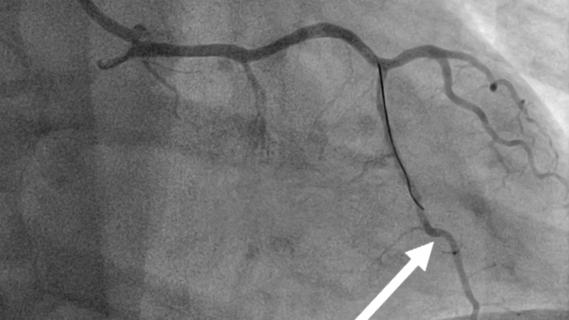
For severe cases, complete unroofing of the bridge is imperative
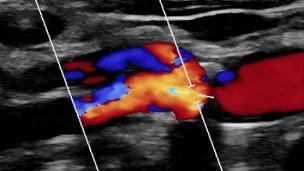
Lower threshold expanded revascularization candidacy without raising early complication rates

Elevated levels of the gut microbial metabolite predict prevalence and adverse outcomes in community-based study

They generally depend on the mutated gene, clone size and clinical setting
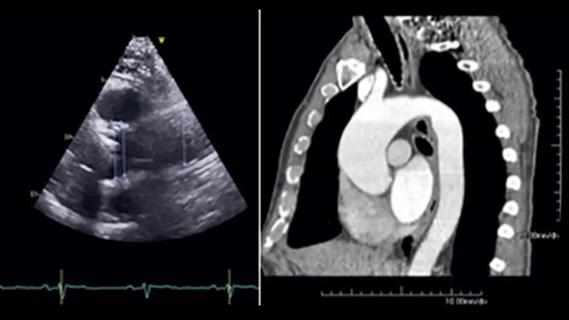
Large analysis adds to evidence that absolute diameter alone may miss vulnerable patients
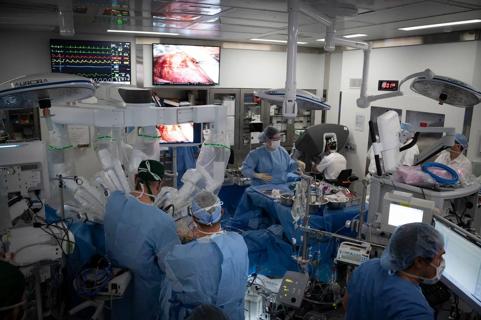
Procedure places the center among only a handful worldwide to offer the minimally invasive approach
 Search