Locations:





 Search
Shared medical appointments reduce stress and improve quality of life in families.
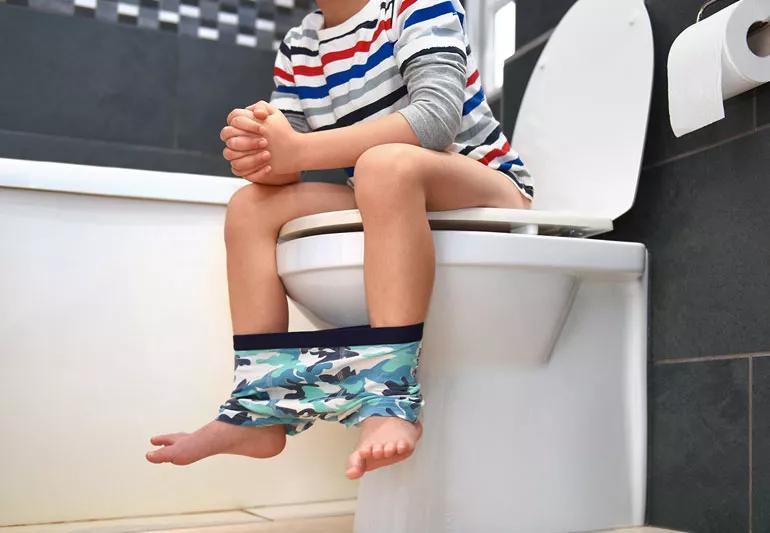
Image content: This image is available to view online.
View image online (https://assets.clevelandclinic.org/transform/8d4993f2-d899-4462-bc2c-f5f6258a63b7/childBathroom-922825058-770x533-1-jpg)
22-CHP-2652660 CQD Piorkowski – Functional Constipation and Fecal Incontinence Clinic 650×450
Families that attend the Functional Constipation-Shared Medical Appointment (FC-SMA) —affectionately known as “Poop School”—gain a wealth of information on handling the medical, emotional and behavioral factors underlying their child’s toileting troubles.
Advertisement
Cleveland Clinic is a non-profit academic medical center. Advertising on our site helps support our mission. We do not endorse non-Cleveland Clinic products or services. Policy
The multispecialty clinic is designed for children ages 3 to 7 with constipation and/or withholding behaviors, who also have fecal soiling accidents or delayed toilet training. These problems are major sources of stress on children and their families. They can affect a child’s psychological health and significantly reduce quality of life.
“Families feel isolated and helpless in meeting the challenges imposed by their child’s functional constipation and fecal incontinence. Our clinic offers an opportunity for families to come together for support and to learn behavioral interventions,” says program director Katherine Corvi, PsyD.
Each cohort in the FC-SMA enrolls six or seven families who participate in weekly sessions for four weeks.
Sessions are currently conducted as virtual visits. Before the first group session, the program’s clinical counselor Lianne Piorkowski, LPCC-S, child life specialist Haley Luedeke, CCLS, and Dr. Corvi meet with each family individually. “We talk about the physical aspects of constipation and find out what behavioral interventions they have tried,” she says.
The team then meets with all parents in a group setting. Each Friday, a different topic is presented for discussion. Subjects include the causes of functional constipation, steps in toilet training, the psychology of stooling and methods of preventing relapse.
Following the parent meeting, the children are invited to listen in while the child life specialist and clinical counselor engage the children through fun activities that address their emotional concerns related to withholding behaviors and toileting.
Advertisement
“They teach the children the same topics we teach their parents, but in a developmentally appropriate way,” says Dr. Corvi. “It’s helpful for the parents to hear how we talk about these issues.”
The last session is devoted to preventing relapse.
“We don’t want parents to stop treatment too soon. Many things can get in the way of progress, such as starting school, going on vacation, eating different foods and using different toilets. We suggest families be consistent with their daily routine and continue using stool softeners or other medications prescribed by the gastroenterologist to help their child through transitions,” says Dr. Corvi.
Because every child may progress at a different rate, follow-up appointments are offered twice a month for families who continue needing support.
A Cleveland Clinic Caregiver Catalyst grant awarded in January 2022 will be used to design new materials for families to use in the home setting, as well as new therapeutic interventions for use in group activities.
“We are hoping these materials will support families through the behavioral strategies related to toileting so that all participants have the tools necessary for success,” says Ms. Piorkowski.
When a child consistently recognizes the signs of a pending bowel movement, stops what they are doing, uses the toilet and then washes their hands, they are ready to graduate from Poop School. The team invites the entire cohort of families to participate in a celebration of the child’s own choosing.
“Undergraduates and families see that success is possible,” says Dr. Corvi.
Advertisement
Referral to Poop School is appropriate whenever a parent expresses concern about their child’s stooling behavior. “We only ask that the child be referred to a pediatric gastroenterologist first since behavioral interventions are less effective if there is a physiologic cause for constipation,” says Dr. Corvi.
To refer a patient, please call 216-445-9765.
Advertisement
Advertisement

Surgeons can estimate the location of conduction tissue they cannot see
Pilot program addresses extended wait times for evaluation
Practice implications for donor selection and timing

Early data show improved rates of breastfeeding support, reduced healthcare utilization

Helping families understand what treatment can and cannot change

Why it's a key strategy to optimize biologic therapies and improve outcomes in pediatric IBD

An integrated approach to care

Combined hematology-gynecology/adolescent medicine clinic addresses major gap in care