Locations:





 Search
Expert team helps 45-year-old woman regain quality of life
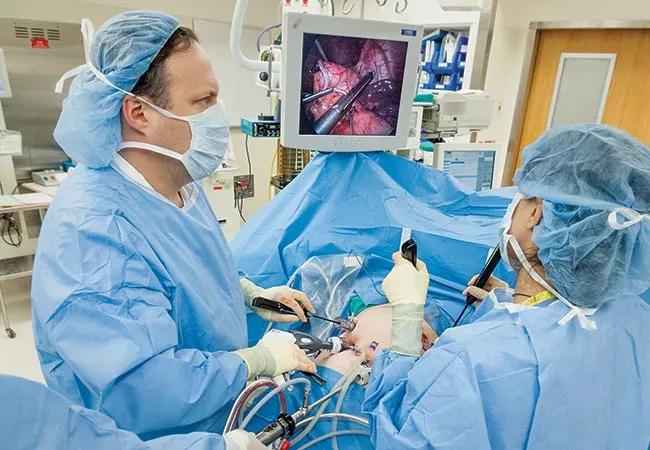
Image content: This image is available to view online.
View image online (https://assets.clevelandclinic.org/transform/ffb39950-cb28-4778-9a8f-2f6c7b457011/650x450-Schauer_jpg)
650×450-Schauer
By Philip Schauer, MD
Advertisement
Cleveland Clinic is a non-profit academic medical center. Advertising on our site helps support our mission. We do not endorse non-Cleveland Clinic products or services. Policy
Cleveland Clinic’s Bariatric and Metabolic Institute is a world leader in the field of metabolic and bariatric surgery, particularly for patients who are high risk or require complex revisional surgery that cannot be managed elsewhere.
Our multidisciplinary team of surgeons, obesity medicine specialists, endocrinologists, psychologists and dietitians offers world-class, comprehensive medical and surgical management of complex and high-risk obesity, diabetes and related co-morbidities with excellent outcomes and impressive value of healthcare. Our anesthesiologists, in particular, are well versed in managing the most challenging bariatric patients, even those exceeding 1,000 lbs.
Our patient is a 45-year-old female with prior history of gastric bypass in Mexico and then a revision for weight gain in Pittsburgh. She presented with poorly controlled type 2 diabetes (HbA1c = 11.9) and weight regain (BMI = 43). She also had polycystic ovarian syndrome (PCOS), metabolic syndrome, fatty liver disease and multiple abdominal procedures, including multiple laparoscopies for PCOS.
She was noted to have a difficult airway on the two prior operations. She was worried about her ever-progressing diabetes, despite prior gastric bypass surgery and the life-long requirement of insulin shots. This led her to search for a possible surgical remedy at Cleveland Clinic’s Bariatric and Metabolic Institute.
In June 2016, she underwent a revision to a distal gastric bypass, a variation of standard gastric bypass but with a larger degree of intestinal bypass.
Advertisement
At her one year follow-up, her BMI decreased to 30 and her diabetes is in complete remission with a normal blood sugar (HbA1c = 5.3) off all diabetes medications, including oral agents and insulin. Her PCOS, metabolic syndrome and fatty liver disease have resolved as well. All of her nutritional lab values are normal and she has resumed a vigorous exercise program.
Studies suggest that she will likely remain in complete diabetes remission long-term and thus avoid the long-term cardiovascular, renal and ophthalmic complications of diabetes.
Advertisement
Advertisement
Findings show significant energy savings and no association with increased surgical site infection, mortality or ICU admission
A complex pelvic exenteration underscores the importance of early multidisciplinary planning for locally invasive cancers

Findings may help guide earlier AUD intervention
Landmark trial data suggest appendectomy may reduce relapse and improve remission rates in select patients
Implications for surgical decision-making and patient management
Dr. Prabhu discusses mentorship, collaboration and her vision for the future of the department

New program looks to innovative approaches for advancing early detection and multicancer prevention
Patients have a significantly higher risk of developing fistulas and experiencing future Crohn’s-like changes