Locations:





Using donor organs efficiently to help the most patients
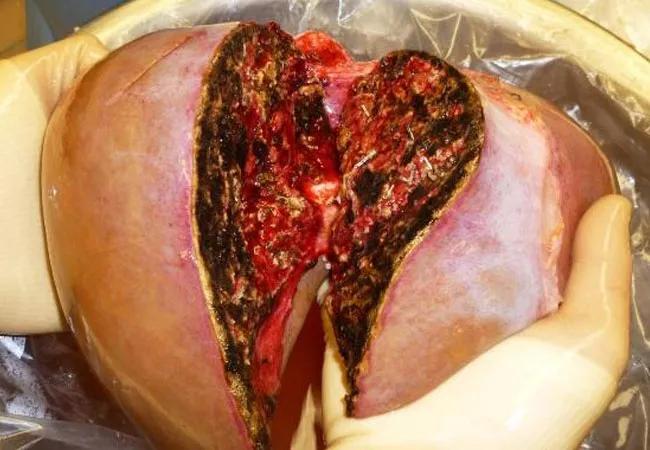
Image content: This image is available to view online.
View image online (https://assets.clevelandclinic.org/transform/72913233-f591-4374-8759-52274de580f5/Split-Liver_jpg)
Split-Liver
Advertisement
Cleveland Clinic is a non-profit academic medical center. Advertising on our site helps support our mission. We do not endorse non-Cleveland Clinic products or services. Policy
As one of the solutions for severe donor shortage in liver transplantation, Cleveland Clinic performed two liver transplants simultaneously from one deceased donor by splitting a liver graft into two hemiliver grafts.
This highly complex procedure requires an experienced surgical team with expertise in both transplant surgery and hepatobiliary surgery. Because splitting a whole liver graft creates two smaller partial grafts, the risk of liver transplant failure is generally considered to be higher than liver transplantation using a whole liver graft. As a result, this procedure remains underutilized.
The patients are a 65-year-old female with primary biliary cirrhosis and a 54-year-old male with hepatitis C-related cirrhosis and hepatocellular carcinoma. Both were listed for liver transplantation at Cleveland Clinic. A brain-dead donor became available and the decision was made to proceed with split-liver transplantation. Our donor team split the whole liver in situ before the liver was procured from the donor. The split liver grafts were brought back to Cleveland Clinic’s main campus to be simultaneously transplanted into the two recipients. Despite complex vascular and biliary anastomoses, both recipients did very well with excellent liver graft function. The patients were discharged from hospital in six and nine days, respectively.
Advertisement
Advertisement
Advertisement

Discounting seronegative celiac and not asking about medications are among the most common clinical mistakes

G-TORe uses endoscopic suturing to stop peristomal leakage without upsizing the feeding tube

Findings suggest insurance coverage alone may not ensure timely specialty care and treatment

Study identifies patient and procedural factors associated with missed endoscopy appointments
Real-time case discussion connects IBD specialists across disciplines, institutions and countries
Findings show significant energy savings and no association with increased surgical site infection, mortality or ICU admission

A complex pelvic exenteration underscores the importance of early multidisciplinary planning for locally invasive cancers

Findings may help guide earlier AUD intervention
 Search