Locations:





Measuring outcomes becomes more granular with surgeon-entered data
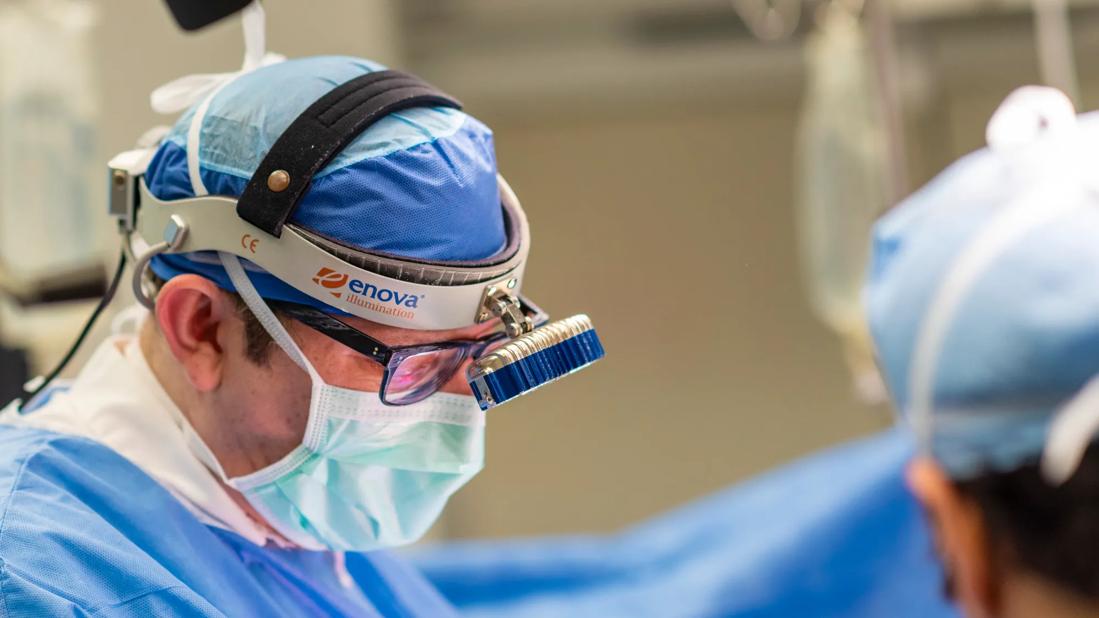
Image content: This image is available to view online.
View image online (https://assets.clevelandclinic.org/transform/3e0d5ff9-1e4e-4a76-8c46-841d36993d9c/DDI_2049700_01-29-21_016_DG-jpg)
Holubar, MD, in surgery
A surgeon-led quality collaborative is a feasible approach that offers actionable quality improvement data that can assist in efforts to improve outcomes, reduce variation and establish best practices, according to a study conducted at Cleveland Clinic Digestive Disease & Surgery Institute. The study was presented at the 2021 Annual Scientific Meeting of the American College of Colon & Rectal Surgeons (ASCRS).
Advertisement
Cleveland Clinic is a non-profit academic medical center. Advertising on our site helps support our mission. We do not endorse non-Cleveland Clinic products or services. Policy
“Our national quality efforts, while laudable, can lack the granular level of detail that allows us to really assess outcomes and determine the best technical practices,” says Stefan Holubar, MD, MS, Inflammatory Bowel Disease Surgery Section Chief and Director of Research in the Department of Colorectal Surgery at Cleveland Clinic. “So we developed a colorectal surgery quality collaborative across all of Cleveland Clinic with modules focused on different procedures, such as colectomy, proctectomy, ileoanal pouch procedures and others.”
Larger quality efforts, including the American College of Surgeons National Quality Improvement Program and Case Log, often rely on CPT and billing codes for ease of tracking. Dr. Holubar and colleagues instead developed an internal web portal to voluntarily collect surgeon-entered data for specific procedures.
“We wanted to capture intraoperative nuances, such as anastomotic and other operative techniques, preoperative risks and postoperative outcomes, such as Clavien-Dindo graded complications, readmissions and reoperations,” says Dr. Holubar.
The sequential rollout of procedure-specific modules began in March 2020, and the team presented eight months of data at the ASCRS meeting.
During the study period, 36 surgeons from nine Cleveland Clinic hospitals entered data on 381 colectomy cases, about half of the total cases performed during this period. “We were really pleased with the level of participation we saw, especially given the timing of our launch and COVID-19,” says Dr. Holubar. “Surgeons are eager for data that is specific enough to help them make technical decisions, and while national quality data is helpful, it doesn’t often provide that level of detail.”
Advertisement
General surgeons contributed 28% of the colectomy cases, with the remainder tracked by colorectal surgeons. Anastomotic methods included:
In a preliminary, univariate analysis, no differences were seen overall between stapled and handsewn anastomoses in terms of complications, readmissions or reoperations. “This is the level of granularity that can offer technical insights linked to outcomes that might otherwise be unavailable,” says Dr. Holubar.
“The portal is modular,” he adds, “so we have been able to add new procedures, such as small bowel resection, and can add new variables, such as splenic or hepatic flexure mobilization.”
At present, the collaborative has accrued over 800 colectomy cases, 120 ileoanal pouch procedures and 100 proctectomy cases. This platform will also facilitate data capture for several planned randomized trials of different surgical techniques.
The team plans to continue the collaborative. The next part of the analysis will include validation of the outcomes data using the gold standard of National Surgical Quality Improvement Program (NSQIP), which presently captures 100% of colectomy and proctectomy cases at main campus. This data will also be combined with existing datasets including NSQIP to add a deeper level of detail.
Advertisement
Advertisement

Discounting seronegative celiac and not asking about medications are among the most common clinical mistakes

G-TORe uses endoscopic suturing to stop peristomal leakage without upsizing the feeding tube

Findings suggest insurance coverage alone may not ensure timely specialty care and treatment
Study identifies patient and procedural factors associated with missed endoscopy appointments
Real-time case discussion connects IBD specialists across disciplines, institutions and countries
Findings show significant energy savings and no association with increased surgical site infection, mortality or ICU admission

A complex pelvic exenteration underscores the importance of early multidisciplinary planning for locally invasive cancers

Findings may help guide earlier AUD intervention
 Search