Locations:





Why does the Cox-Maze procedure remain so underutilized?
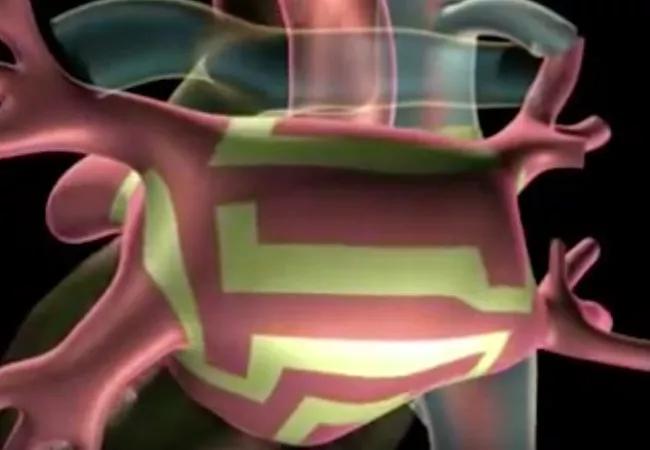
Image content: This image is available to view online.
View image online (https://assets.clevelandclinic.org/transform/72a5f3b3-70e1-454c-b452-1efaddaf48e5/18-HRT-022-Maze-CQD_jpg)
Still image of Maze animation
When it comes to the Cox-Maze IV procedure for cardiac surgery patients with atrial fibrillation (AF), one question looms larger than any other at the dawn of 2018: Why don’t surgeons do this operation more frequently?
Advertisement
Cleveland Clinic is a non-profit academic medical center. Advertising on our site helps support our mission. We do not endorse non-Cleveland Clinic products or services. Policy
That’s the question Cleveland Clinic cardiothoracic surgeons Marc Gillinov, MD, and Edward G. Soltesz, MD, pose in an editorial published in the January 2018 issue of the Journal of Thoracic and Cardiovascular Surgery.
The editorial is in response to a retrospective single-center study by Musharbash and colleagues in the same issue demonstrating that a concomitant Cox-Maze IV procedure did not add to postoperative morbidity or mortality in selected patients with a history of AF undergoing cardiac surgery. What’s more, patients undergoing the Cox-Maze IV procedure had significantly better late survival relative to patients with untreated AF and survival similar to that of patients without a history of AF.
The study supports the contention that long-term survival is improved by concomitant surgical ablation, Drs. Gillinov and Soltesz write, adding that “this finding echoes previous reports.” They note that ablation has also been associated with decreased risk of stroke, reduced long-term anticoagulation requirements and improved quality of life. “In short, the operation is effective at controlling heart rhythm and beneficial in its clinical effects,” they argue.
Despite these benefits, the Society of Thoracic Surgeons database reveals that fewer than one-half of cardiac surgery patients with atrial fibrillation undergo concomitant ablation. Indeed, even in the study at hand by Musharbash and colleagues, a mere quarter of patients with preexisting AF ended up receiving ablation.
Advertisement
The editorialists note that the Cox-Maze IV procedure does add 20 to 40 minutes to the aortic cross-clamp time and has other drawbacks, including conferring an increased risk of permanent pacemaker requirement and an increased risk of longer stays in the ICU and hospital. “Although these costs cannot be considered negligible,” they write, “the clinical benefits of surgical ablation far outweigh these factors.”
Noting that most of the questions surrounding safety, effectiveness and clinical benefits of surgical ablation have been answered, they conclude that the real mystery of the procedure is the lingering sluggishness of its uptake. “The work of Musharbash and colleagues…lends further support to the imperative that we broaden our application of surgical ablation,” Drs. Gillinov and Soltesz conclude.
The full editorial is available here.
Advertisement
Advertisement

AHA statement details nuanced, evidence-based strategies

The benefits of multiarterial grafting are possible without opening the chest

Collaborative citywide initiative reshapes protocols to boost cardiac arrest survival
For severe cases, complete unroofing of the bridge is imperative
Lower threshold expanded revascularization candidacy without raising early complication rates

Elevated levels of the gut microbial metabolite predict prevalence and adverse outcomes in community-based study

They generally depend on the mutated gene, clone size and clinical setting
Large analysis adds to evidence that absolute diameter alone may miss vulnerable patients
 Search