Locations:





Should surgeons forgo posterior and lateral approaches?
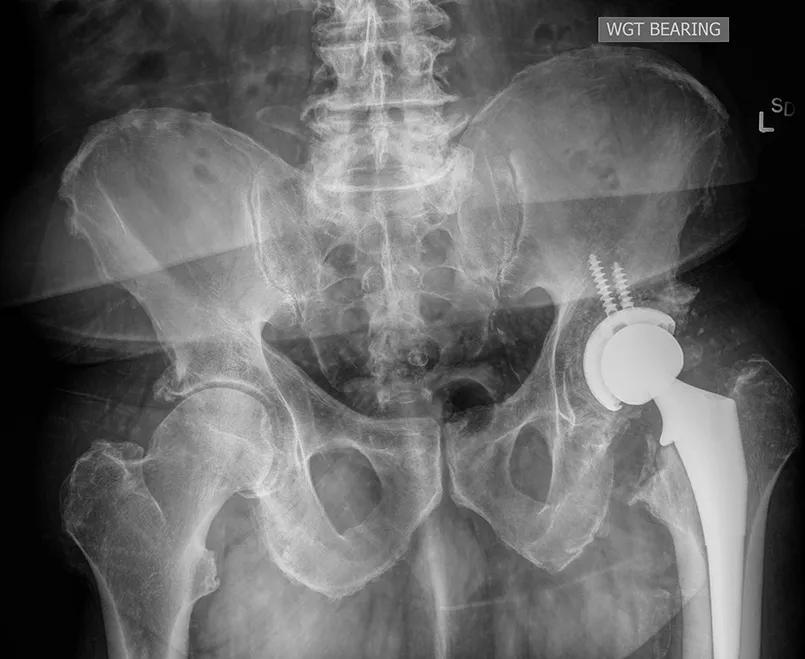
Image content: This image is available to view online.
View image online (https://assets.clevelandclinic.org/transform/35d84ba4-9eda-407a-bdb1-f0e6035e5619/23-ORI-3641509-CQD-Inset3-jpg)
Total hip replacement
The outcomes of direct anterior hip replacement may be equivalent to conventional hip replacement using lateral or posterior approaches, but demand for the direct anterior approach has soared in recent years.
Advertisement
Cleveland Clinic is a non-profit academic medical center. Advertising on our site helps support our mission. We do not endorse non-Cleveland Clinic products or services. Policy
“More patients are specifically requesting it because they perceive it to have a quicker recovery with fewer postop limitations,” says Cleveland Clinic orthopaedic surgeon Matthew Deren, MD. “It’s true that the recovery may be a little easier initially, but by six weeks after surgery, patients with hip replacements generally progress the same no matter the surgical approach.”
Still, the popularity of the direct anterior approach doesn’t appear to be waning. Now, new innovations are further improving the accuracy of direct anterior hip replacement, making it even more attractive for patients as well as surgeons.
Accuracy in direct anterior hip replacement conventionally has been based on intraoperative fluoroscopy.
“We’d rely on fluoroscopy and bony landmarks to place the cup in a position that appeared correct,” says Cleveland Clinic orthopaedic surgeon Alexander Roth, MD. “Now we’re beginning to improve precision by using fluoroscopy with AI technology.”
The AI software evaluates fluoroscopy images and provides real-time data on cup positioning, leg length and offset. This live feedback enables surgeons to perfectly position the implant, making subtle intraoperative adjustments based on acetabular anteversion and abduction angles.
The AI technology compares intraoperative AP pelvis imaging with benchmark imaging obtained at the beginning of the procedure. Numerical data is displayed on the computed radiography screen. The AI platform can be used with any brand of hip implant.
Advertisement
However, advances in robot-assisted surgery may reduce the need for fluoroscopy. While robot-assisted surgery has been available for direct anterior hip replacement, new technology is enabling robot-assisted direct anterior hip revision.
“The robot provides extreme precision in preparing and placing acetabular components — no fluoroscopy required,” says Dr. Deren. “Still, more setup is required for robotic surgery. There are pins to place in the pelvis and registration points to be identified.”
While incorporating robotics into anterior hip surgery has helped Dr. Deren fine-tune accuracy, it also has helped enhance his training of adult reconstruction fellows.
“All trainees want the experience of reaming, preparing the acetabulum, which requires great precision,” he says. “If you tilt the angle of your hand slightly, you easily can get in the wrong plane — and then you can’t put bone back if you wrongly remove it. The robot helps prohibit errors like that, keeping the reaming within a fraction of a millimeter from the surgical plan. Now I can give trainees the opportunity to perform complex revision cases, even in patients with minimal acetabular bone remaining.”
Robot-assisted surgery is becoming more pervasive, he says, as more surgeons coming out of fellowships have been trained to use it and are requesting robotic technology at their hospitals.
The future of hip replacement, regardless of approach, will involve augmented reality and handheld robotics — without pins, trackers and other devices that intrude on the surgical field, Dr. Deren predicts.
Advertisement
Other innovations helping improve accuracy in hip replacement surgery, including direct anterior procedures, are automated powered impaction devices. Instead of swinging a mallet, surgeons can use one of these devices to drive broaches with more consistent force.
“These devices are like a controlled jackhammer that more precisely prepares a bony envelope to receive an implant,” Dr. Roth says. “We no longer need to take hundreds of swings with a mallet to pound a broach into a femur. This step of the surgery is now completed faster, more consistently, and with less wear and tear on the surgeon’s body.”
With these technological advancements, direct anterior hip replacement can be even more accurate and provide more consistently favorable patient outcomes. However, surgeons should not be pressured to transition to the direct anterior approach, even if more patients are requesting it.
Do what is comfortable for you based on your training and experience, say Drs. Deren and Roth.
“I perform direct anterior surgery for most of my hip replacement patients, but I sometimes recommend the posterior approach — especially for patients with obesity or a large abdominal pannus, which may complicate wound healing, depending on placement of the incision,” Dr. Roth says.
Dr. Deren also performs direct anterior surgery for most patients, except for those with prior posterior hardware or acetabular defects that are more difficult to reach from the front.
“If the patient has a plate or prior trauma or some femoral hardware to take out, a posterior approach may be easiest,” he says. “Every patient needs to be assessed individually.”
Advertisement
Advertisement

Study challenges assumptions about risk evaluation in total hip revision

Study highlights the need for objective functional measures as value-based care expands

Reduces likelihood of achieving CMS-defined substantial clinical benefit at one year

How it’s similar but different from the direct anterior approach
Multidisciplinary care can make arthroplasty a safe option even for patients with low ejection fraction

High-risk procedure prepares patient for lifesaving heart surgery
Cleveland Clinic is among the first in the U.S. to perform the procedure

Insights to help orthopaedic practices comply with the 2025 CMS mandate
 Search