Locations:





New service for patients with diabetes will make annual screening more convenient
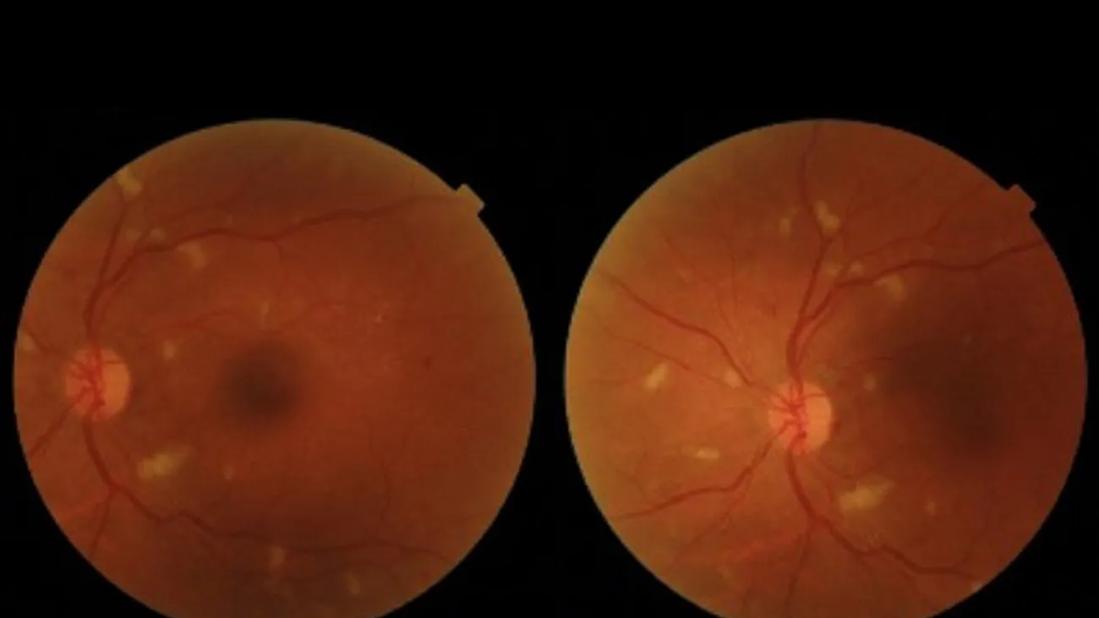
Image content: This image is available to view online.
View image online (https://assets.clevelandclinic.org/transform/375a08ca-7817-445f-8575-8d143a79a43a/diabetic-retinopathy-screening)
Fundus image of diabetic retinopathy
Patients with diabetes now have a quicker, more convenient way to be screened annually for diabetic retinopathy (DR). Artificial intelligence (AI)-powered fundus cameras have been installed in all Cleveland Clinic Cole Eye Institute Ohio locations adjacent to primary care clinics. They also will be installed in some Cleveland Clinic primary care and endocrinology clinics.
Advertisement
Cleveland Clinic is a non-profit academic medical center. Advertising on our site helps support our mission. We do not endorse non-Cleveland Clinic products or services. Policy
With these cameras, patients can be screened for DR on the same day as their primary care or endocrinology visit and receive diagnostic results usually within 30 seconds.
“Cleveland Clinic cares for tens of thousands of patients with diabetes, and a large proportion of them do not have dilated eye exams, which are critical to prevent vision loss from diabetic retinopathy,” says Sumit Sharma, MD, a vitreoretinal surgeon at the Cole Eye Institute. “However, each year, many of these patients without retinopathy are referred to ophthalmology for a dilated eye exam for retinopathy screening. Those exams require evaluation by a provider and can take one to two hours, depending on how busy the clinic is that day. With our new fundus cameras, we can screen patients in a fraction of the time. That is more convenient for patients and allows us to save ophthalmology visits for patients with active diabetic retinopathy requiring treatment.”
The new nonmydriatic cameras can detect the presence or absence of DR without pupil dilation, a darkened room or a specialist’s involvement.
Technicians or support staff conduct the screening, but the cameras are robotic. The patient sits in front of the tabletop device and places their chin in the chin rest. The technician uses a touch screen to start the camera. The camera moves and focuses itself to capture two images of each eye: one of the optic nerve and one of the macula.
The AI software evaluates the images for the presence or absence of diabetic retinopathy. Within seconds, it provides one of three results:
Advertisement
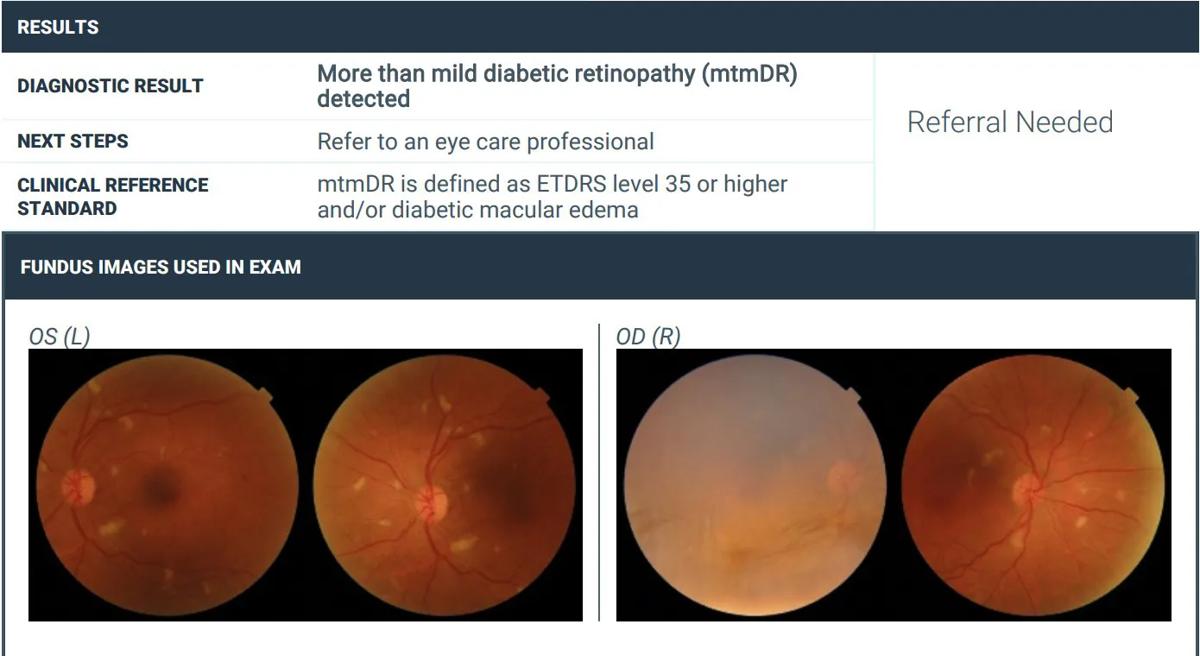
Image content: This image is available to view online.
View image online (https://assets.clevelandclinic.org/transform/2ab81581-0683-459e-97ac-c791195118c4/diabetic-retinopathy-screening-inset)
Sample result from a patient’s screening with an AI-powered fundus camera
The whole process takes only minutes, says Dr. Sharma. The AI software immediately flows results into the patient’s electronic medical record. No additional provider documentation is required.
“We can screen about 85% of patients without dilation,” he says. “For the screenings taking place in ophthalmology offices, we can immediately perform dilation and re-evaluate patients who receive inconclusive results. We can screen up to 95% of patients that way.”
A number of things can cause “exam quality insufficient” results, he says. Severe cataracts or other eye pathology can complicate imaging and AI analysis.
If results are inconclusive (even after a dilated exam) or if DR is detected, patients are scheduled for a comprehensive ophthalmology evaluation at a later date. Patients who don’t have retinopathy can follow up with their primary care or endocrinology provider and be screened again in one year.
Endocrinologist Kevin Pantalone, DO, Director of Diabetes Initiatives at Cleveland Clinic, welcomes these fundus cameras into selected endocrinology clinics, where nurses and medical assistants will be trained to use them.
“National rates for DR screening often hover between 50% and 70%,” Dr. Pantalone says. “There is a clear need to improve screening rates, as DR is the leading cause of blindness in working-age adults. Anything we can do to make the screenings more convenient will make patients more likely to complete them.”
Instead of ordering an ophthalmology consult for every patient needing annual DR screening, providers like Dr. Pantalone now order “AI Diabetic Retinopathy Screening.”
Advertisement
Depending on camera availability, some patients can have the screening as part of their primary care or endocrinology visit. Others can schedule a same-day screening at an adjacent ophthalmology clinic and go there directly after their primary care or endocrinology exam.
Every patient with diabetes needs at least annual screenings for DR, says Dr. Sharma. The risk of vision loss increases the more the disease progresses and the longer it goes unrecognized. Often in the early stages, patients are completely asymptomatic.
“Improving the convenience of screenings means we may catch more disease in more patients, and also catch it earlier, even while asymptomatic,” he says. “A lot of times, the patients who have the most severe disease are those who have the least access to care or the most difficulty getting to appointments. Screening patients on the same day as another visit can remove this barrier.”
Advertisement
Advertisement

Retrospective analysis finds lower mortality rates, fewer hospital visits among patients with Type 1 diabetes using GLP-1 Therapies

Association revises criteria for the diagnosis and resolution of severe conditions

What to consider in the management of euglycemic DKA
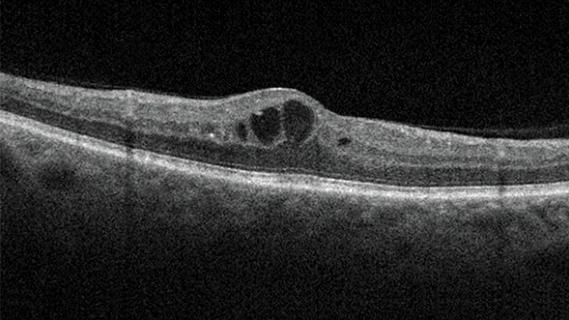
Less than 50% of patients with diabetes get appropriate ophthalmic screening through primary care referrals
Familiarity will enhance its accessibility for patients with diabetes
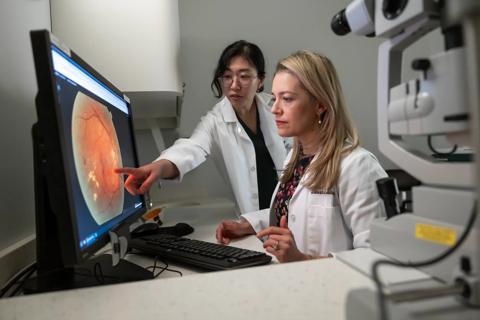
New study counters earlier findings linking drugs with eye disease

Study highlights the value of quantitative ultra-widefield angiography
Longevity in healthcare, personal experiences may provide caregivers with false sense of confidence
 Search