Locations:


Evaluating AI initiatives and their impact on operations and care delivery
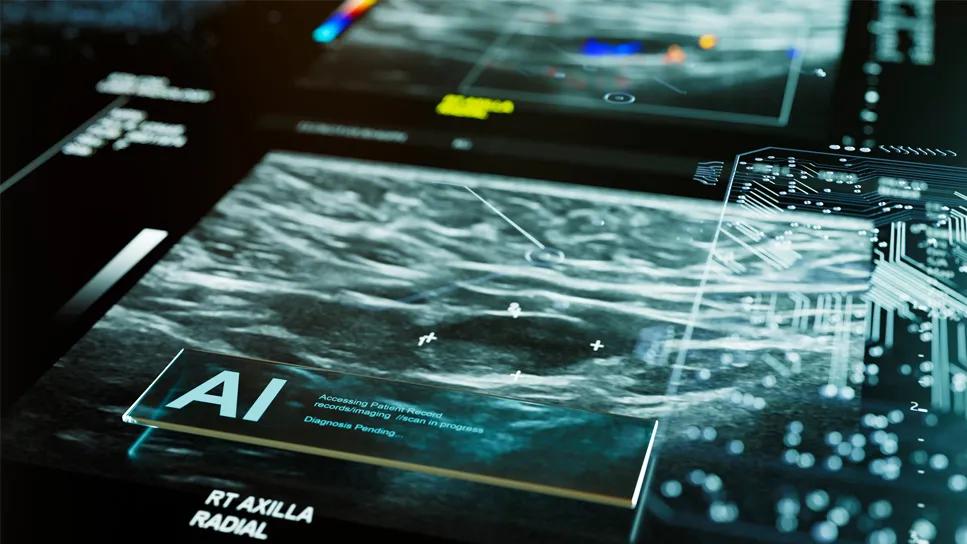
Image content: This image is available to view online.
View image online (https://assets.clevelandclinic.org/transform/8cdaa3ee-00d1-4674-98d2-0fb4451e91d2/ai-medical-imaging-technology-1937349524)
AI tech
Artificial intelligence (AI) initiatives abound in hospital systems, from speeding drug discovery to streamlining trial identification. With AI becoming ubiquitous in cancer care, there is a need to incorporate these innovations in a responsible way.
Advertisement
Cleveland Clinic is a non-profit academic medical center. Advertising on our site helps support our mission. We do not endorse non-Cleveland Clinic products or services. Policy
To that end, Cleveland Clinic Cancer Institute formalized a strategic approach to evaluating emerging technologies to streamline AI adoption in a safe and deliberate manner. Led by Dr. Paul Thambi and Dr. Louis Williams, the new Cancer Institute Office of Technology and Digital Strategy assesses potential AI technologies to ensure alignment with enterprise strategy.
A plethora of AI companies have approached the Cancer Institute with partnership opportunities. The task force vets these proposals, their potential impact on operations and care delivery and alignment with enterprise goals and vision. With this structure in place, the Cancer Institute will be well positioned to integrate AI models into day-to-day care as well as the enterprise business model.
“Vendors don’t just want to deploy their models but do so in an environment where there’s a high degree of quality as well as robust data sets,” explains Dr. Thambi. “The richness of our clinical data allows AI models to make accurate predictions – and has the potential for many new discoveries.”
AI is already being used in the Cancer Institute to:
The task force serves as an entry point for these initiatives. Instead of evaluating AI proposals on a one-off basis, they’ve developed a comprehensive strategy around the use of AI. “AI will be fundamental to all aspects of running the Cancer Institute in the future,” says Dr. Williams. “That extends from operations to scheduling to clinical decision-making. We need to be able to scale well. This means both reducing barriers to adopting AI and ensuring proper governance structures.”
Advertisement
The enterprise has an AI Task Force that evaluates models and AI technologies that are not research based. The AI Task Force is analogous to an institutional review board, but for non-research-based applications, ensuring safety, monitoring for bias, data security and measures to monitor the models for changes in performance.
“It’s crucial to have a system to continuously re-evaluate the effectiveness of each tool,” says Dr. Williams. “You need to analyze the output of models on an ongoing basis. There can be drift in a model that may influence its accuracy over time or there may be bias in the model that isn’t apparent upfront. That’s why it’s necessary to have a unified strategy that includes training models to identify mistakes before a model goes into production as well as longitudinal risk assessment to ensure safety.”
Ultimately, the hope is that these models will offload certain functions to free up clinicians to focus on personal attention for patients and families facing cancer. “We may have tools to do things like giving a better differential diagnosis but there’s a human element necessary to deliver the news of that diagnosis and support patients through their journey,” says Dr. Thambi. “All of these tools can help usbe more present and less distracted by the computer as we are seeing patients.”
Advertisement
Advertisement

Study reinforces the importance of genetic testing prior to local therapy decisions

Understanding expanding treatment options and potential advances

Adding 177Lu-PSMA-617 to ADT plus an ARPI cut the risk of radiographic progression or mortality by 28%

New program will help patients improve fitness and manage weight after cancer treatment

Cleveland Clinic hematologist highlights new guidelines and treatment advances in immune thrombocytopenia
NIMBLE replaces weekly tumor board delays with same-day multidisciplinary recommendations

Cleveland Clinic study provides validation for the test, which combines AI and pathological data to predict outcomes in postoperative patients

Advanced imaging technology catches metastases much earlier, allowing treatment with fewer side effects
 Search