Locations:





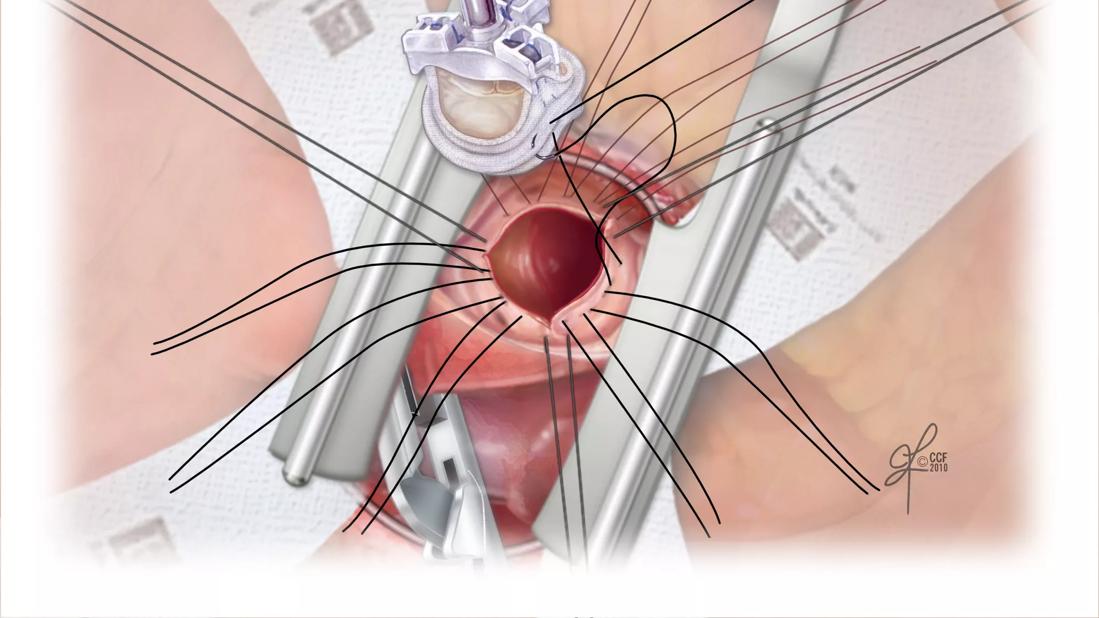
Image content: This image is available to view online.
View image online (https://assets.clevelandclinic.org/transform/9fb703ab-69b2-485f-a81f-5c942fadde08/Figure-R08_AVR-Prosthesis-Suturing_jpg)
AVR-Prosthesis Suturing
By David Baran, MD, Section Head, Advanced Heart Failure, Transplant and Mechanical Circulatory Support Cleveland Clinic Weston Hospital
Advertisement
Cleveland Clinic is a non-profit academic medical center. Advertising on our site helps support our mission. We do not endorse non-Cleveland Clinic products or services. Policy
Note: This article is reprinted from Cardiac Care Publication News From Cleveland Clinic in Florida.
Management of valvular disease is a fundamental part of cardiovascular medicine. Some issues such as mitral valve prolapse or aortic sclerosis are relatively straightforward. However, when left ventricular function is quite abnormal, it may be fairly challenging to decide on the proper course of treatment.
Treatments for valvular disease have greatly evolved in the last decade. What used to be the pure domain of the cardiothoracic surgeon has now become a shared responsibility among the members of the care team as these complex situations are managed.
For example, aortic valve replacement had traditionally been performed via open heart surgery, but now transcatheter aortic valve replacement (TAVR) has been shown to be equivalent to surgical aortic valve replacement for many patients at least in the moderate term time frame. Progressive improvements in the technology have led to the application of TAVR to more and more patients.
The same has happened to mitral valve replacement in which initial transcatheter edge-to-edge repairs were limited to specific cases of degenerative mitral regurgitation. At this time, many kinds of mitral valve disease can be addressed percutaneously not only by “clip” technologies but also by various kinds of transcatheter valve replacement approaches.
Cleveland Clinic has long been on the forefront of innovation in this area. At Cleveland Clinic Weston Hospital, a multidisciplinary team meets weekly to discuss the most complex of valvular cases. Patients receive the benefit of a “meeting of the minds” of cardiothoracic surgeons, interventional cardiologists, structural cardiologists, advanced heart failure specialists, as well as others members of the heart team, along with our expertise in advanced imaging (CT, MRI and transesophageal echocardiography).
Advertisement
Often, physicians from Cleveland Clinic Martin Health and Cleveland Clinic Indian River Hospital present their complex cases as well. This allows subspecialty expertise from Weston Hospital to be shared across the clinical enterprise and the Florida region.
Some of the most controversial cases are those with severe left ventricular dysfunction and aortic or mitral valve disease. Examples include low-flow, low-gradient aortic stenosis and mitral regurgitation with left ventricular ejection fraction under 30%. It can be challenging to decide whether to refer to a cardiothoracic surgeon, the heart transplant group, or the structural or interventional cardiologist.
When patients are seen at Weston Hospital, regardless of who sees the patient first, all disciplines weigh in on these complex cases to formulate the best treatment options for the patients. Because Weston Hospital has a large heart transplant program as well as a ventricular assist device program, we collaborate with the patient and the referring physician to make the best choice through a patient-centered approach.
Advertisement
Advertisement
Cleveland Clinic in Florida explores extended reality for multimodality image guidance

The American Society of Clinical Oncology (ASCO) recently released updated guidelines
Cleveland Clinic's transplant team in Florida is using circulatory-death donor hearts to expand transplant opportunities for patients.
Repair of tiny lymphatic vessels offers big relief for patients with lymphedema after cancer surgery
AI-enhanced mammography improves cancer detection and may support more personalized screening strategies
The Center for Neurological Restoration offers a structured, multidisciplinary approach to conditions that often require longitudinal management and escalation beyond first-line therapies
Multidisciplinary expertise provides advanced evaluation, second opinions and personalized treatment planning for patients with challenging cerebrovascular disorders
Study highlights strong predictive value of circulating tumor DNA testing
 Search