Locations:





Will we see this major breakthrough in 2019?
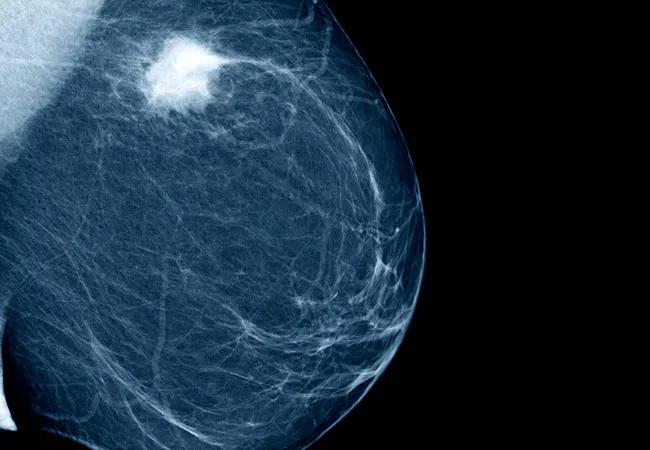
Image content: This image is available to view online.
View image online (https://assets.clevelandclinic.org/transform/f119936d-5ba2-41c5-9370-5ed9c75d2973/650x450-Breast-Cancer-1_jpg)
650×450-Breast-Cancer
More than 70% of breast cancer patients have estrogen-receptor-positive (ER+) tumors. Antiestrogen therapy plays a major role in their treatment. However, most advanced-stage and some early-stage breast cancer patients will develop resistance to endocrine therapy.
Advertisement
Cleveland Clinic is a non-profit academic medical center. Advertising on our site helps support our mission. We do not endorse non-Cleveland Clinic products or services. Policy
Over the past 40 years, researchers have attempted to delay resistance and extend effectiveness by expanding antiestrogen options — from tamoxifen to aromatase inhibitors to fulvestrant.
In 2015, cyclin-dependent kinase 4 and 6 (CDK4/6) inhibitors were introduced. This novel class of agents fought off tumor progression a different way, by subduing hyperactive enzymes that allow cancer cells to multiply.
While antiestrogens alone can stall tumor progression for about one year in a patient with metastatic breast cancer, antiestrogens and CDK4/6 inhibitors together can stall it for more than two years.
“Increasing progression-free survival from one to two years is a substantial improvement,” says Jame Abraham, MD, Director of Breast Oncology at Cleveland Clinic. “Even though it’s a major step in the right direction, one extra year is still not good enough.”
The quest for longer-lasting antiestrogen therapies for ER+ breast cancer continues. And, according to Dr. Abraham, 2019 may bring the next step forward.
A new drug on the horizon, an alpha-specific phosphatidylinositol-3-kinase (PI3K) inhibitor, will be a major breakthrough pending FDA approval, he says.
What causes ER+ breast cancer cells to grow despite antiestrogen therapy? One answer is the PI3K signaling pathway. About 40% of hormone-receptor-positive (HR+) breast cancers have a PIK3CA mutation, which sends the PI3K pathway into overdrive, speeding cell replication.
“Many drugs are being tested to target the PI3K pathway, but the PI3K inhibitor alpelisib seems to be the most promising,” says Dr. Abraham. “It is active in metastatic ER+ patients who failed first-line endocrine therapy, and its side-effect profile is well tolerated.”
Advertisement
Phase 3 trial, SOLAR-1, is studying the effect of alpelisib with antiestrogen fulvestrant in patients with HR+, HER2-negative metastatic breast cancer. Dr. Abraham and Cleveland Clinic are not participating in the trial. Initial results were presented at the 2018 San Antonio Breast Cancer Symposium. Results of the phase 1b trial to determine the maximum tolerated dose of fulvestrant plus alpelisib were published recently in JAMA Oncology.
SOLAR-1 is a randomized, double-blind, placebo-controlled trial comparing fulvestrant plus alpelisib with fulvestrant alone in patients with metastatic breast cancer with a PIK3CA mutation who progressed on or after an aromatase inhibitor. Results to date show that, in participants with the PIK3CA mutation, median progression-free survival was 11 months in those who took alpelisib and 5.7 months in those who didn’t.
It’s too soon to determine median overall survival in those who took alpelisib, but the trend is positive. Median overall survival in those who didn’t take alpelisib is 27 months.
The most common adverse events include hyperglycemia, diarrhea and nausea. Hyperglycemia can be identified quickly and easily and is reversible with anti-diabetic medication. With proper medication to prevent and treat the other side effects, patients tolerate the treatment well.
Adding alpelisib to antiestrogen treatment is a promising new therapy for patients with ER+ metastatic breast cancer, those with the PIK3CA mutation who progressed after an aromatase inhibitor, says Dr. Abraham. According to the investigators, the majority of patients were endocrine resistant, and the subgroup analysis showed benefit of alpelisib, regardless of line therapy or prior CDK4/6 inhibitors.
Advertisement
“Extending progression-free survival by five months is again a step in the right direction,” he says. “It may seem like a small step forward, but that’s how we’ve advanced cancer treatment historically. We still have a long way to go, but we are making steady progress.”
The progress will continue as more patients enroll in clinical trials, he notes.
“We need to encourage patients to participate in clinical trials,” says Dr. Abraham. “And we need to be vigilant about genetic profiling of breast cancer tumors. Profiling can identify patients who potentially will benefit from advanced treatments like alpelisib.”
Advertisement
Advertisement

Adding 177Lu-PSMA-617 to ADT plus an ARPI cut the risk of radiographic progression or mortality by 28%

New program will help patients improve fitness and manage weight after cancer treatment

Cleveland Clinic hematologist highlights new guidelines and treatment advances in immune thrombocytopenia
NIMBLE replaces weekly tumor board delays with same-day multidisciplinary recommendations

Cleveland Clinic study provides validation for the test, which combines AI and pathological data to predict outcomes in postoperative patients
Advanced imaging technology catches metastases much earlier, allowing treatment with fewer side effects

Reduced radiation for lymph node areas reduces side effects

Large Cleveland Clinic analysis may help resolve a longstanding question over optimal fractionation
 Search