Locations:





The shifting role of cell therapy and steroids in the relapsed/refractory setting
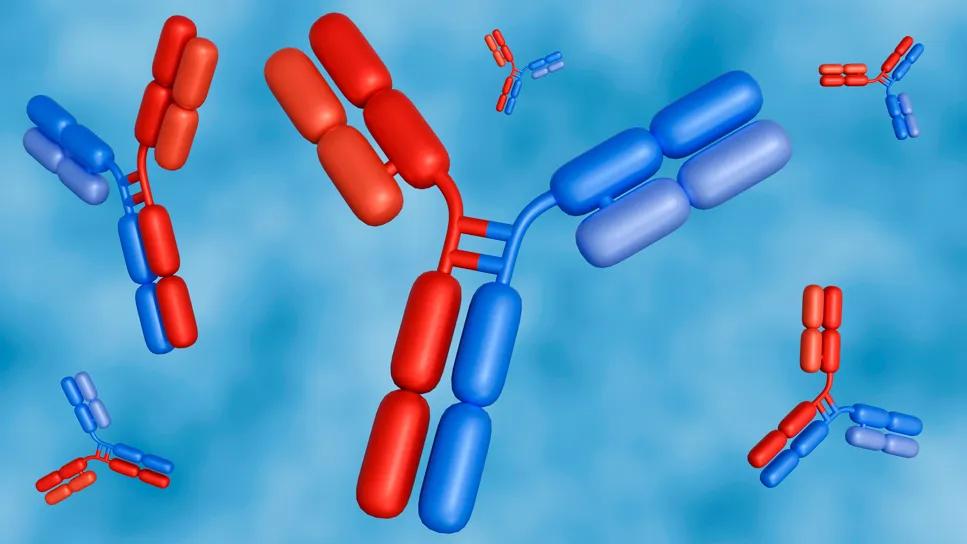
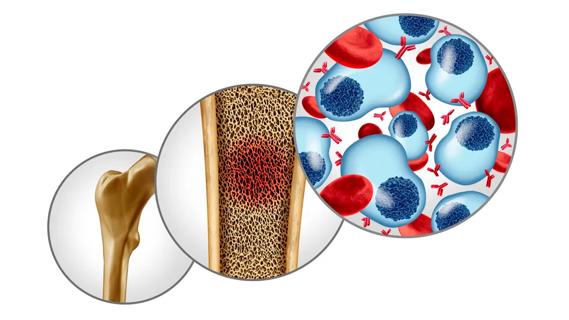
Image content: This image is available to view online.
View image online (https://assets.clevelandclinic.org/transform/1c31d759-4b64-4871-bf52-ed5c3732635b/bispecific-antibody-image-rrmm-study-2167502114)
Bispecific antibodies
The exceptional results of the MajesTEC-3 study of teclistamab and daratumumab has created much buzz in the hematology community. The study of 587 patients with relapsed/refractory disease showed 36-month progression-free survival rates of 83.5%, compared to 29.7% in the standard-of-care arms.
Advertisement
Cleveland Clinic is a non-profit academic medical center. Advertising on our site helps support our mission. We do not endorse non-Cleveland Clinic products or services. Policy
ConsultQD recently talked with hematologist/oncologist Sandra Mazzoni, DO, about the implications of these findings.
Everything was in flux as far as where cell therapy was going to land in the treatment sequence. Initially, it was approved after four lines of therapy. Most recently, CAR T-cell therapy was approved after first relapse. Now we have bispecific antibodies and need to determine where they play a role.
The MajesTEC-3 study was designed to move those options further up and use them at first relapse. Researchers studied the BCMA-targeted bispecific antibody teclistamab used in combination with the immunotherapy daratumumab.
The study findings also bring into play considerations for patients who aren’t the best candidates for CAR T-cell therapy but would be excellent candidates to safely receive bispecific antibodies.
I think people were surprised by how comparable the efficacy and safety rates were to CAR T-cell therapy.
Beforehand, patients at first relapse would have the option to go to CAR T-cell therapy, have a triplet of standard options or participate in a clinical trial. Now with the high-level evidence from MajesTEC-3 and supporting NCCN guidelines, there is the option to use teclistamab and daratumumab at first relapse.
The study was done during the COVID era, and infection rates were initially high (54.1% with grade 3 or 4 infections) among patients receiving teclistamab and daratumumab.
Infection rates dropped off since then because there’s more use of prevention strategies like immunoglobulins and prophylactic antibiotics like sulfamethoxazole-trimethoprim to protect against Pneumocystis jirovecii pneumonia (PJP). At our center, we mandate IVIG monthly as well as sulfamethoxazole-trimethoprim, or an alternative if the patient has sulfa allergies.
Advertisement
The infection rates also drop dramatically once the frequency of therapy was spaced out from weekly to biweekly and then to monthly.
In terms of takeaways from the study, long-term I think there’s going to be even more debate about how to sequence drugs that target BCMA. Traditionally, the thought was that if you’re going to expose someone to BCMA, use CAR T-cell therapy first because it doesn’t do much in terms of alteration to the BCMA target, whereas chronic exposure with a bispecific has a higher risk of altering the BCMA target itself.
I think it's a bit premature to say that, but everyone is very excited by the survival curves. The survival benefit is one of the highest we've seen in a study in a long time.
In this study, yes, that was the case. However, in real practice, I think there's going to be a big question mark about this. There's likely going to be two strategies: One is using the combination therapy for a fixed duration until the patient achieves minimal residual disease (MRD)-negative status, then close observation, and the other is taking an immune boostering approach where patients are re-dosed every four to six months.
The thought is that there are synergies between the two medications. Teclistamab targets CD3 on T-cells, and daratumumab alters the T-cell subsets and is thought to help with the fitness of the helper T-cells and increase the number of CD8 cytotoxic T-cells.
Keep in mind that only about 5% of the patients in this study were previously exposed to daratumumab, whereas in the real world, most patients at first relapse have been exposed to daratumumab and many are daratumumab refractory. There’s going to be a discussion point about whether you really need daratumumab in those cases.
Advertisement
I think it’s possible that teclistimab is the real workhorse in this scenario, and that many of us will provide it as a single agent to patients at first relapse.
There’s definitely a role for steroids in myeloma, especially for newly diagnosed patients or those with a high disease burden. Steroids also help to palliative bone pain. That said, I’m excited to see us pulling away from using steroids over and over though, as I see more side effects with steroids than I do with any other therapies.
Cleveland Clinic is participating in the MajesTEC-7 study, which is now open. This trial is studying combinations of teclistamab, daratumumab and lenalidomide versus talquetamab, daratumumab and lenalidomide versus standard of care with daratumumab, lenalidomide and dexamethasone in the frontline setting for patients who are ineligible for autologous stem cell transplant or who choose to defer transplant. These results may have the community rethinking the role of transplant in the future.
There’s a lot of fear in community sites around how to safely manage patients, especially in the initial step-up dosing, based on the initial study data about rates of cytokine release syndrome (CRS) and concern around management of the rare high-grade CRS. Many community sites may not have the ability to directly admit patients to the hospital or their local hospital lacks an ICU.
One of the answers is to have partnerships between academic sites and community practices where we take patients through the acute toxicity window and then they return to their community practice for ongoing care.
Advertisement
We also have better strategies in place now to manage CRS and other toxicities preventatively. Giving tocilizumab up front, for example, reduced CRS rates from 50-60% down to single digits. With these preventative measures, the majority of CRS cases are grade 1 and treatable with Tylenol and steroids.
Especially with all the new cell therapies now available at first relapse, it’s important to make referrals early. Don’t necessarily wait until the patient meets the strict definition of disease progression.
In our clinic, if we see early evidence of disease progression, we start talking about CAR T-cell therapy. The time to do this is when the disease is very manageable. Outcomes, particularly with CAR T-cell therapy, are better with a lower disease burden.
Advertisement
Advertisement

Phase 2 study brings pivotal advances in treatment efficacy and safety for the most challenging-to-treat population
Making sense of the fast-moving treatment landscape
Explaining common misconceptions about chimeric antigen receptor therapy

Clinicians share practices to streamline initiation of care
Prediction and bioinformatic data could prove valuable for therapeutic interventions targeting this malignancy
Findings from large database important to inform clinical practice
Study of 401,576 patients reveals differences in cancer burdens as well as overall survival
Despite sicker patients, response rates of teclistamab in a real-world study were similar to those from a pivotal clinical trial
 Search