Locations:





 Search
Jessica Barry, MD, pediatric gastroenterologist talks about the procedure and its implications for care
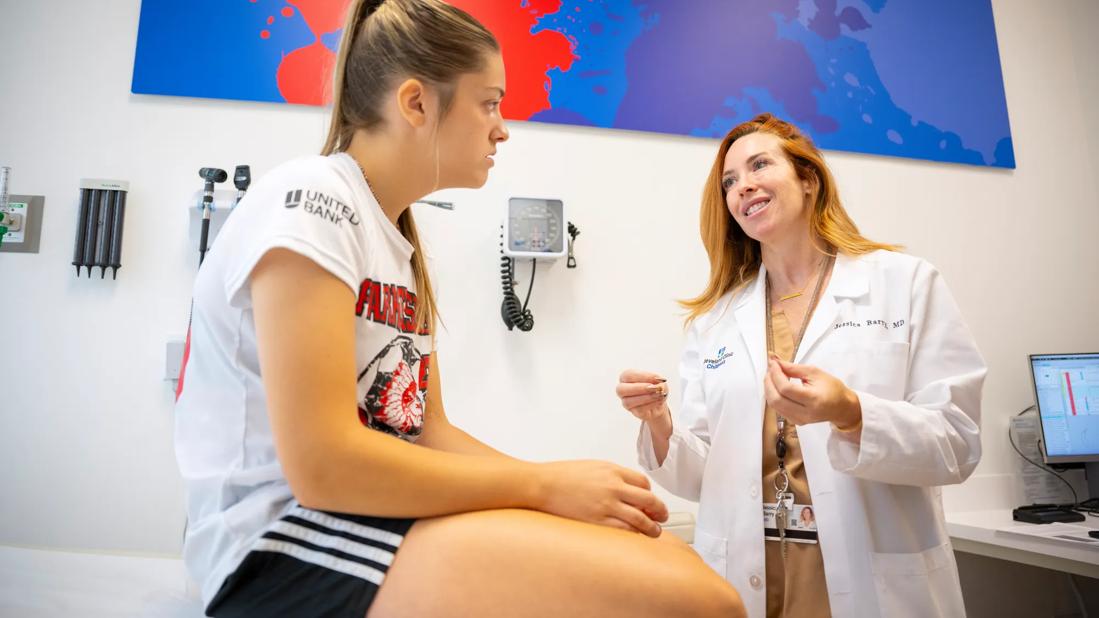
Image content: This image is available to view online.
View image online (https://assets.clevelandclinic.org/transform/dce5bfd3-0066-4b18-b529-a285ff70d451/CHP_5124710_08-07-24_0032_MK)
Jessica Barry, MD
Children suffer from many of the same gastrointestinal disorders as adults, but they often lack specialized care. Now Cleveland Clinic Children’s is expanding the treatments it offers in its pediatric gastroenterology program with small bowel balloon enteroscopy.
Advertisement
Cleveland Clinic is a non-profit academic medical center. Advertising on our site helps support our mission. We do not endorse non-Cleveland Clinic products or services. Policy
The procedure will allow young patients with bowel polyps, Crohn’s disease, and other small bowel disorders to receive more thorough evaluations, potentially less invasive treatment, all while remaining in a pediatric setting, says Jessica Barry, MD, a pediatric gastroenterologist at Cleveland Clinic Children’s.
“Small bowel enteroscopy has been utilized in adult patients for more than the last 10 years, but as for pediatric utilization this advanced technique is a little bit newer,” she said. “Now we are able to offer it within our pediatric endoscopy suites, so patients may remain in a pediatric care setting to have these procedures performed.”
Cleveland Clinic’s pediatric gastroenterology team includes 14 physicians, 12 of whom perform endoscopic procedures. In addition to advanced endoscopic techniques like small bowel enteroscopy, the program is known for providing liver transplants, multi-visceral small bowel transplants and small bowel rehabilitation.
The program also treats disorders including inflammatory bowel disease and polyposis disorders, as well as general pediatric gastroenterology conditions such as feeding disorders, nutritional disorders, motility disorders, functional constipation, and functional GI disorders.
Small bowel enteroscopy is similar to upper endoscopy, except that it can reach much farther into the small bowel. Traditional endoscopy techniques allow the provider to reach as far as the second portion of the duodenum. With small bowel enteroscopy, the clinician uses a longer-than-typical endoscope, combined with an overtube balloon that inflates within the small bowel as the endoscope moves through, this aids in moving the bowel over the scope like passing a sock over a foot.
Advertisement
“With this technique, we are able to visualize further into the small bowel, sometimes all the way to the terminal ileum,” Dr. Barry says.
The technique can provide a more thorough evaluation of patients and potentially reduce the need for more invasive procedures.
Currently, conventional endoscopy and colonoscopy are used to evaluate patients with gastrointestinal symptoms, but those modalities can only reach so far, leaving a long gap of small bowel in between that remains unexplored. Capsule endoscopy can provide a snapshot of this hard-to-reach area, but if physicians want a more detailed view, or need the capacity to biopsy or treat abnormalities, the patient may need to be referred for laparoscopic surgery.
With small bowel enteroscopy, the physician can explore the small intestine endoscopically, in hopes of needing more invasive techniques or multiple procedures.
“I can evaluate the tissue look for polyps, mucosal disease or bleeding, and then I’m able to make interventions based on what I see in that moment,” Dr. Barry says.
Situations where this procedure might be called for include patients who are known to have a familial polyposis disorder that requires regular small bowel screenings; or patients for whom imaging has shown thickening or other signs of inflammatory disease in an area that can’t be reached through conventional methods.
“Patients may have been to multiple centers where they’ve had upper endoscopy and colonoscopy, which have been normal, but nobody’s been able to reach those areas of concern on other imaging or capsule endoscopy evaluations in between, which leads them to still go without answers,” she says.
Advertisement
Getting a conclusive diagnosis for a disorder like Crohn’s disease, for example, is critical before embarking on a potentially lifelong course of treatment, she notes.
“Not only may it, in certain circumstances, lead to earlier detection, it could avoid unnecessary treatments,” Dr. Barry says.
Only a few medical centers in the country currently offer small bowel enteroscopy for pediatric patients. That meant children in the Cleveland area previously needed to be treated in adult centers, or they had to travel for care.
Offering the procedure at Cleveland Clinic Children’s means that it can be performed with a smaller pediatric endoscope, and young patients will be treated in a familiar, child-friendly setting cared for by a pediatric provider and nurses.
Dr. Barry recently treated a 14-year-old girl with a diagnosis of Peutz-Jeghers syndrome who was due for a baseline polyp screening evaluation.
“I was able to complete her entire procedure — the upper endoscopy, the balloon small bowel enteroscopy, and her colonoscopy — all in one setting,” Dr. Barry says. “So she wasn’t coming back for multiple procedures, and she did not have to be treated in an adult atmosphere.”
The center is working on adding other treatments to its program, including other advanced mechanisms for polypectomy and bleeding control.
Advertisement
Advertisement
Findings may help guide earlier AUD intervention
Landmark trial data suggest appendectomy may reduce relapse and improve remission rates in select patients
Implications for surgical decision-making and patient management
Dr. Prabhu discusses mentorship, collaboration and her vision for the future of the department

New program looks to innovative approaches for advancing early detection and multicancer prevention
Patients have a significantly higher risk of developing fistulas and experiencing future Crohn’s-like changes
Cleveland Clinic researchers developed an objective tool to assess response following total neoadjuvant therapy.

Patients may benefit from booster appointments, psychological support