Locations:





Patients have a significantly higher risk of developing fistulas and experiencing future Crohn’s-like changes
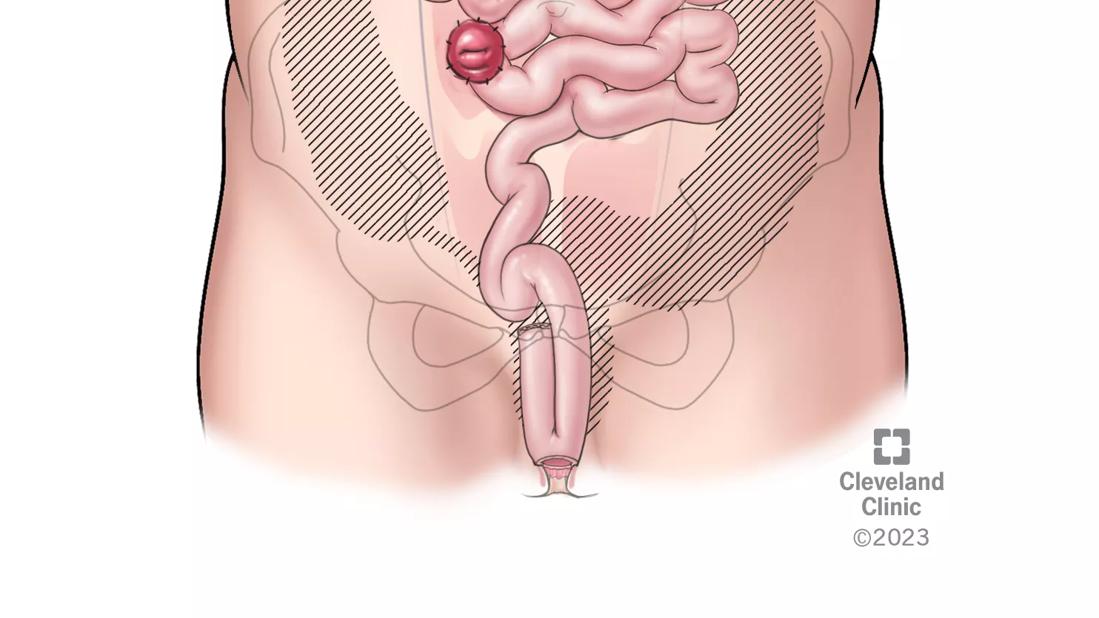
Image content: This image is available to view online.
View image online (https://assets.clevelandclinic.org/transform/53b92887-3bfe-4015-8026-10d588c0e0d2/Loop-ileostomy-w_jpouch_anterior-2_23-DDI-4221808)
Illustration of J pouch
Pyoderma gangrenosum (PG) is a rare extraintestinal manifestation of ulcerative colitis that leads to severe skin ulcers and is considered a marker of inflammatory status. Now, a new study by Cleveland Clinic physicians shows that it is associated with worse outcomes after ileal pouch-anal anastomosis (IPAA) surgery, or “J-pouch” surgery.
Advertisement
Cleveland Clinic is a non-profit academic medical center. Advertising on our site helps support our mission. We do not endorse non-Cleveland Clinic products or services. Policy
Patients with pyoderma gangrenosum had an almost six times higher risk of pouch failure. The study, which tracked patients for 10 years after surgery, also found that patients with PG had a significantly higher risk of developing fistulas and of experiencing Crohn’s-like changes in the future. It’s the first study to look at IPAA outcomes in these patients.
“I don’t want to send a message that if a patient has pyoderma gangrenosum, then they can’t have a J-pouch,” says senior author Olga Lavryk, MD, PhD, a colorectal surgeon at the Cleveland Clinic. “But identifying high-risk patients for pouch failure, like this group, is really important because they can be counseled and make an informed decision. Our findings from this study indicate that patients with PG may have a different, more inflammatory phenotype of their disease, which gives us an idea that these patients may be at higher risk of developing Crohn ’s-like changes in the future.”
PG affects fewer than 2% of patients with ulcerative colitis, but symptoms can be severe. Patients develop deep, painful skin ulcers that can appear anywhere on the body, but they are especially challenging when they occur around the stoma area. When this happens, it can make it difficult or extremely painful to insert the ostomy appliance, change the bag or seal the area. In extreme cases, the stoma may need to be relocated.
IPAA surgery involves creating a pouch from the small intestine to replace the rectum. This can restore bowel movements and eliminate the need for a permanent ostomy bag. It is typically offered to patients with severe ulcerative colitis who have exhausted medical therapy, but it is not recommended for patients with Crohn’s disease.
Advertisement
In the retrospective study, researchers compared 30 patients with PG who underwent IPAA surgery and compared them with a control group of patients without PG. Patients were closely matched for age, gender, diagnosis, disease duration, surgery year, technique, and length of follow-up, along with other factors.
Pouch failure was significantly more common in the PG group (21%) than in the group without PG, which had only a 3% failure rate. More than 34% of the PG patients developed pouch-related fistulas, compared to 10% of the control patients.
Long-term, 55% of the group who had been diagnosed with PG prior to surgery were ultimately diagnosed with Crohn’s disease, compared to 45% of the group without PG.
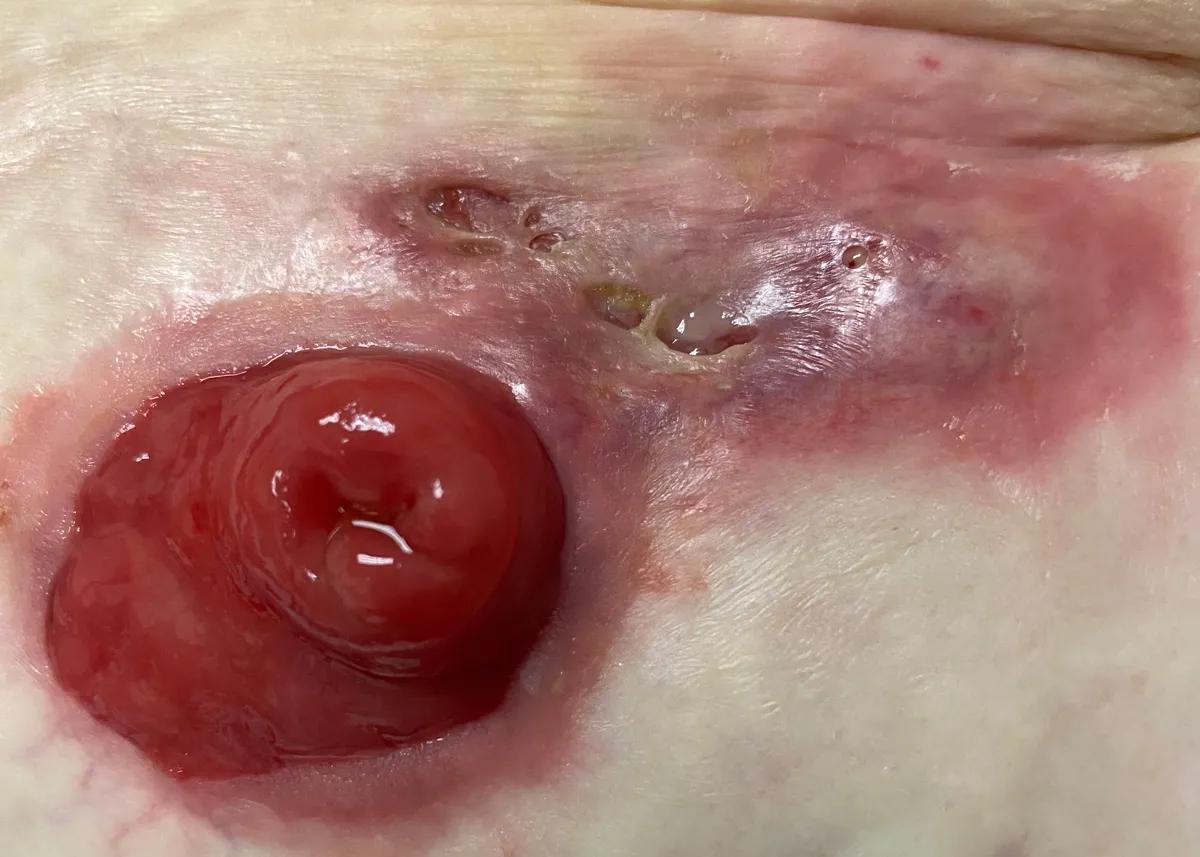
Image content: This image is available to view online.
View image online (https://assets.clevelandclinic.org/transform/46258ffc-8cf0-4c97-87c8-92388dee417a/pyoderma-gangrenosum-2)
Example of pyoderma gangrenosum
While the study was small, she noted that researchers looked at data from more than 3,800 patients who underwent IPAA dating back to 1983 to find 30 who had PG, pointing to the rarity of the condition.
The findings should be used to help counsel patients and guide shared decision-making, Dr. Lavryk says.
“IPAA surgery is not a must-do,” she explains. “Now that we know how to do this surgery, the next step is learning how to identify high-risk patients who may not do well with the surgery and improving patient satisfaction. These new findings are just a small piece in the big puzzle.”
The study, “Pyoderma Gangrenosum — a Risk Factor for IPAA Failure? A Matched Cohort Analysis,” was presented May 11, 2026, at the American Society of Colon Rectal Surgeons Annual Meeting.
Advertisement
Advertisement

Landmark trial data suggest appendectomy may reduce relapse and improve remission rates in select patients

Retrospective analysis looks at data from more than 5000 patients across 40 years

The Integrated Program aligns IBD care and research across Cleveland Clinic locations

Cleveland Clinic and Johns Hopkins collaboration could help meet need for new therapies

Findings suggest insurance coverage alone may not ensure timely specialty care and treatment

Study identifies patient and procedural factors associated with missed endoscopy appointments
Real-time case discussion connects IBD specialists across disciplines, institutions and countries

Findings show significant energy savings and no association with increased surgical site infection, mortality or ICU admission
 Search