Locations:





Investigators evaluated ambient air toxins and emission sources
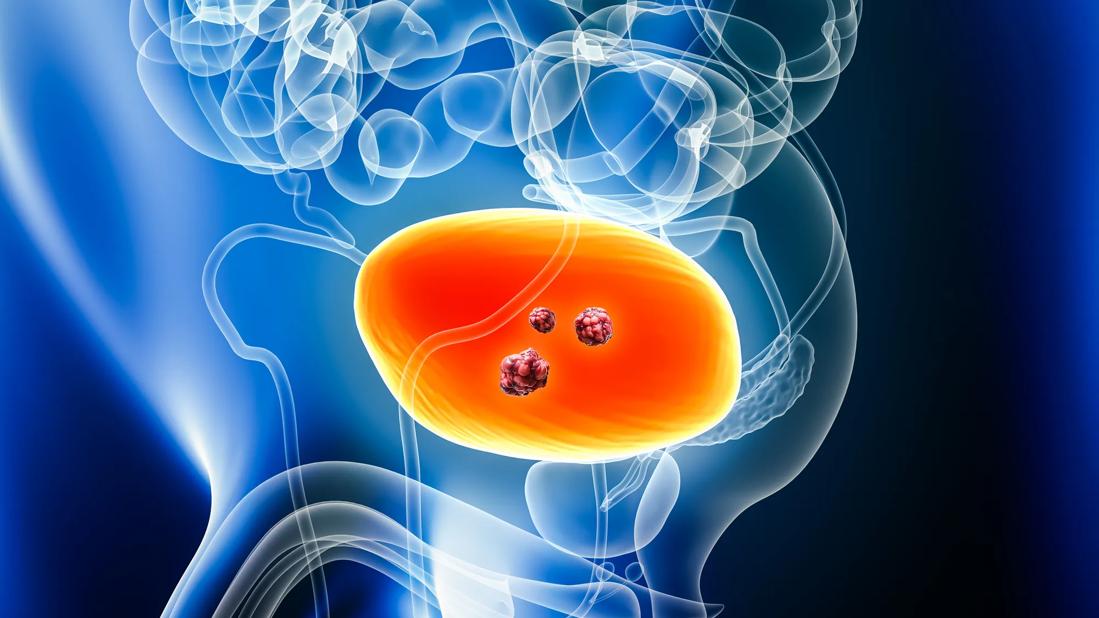
Image content: This image is available to view online.
View image online (https://assets.clevelandclinic.org/transform/eb4bcc81-53fa-456b-99f1-8ab941203f41/bladder-cancer-1467893023)
bladder cancer graphic
In two case-control analyses presented at the 2026 American Urological Association Annual Meeting, investigators linked geocoded residential data from 4,728 Cleveland Clinic participants with EPA AirToxScreen to examine whether ambient air toxins and emission sources were associated with bladder cancer.
Advertisement
Cleveland Clinic is a non-profit academic medical center. Advertising on our site helps support our mission. We do not endorse non-Cleveland Clinic products or services. Policy
These findings raise new questions about bladder cancer epidemiology, informing future efforts to characterize geographic variation in risk.
“Cigarette smoking remains the most well-established risk factor for bladder cancer,” explains Jacob Knorr, MD (PGY-4, Urology Department). “However, despite long-term declines in smoking prevalence in the United States, bladder cancer incidence has not decreased proportionally.” This has raised questions about additional environmental contributors.
Urologists have theorized a potential relevancy with inhaled environmental pollutants. Sean McSweeney, MD, also a PGY-4 in the Department of Urology, notes a similar exposure pathway may be in play for inhaled environmental pollutants.
“We know that after toxins from cigarette smoke are filtered through your lungs and kidneys, they are stored in your bladder,” says Dr. McSweeney. “That’s why cigarette smoking is so highly associated with bladder cancer. The inside of your bladder is exposed to those carcinogens.”
Under the direction of Christopher Weight, MD, Director, Section of Urologic Oncology, Drs. Knorr and McSweeney designed two case-control studies with a cohort of 4,728 participants from Cleveland Clinic. Approximately half were patients with pathology-confirmed bladder cancer (n = 2,366), and the other half were noncancer study control participants (n = 2,362).
In the first analysis, the study sample was geocoded at the census block level and linked to environmental exposures data, using the Air Toxics Screening Assessment (AirToxScreen), the U.S. Environmental Protection Agency (EPA)’s screening tool. The researchers included block-level air concentrations of 177 chemicals in the first analysis. The controls were age-matched on a 1:1 basis (using nearest neighbor) and analyzed using adjusted logistic regression.
Advertisement
The researchers found a number of environmental exposures were linked to increased bladder cancer odds. The key chemical classes associated with risk included:
Many of these chemicals are known urothelial carcinogens. Beyond the chemicals alone, the researchers say that adding pollutant source information to complement the chemical findings was important for contextualizing the data.
Dr. Knorr posits, “Are we seeing these more in urban areas, like industrial and traffic-related emissions? Or are they more characteristic of rural exposures, like herbicides, insecticides, and oil and gas drilling?”
To get a fuller picture, the team conducted a second analysis using the same methodology but assessing unique source groups rather than chemicals alongside the participant data. They identified 39 air-pollutant sources using AirToxScreen. Participants were also classified by Rural-Urban Commuting Area (RUCA) codes.
The researchers found that agricultural combustion and biogenic sources were more strongly associated with bladder cancer in urban RUCA codes. In contrast, the presence of oil and gas extraction industry had a stronger association with bladder cancer in rural-coded populations.
“These findings suggest that not only can different sources have different levels of risk associated with bladder cancer, but that the sources may vary based on a person’s geographic location,” says Dr. McSweeney. While previous data have shown a link between occupational exposures, these studies are among the first to link bladder cancer cases to residential data.
Advertisement
As a next step, the research team plans to validate their initial findings in a larger cohort. Eventually, they aim to assess causation by analyzing mutational signatures in bladder tumor specimens, which, Dr. Knorr adds, will help them connect the dots from the epidemiologic study to a mechanistic one.
The researchers emphasize that the incidence of bladder cancer with respect to patients’ geographical location is multifaceted and underexplored. Still, these growing data can support conversations following a diagnosis, which can be especially vexing, they say, in young patients who don’t meet any traditional risk factors.
“While these results remain hypothesis generating at this point, we found that exposure to certain environmental toxins was much higher in patients with bladder cancer,” says Dr. Weight. “This research underscores how interconnected we are to our environment and the chemical and pollutants we put into our air, water and soil.”
Advertisement
Advertisement

Oncologic and functional outcomes are promising, but selection is key
Findings confirm microbial variability, offer new potential treatment strategy

Research program sets the stage for clinical trials
Retrospective study finds acceptable cancer control among most histologic subtypes with intravesical therapy

What updated techniques, counseling and a changing workforce could mean

A recent case study illustrates surgical intervention for treating recurrent bladder cancer

Device may offer a practical middle-ground option for some patients

Study shows a simplified three-factor model performed comparably with the standard five-factor framework
 Search