Locations:





Recruitment open for Phase III trial of immunotherapy plus chemotherapy and radiotherapy
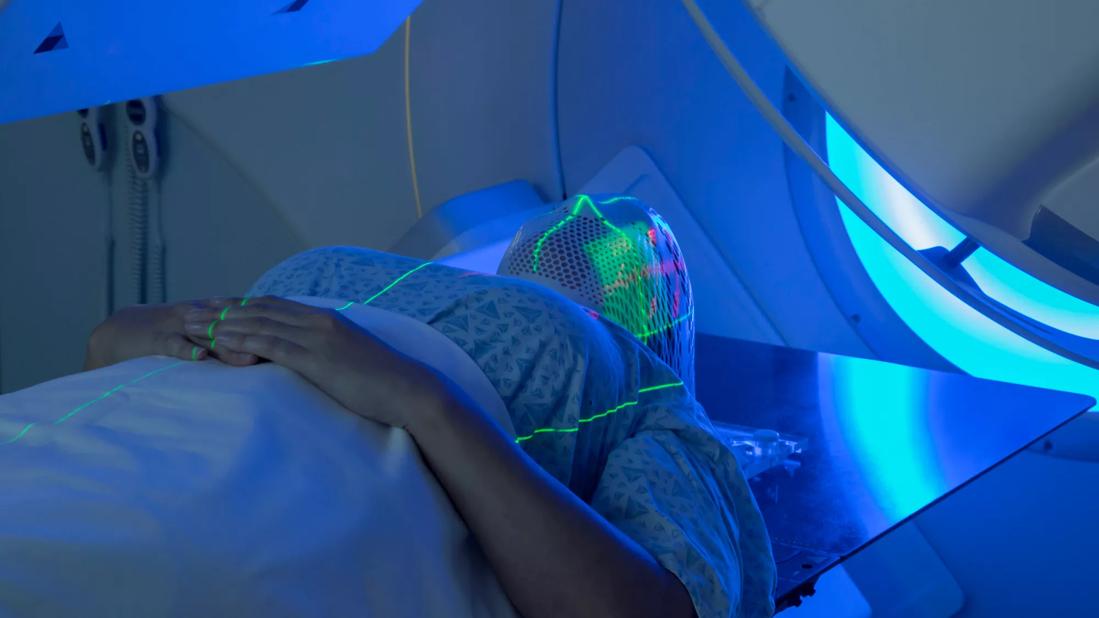
Image content: This image is available to view online.
View image online (https://assets.clevelandclinic.org/transform/2ad82d91-9121-419e-b203-943e434a3cf3/GettyImages-614740874-scaled_jpg)
Woman Receiving Radiation Therapy Treatments for Head & NeckCancer
Adult patients with pathologic stage III or IV head and neck squamous cell carcinoma (HNSCC) are being sought for a prospective clinical study. Cleveland Clinic is one of 237 locations nationwide where the prospective, randomized, Phase III trial focused on adjuvant therapy is being conducted.
Advertisement
Cleveland Clinic is a non-profit academic medical center. Advertising on our site helps support our mission. We do not endorse non-Cleveland Clinic products or services. Policy
RTOG-1216 is designed to determine whether a combination of atezolizumab (PD-L1 inhibitor), cisplatin and intensity-modulated radiation therapy (IMRT) produces better overall survival (OS) than standard cisplatin plus IMRT in the adjuvant treatment of individuals with pathologic high-risk, human papillomavirus-negative HNSCC. The researchers also will be evaluating OS with a combination of docetaxel-cetuximab and IMRT versus standard cisplatin and IMRT in the same setting.
To be eligible for the study, patients must have pathologic stage III or IV HNSCC involving the oral cavity, oropharynx, larynx or hypopharynx. They also must have at least one of the following high-risk pathologic features: extracapsular nodal extension or invasive cancer at the primary tumor resection margin (tumor on ink or tumor in a final separately submitted margin). The total target for accrual is 684 patients.
RTOG-1216 expands upon results from NRG-HN003, a Phase I study of adjuvant pembrolizumab (PD-1 inhibitor), cisplatin and radiation therapy in 34 patients with pathologic high-risk HNSCC. In that study, a Phase II dose of pembrolizumab of 200 mg every 3 weeks for eight doses, starting 1 week before IMRT with 60 to 66 Gy delivered at 2 Gy/fraction 5 days per week, and cisplatin 40 mg/m2 weekly during IMRT was found to be safe and feasible.
“One of our goals for this study is to see if we can improve outcomes with the addition of immunotherapy to standard chemotherapy and radiation therapy,” says Emrullah Yilmaz, MD, PhD, a study investigator and head and neck oncologist at Cleveland Clinic. “It was encouraging that there were no unexpected side effects with those combinations in patients in NRG-HN003, but our research was not designed to assess the efficacy of treatment.”
Advertisement
Patients enrolled in the Phase III portion of RTOG-1216 will be randomized to one of three arms (arms 1, 3, or 4). Those in arm 1 will undergo IMRT once daily 5 days a week for 6 weeks and receive concurrent cisplatin intravenously (IV) once a week for 6 weeks. Those in arm 3 will receive weekly cetuximab concurrent with IMRT, starting one week prior to radiation therapy. They will also receive the same IMRT regimen as in arm 1 and at the same time receive docetaxel once a week for 6 weeks. Patients in arm 4 will undergo IMRT once daily for 5 days per week over a 6-week period and receive concurrent cisplatin weekly for 6 weeks. Starting 1 week before IMRT, they will also receive atezolizumab IV over 30 to 60 minutes every 3 weeks for up to 8 doses (weeks -1,3,6,9,12,15,18, and 21) in the absence of disease progression and unacceptable toxicity.
After the study treatment is complete, patients will be followed up at 1 and 3 months, every 3 months for 2 years, every 6 months for 3 years and annually thereafter.
Concurrent cisplatin and radiation therapy is the current standard of care for the adjuvant treatment of patients with HSNCC with high-risk pathologic features. Despite the treatment, locoregional recurrence is common in those with pathologically high-risk disease. Immunotherapy has been studied for HNSCC, which is the sixth leading cancer worldwide, but its use in the adjuvant setting is not yet established.
The authors of NRG-HN003 and the researchers involved in RTOG-1216 hypothesize that immunotherapy with PD1 checkpoint blockade may reverse immunosuppression caused by HNSCC or the treatment for it. “Unfortunately, patients with HSNCC and high-risk features who undergo surgery and adjuvant chemotherapy with radiation therapy have a greater risk of disease recurrence,” explains Dr. Yilmaz. “We are hoping that with novel combinations using immunotherapies we can increase their survival.”
Advertisement
In addition to RTOG-1216, Dr. Yilmaz notes that a wealth of other research is ongoing at Cleveland Clinic on HNSCC. Studies are underway aimed at identifying immune markers that will predict response to treatment and of immunotherapy combined with radiation therapy. Settings include the use of immunotherapy for the treatment of earlier, metastatic and advanced disease.
Advertisement
Advertisement

Adding 177Lu-PSMA-617 to ADT plus an ARPI cut the risk of radiographic progression or mortality by 28%

New program will help patients improve fitness and manage weight after cancer treatment

Cleveland Clinic hematologist highlights new guidelines and treatment advances in immune thrombocytopenia
NIMBLE replaces weekly tumor board delays with same-day multidisciplinary recommendations

Cleveland Clinic study provides validation for the test, which combines AI and pathological data to predict outcomes in postoperative patients
Advanced imaging technology catches metastases much earlier, allowing treatment with fewer side effects

Reduced radiation for lymph node areas reduces side effects
Large Cleveland Clinic analysis may help resolve a longstanding question over optimal fractionation
 Search