Locations:





Comorbidities and medical complexity underlie far more deaths than SUDEP does
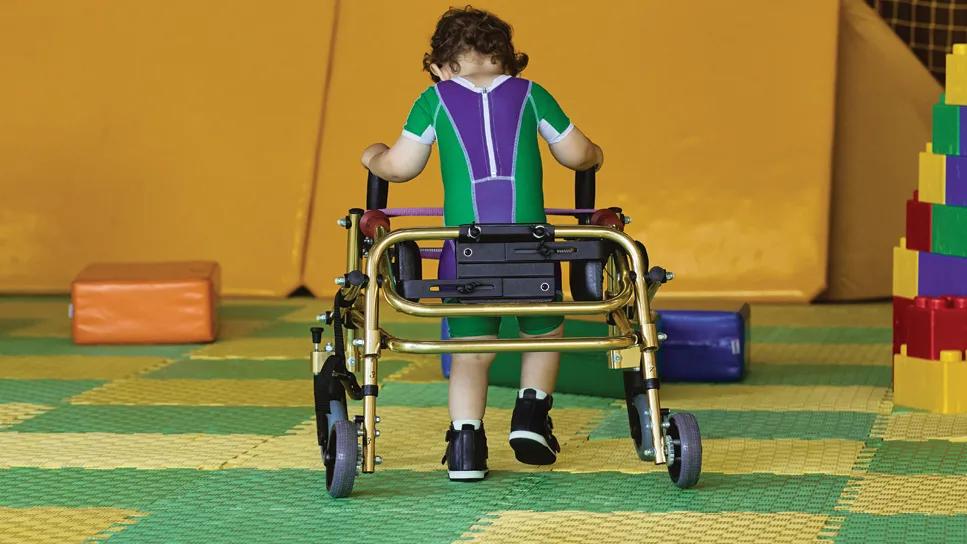
Image content: This image is available to view online.
View image online (https://assets.clevelandclinic.org/transform/da73a723-0ced-473c-9cb4-edce0c8a9c28/toddler-with-walker-depicting-developmental-and-epileptic-encephalopathies)
small child walking with a wheeled walker
Among patients with developmental and epileptic encephalopathies (DEEs), the majority of deaths are driven by comorbidities beyond severe epilepsy — most often respiratory failure — rather than by sudden unexpected death in epilepsy (SUDEP). So concludes a new retrospective study from Cleveland Clinic, one of the largest series to date reporting details of mortality in patients with DEE.
Advertisement
Cleveland Clinic is a non-profit academic medical center. Advertising on our site helps support our mission. We do not endorse non-Cleveland Clinic products or services. Policy
“There’s a perception in the medical community that children with DEE tend to die from SUDEP, but our findings indicate that this perception needs revisiting,” says Elia Pestana Knight, MD, senior author of the study, which was presented at the Partners Against Mortality in Epilepsy (PAME) conference, held before the 2025 annual meeting of the American Epilepsy Society, by first author Annette Hu Cremean, DO, a pediatric neurology resident at Cleveland Clinic.
“Eighty percent of the children in our analysis died from non-SUDEP causes,” adds Dr. Pestana Knight, a pediatric epileptologist with Cleveland Clinic. “These findings suggest that improving outcomes for these high-risk patients requires a shift toward aggressive, multidisciplinary management of comorbidities that extends well beyond seizure control.”
DEEs are a severe group of epilepsy disorders marked by seizures and persistent epileptiform activity that contribute to developmental delays. They typically begin in infancy or childhood and encompass several clearly defined epilepsy syndromes. Affected individuals frequently experience a range of comorbidities, including intellectual disabilities, psychiatric conditions such as autism spectrum disorder and behavioral challenges, as well as movement and musculoskeletal issues, gastrointestinal disturbances, sleep disorders and a heightened risk of death. The nature of these challenges evolves over time, requiring significant lifelong patient support.
While the risk of SUDEP is a recognized concern in patients with DEE, data on the broader circumstances of mortality and the role of non-neurological comorbidities are limited. “Gaining a deeper understanding of these events is essential for providing families with accurate prognostic counseling and disease-specific guidance,” Dr. Pestana Knight observes.
Advertisement
To address this gap, she and colleagues conducted a 10-year retrospective chart review (January 2014 to January 2024) of deceased patients aged 18 years or younger who had been treated for DEEs at Cleveland Clinic. The study analyzed the clinical characteristics, comorbidities and healthcare utilization patterns of 44 patients, comparing those who died of SUDEP with those who died of other causes (non-SUDEP).
The study identified 35 non-SUDEP deaths (80%) and 9 SUDEP deaths (20%). The data revealed that non-SUDEP patients represented a significantly more medically complex cohort. Notable differences included:
One of the most striking findings was the predominance of pulmonary issues. Respiratory failure was the leading cause of mortality, accounting for death in 54% of non-SUDEP cases. This trend held across various underlying etiologies of DEE, including genetic, metabolic and structural causes. Among patients with a confirmed genetic basis for DEE, 92% were found to have a monogenic disorder.
Advertisement
The location of death also varied significantly. While 44.4% of SUDEP deaths occurred at home, non-SUDEP deaths were far more likely to occur in a clinical setting, with 48.6% of patients in the non-SUDEP group dying in the hospital and 37.1% in hospice care.
These findings underscore that DEE is rarely an isolated neurological issue and can have a very broad spectrum of clinical manifestations, the researchers note. For clinicians, the study offers two actionable takeaways:
“Our unique study helps refine understanding of mortality in DEE and the events surrounding death,” Dr. Pestana Knight says. “However, many questions remain about the optimal management of these patients beyond treatment of their epilepsy. Larger prospective investigations are needed.”
She adds that despite her group’s findings of lower-than-expected rates of SUDEP in this population, “it remains imperative for clinicians to discuss SUDEP with all patients with epilepsy and their families.” She says this need is increasingly being recognized, noting that Ohio’s legislature is currently considering a SUDEP awareness bill that would require physicians to discuss SUDEP with appropriate patients.
Advertisement
“SUDEP awareness is essential,” Dr. Pestana Knight concludes. “But for patient with DEEs, it is very important for clinicians to recognize the other, more important causes of mortality.”
Advertisement
Advertisement
Patient history plays a key role in identifying the condition

Highest response rates seen with stress-lowering techniques like yoga, meditation and mindfulness

Multicenter study offers guidance on when to consider extended monitoring

Free portal helps researchers classify and share data using the IC-CoDE framework
Quantitative imaging adds diagnostic value beyond 3T MRI in nearly half of patients
Data-driven segmentation approach shows promise for seizure characterization with utility for clinical decision making
Early identification of temporal encephaloceles can improve surgical decision-making
Insights from one of the first studies of invasive monitoring in the rare form of focal cortical dysplasia
 Search