Locations:





Although common, overuse injuries have no significant impact on a players’ draft rank, short-term availability and performance
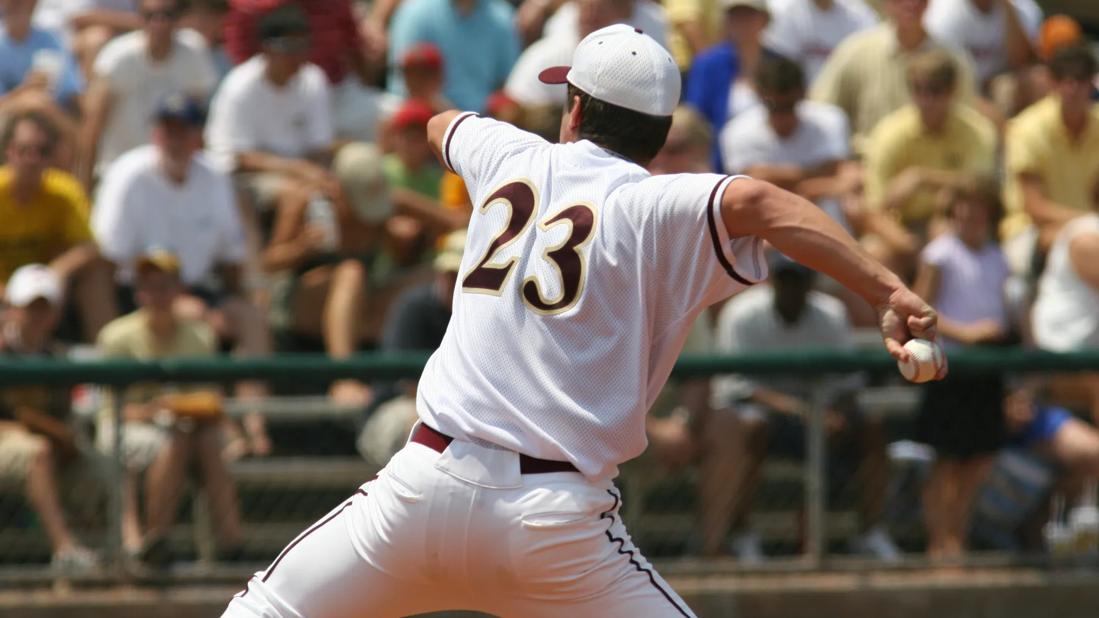
Image content: This image is available to view online.
View image online (https://assets.clevelandclinic.org/transform/27f47c13-ace2-428d-9f67-d2c6e0b09a3c/baseball-pitcher-184086302)
Baseball pitcher
While granular injury data is presently lacking, this study demonstrates that a baseball player with a prior injury should not necessarily be stigmatized when compared to his uninjured counterparts, a recent study finds.
Advertisement
Cleveland Clinic is a non-profit academic medical center. Advertising on our site helps support our mission. We do not endorse non-Cleveland Clinic products or services. Policy
“We wanted to determine how these overuse injuries impact an athlete’s career,” states Prem Ramkumar, MD, MBA, a surgical resident in Cleveland Clinic’s Department of Orthopaedic Surgery and lead author on the study. “This is the first study examining the musculoskeletal history of predraft players via their medical records rather than low fidelity, unofficial data. Understanding how these injuries impact a player’s availability and performance can improve decision making by medical, coaching and franchise personnel.”
Researchers reviewed the medical records of 1,890 amateur baseball players (750 position players and 1,140 pitchers). The records documented the findings of preparticipation physical assessments completed by major league baseball (MLB) team physicians before the drafts in 2014 to 2018.
Previous studies relied on roster management tools, such as the disabled list, which does not give insight into preprofessional injuries, their impact on draft rank, or specific pathology. At a macroscopic level, musculoskeletal history does not affect an amateur baseball player’s draft rank, short-term availability, or performance in the MLB.
Of the 1,890 players, 22.8% no reported injury history, 48.8% reported nonoperative injuries and 28.5% reported injuries that were treated operatively. The most common predraft injuries were elbow tendinitis (n = 312), ulnar collateral ligament (UCL) sprain (n = 134), UCL tear (n = 78), shoulder labral tear (n = 76) and subacromial bursitis (n = 74).
Advertisement
The most common nonoperative treatments were physical therapy and cellular therapy injections. The most common surgical procedures were UCL reconstruction, closed reduction and percutaneous pinning or open reduction and internal fixation, knee arthroscopy and should arthroscopy with labral repair.
Players with nonoperative injuries had decreased odds of being drafted; however, among drafted players, there was no difference among noninjured, nonoperative or operative groups in terms of draft rank. Players with operative injuries had non-statistically significant decreased odds of being drafted, indicating that managers may hesitate to draft players with prior injuries.
For purposes of this study, availability was defined as how often players were physically available (e.g., not on the disabled list or out for surgery) for the franchise during their first two years in the MLB. The analysis found no statistically significant differences in availability among the noninjured, nonoperative and operative groups.
Performance was determined by regression analysis of a position player’s batting average or a pitcher’s earned run average (ERA). There were no significant differences in performance among the three injury groups. The findings suggest only overall draft rank predicts increased ERA in the pitcher-only group.
“Throwing injuries, especially overuse injuries to the elbow or shoulder, are common in this athlete population, which may necessitate specialist care with experience in shoulder and elbow pathology,” says the study’s senior author, Mark Schickendantz, MD, who specializes in arthroscopic shoulder and elbow surgery and serves as head team physician for the Cleveland Indians MLB team and as Director of Cleveland Clinic Center for Sports Health. “If a pitcher has a significant injury to their throwing arm, even without surgery, it may take three to four months before they’re back playing again. This study shows that, despite this time away for rehabilitation, preprofessional injuries do not impact a player’s overall availability or performance in the first two years of his MLB career.”
Advertisement
Cleveland Clinic has specially designed a rehabilitation program for overhead throwers, the majority of whom are baseball players. In the Cleveland Clinic Sports Health Throw Right program, sports physicians collaborate with physical therapists, athletic trainers, exercise physiologists, physical therapy assistants, certified strength and conditioning specialists to assess these injuries individually. The team works together to assess the injury and investigate its cause, correct the problem and prevent future disability.
Advertisement
Advertisement
Ultrasound-guided debridement for selected patients with persistent symptoms
Cleveland Clinic’s new program uses a cross-institute model to provide complete care for women of all ages and athletic levels
A practical look at patient selection, implant choice and the unanswered questions around long-term value

PTs’ roles as educators and translators make them a natural fit for informatics
Innovative procedure offers less-invasive alternative to Latarjet procedure

Even patients with reported penicillin allergies can receive it without increased complications

Study challenges assumptions about risk evaluation in total hip revision
Protein expression in synovial fluid indicates patients’ immune factors may be involved
 Search