Locations:





Low-dose aspirin, more frequent checkups may lower risks

Image content: This image is available to view online.
View image online (https://assets.clevelandclinic.org/transform/5ebfe0ca-2a07-4e59-a9a6-5cd8ee7cdf12/physician-counsel-1499725218)
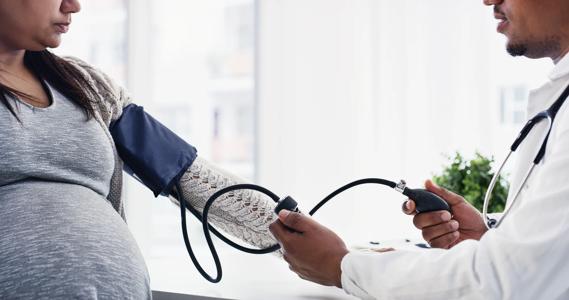
female patient in consultation with doctor
Rates of hypertensive disorders of pregnancy are rising nationwide and are at crisis levels in some communities. In Cuyahoga County, where Cleveland Clinic’s Main Campus, Fairview and Hillcrest hospitals are located, the condition now affects as many as one in three patients, says obstetrician/gynecologist Monique Yoder Katsuki, MD, MPH. Follow-up with a primary care provider is essential for these patients, not just during the postpartum period but for the rest of their lives.
Advertisement
Cleveland Clinic is a non-profit academic medical center. Advertising on our site helps support our mission. We do not endorse non-Cleveland Clinic products or services. Policy
Hypertensive disorders of pregnancy, including gestational hypertension and preeclampsia, are associated with an increased lifetime risk for cardiovascular disease. Patients may need routine health screenings at an earlier age and more frequently, as well as medication management that takes their future reproductive plans into account.
“It’s really important to get a patient’s pregnancy-related history,” Dr. Katsuki says. “Did they have gestational diabetes? Were they on insulin? Did they have a hypertensive disorder of pregnancy? Did they have preeclampsia? Did they take blood pressure medication? These are important questions that will help to guide care.”
Because of the high prevalence of preeclampsia in the community, the Partners for Change initiative in Cuyahoga County has collaborated with obstetric care providers in the region on an initiative to recommend low-dose aspirin universally to all pregnant patients, rather than using risk-based recommendation guidelines. Dr. Katsuki notes that low-dose aspirin has been shown to reduce the risk of developing preeclampsia. This can, in turn, reduce the risk of medically indicated preterm birth and associated risks of prematurity.
“It’s very low-risk, and it has very significant potential benefits,” she says. “With this universal approach we’re finding that we have increased uptake of low dose aspirin and we’re really getting improved uptake with the most high-risk patients.”
Dr. Katsuki emphasizes the importance of postpartum care for this population.
Advertisement
“Many young, healthy women don’t have a primary care provider — they will just see their Ob/Gyn provider,” she says. Obstetrician/gynecologists who see patients with hypertensive disorders during pregnancy should ensure that those patients are established with a primary care provider for ongoing care after delivery.
In the postpartum period, patients who have hypertensive disorders of pregnancy need more frequent monitoring than a six-week postpartum checkup. They need frequent blood pressure checks and monitoring of symptoms as complications may arise, and medications often need to be adjusted or tapered in the postpartum period.
Long-term management should include regular surveillance of blood pressure, health maintenance examinations tailored around the patient’s risk factors, and medication monitoring.
In addition to taking a patient’s pregnancy history, providers should ask about their future reproductive plans, Dr. Katsuki adds. “Screening for, identifying and managing any risk factors in the interpregnancy interval is really helpful for optimizing health in pregnancy. We really want to capitalize on the opportunity to manage medical problems and minimize risks prior to a subsequent pregnancy.”
Fertility planning is also important for managing hypertensive medications, some of which may be contraindicated during pregnancy and may need to be changed if a patient desires pregnancy or becomes pregnant.
Cardiovascular risk doesn’t end with the early postpartum period, and neither should follow-up care, Dr. Katsuki says.
Advertisement
In some cases, routine health screenings and more comprehensive health evaluations should be initiated earlier or repeated more frequently than they would for a patient without a history of hypertensive disorders of pregnancy, she adds.
Along with regular blood pressure checks, screenings could include HbA1C, renal function, lipid testing, and more advanced cardiovascular testing.
Even if a provider is seeing a patient who gave birth decades earlier, their pregnancy history remains relevant. “You still want to know,” Dr. Katsuki says. “It has very real implications for health risks, screening and maintenance.”
Addressing social determinants of health and socioeconomic challenges, such as financial and food in security and housing and transportation needs, can also have a significant effect on improving outcomes for women with high-risk pregnancies, Dr. Katsuki says. Cleveland Clinic now screens all obstetric patients for social-determinants-of-health needs and has implemented interventions such as support from obstetric nurse navigators and community health workers for patients facing challenges.
She highlighted one case involving a young patient in her first pregnancy who was facing a complex social situation and a number of challenges that made it difficult for her to access care. The patient developed a hypertensive disorder of pregnancy and fetal growth restriction, necessitating more frequent appointments and closer management. With support from nurse navigation and community health workers, the patient’s resource needs were met and she was able to make it to her appointments. After a routine visit raised concerns about the health of the fetus, the patient was taken directly to labor and delivery and her baby was promptly delivered via cesarean section, with a good outcome, Dr. Katsuki says.
Advertisement
“If the patient hadn’t had the ability, the connections and resources to attend appointments for frequent fetal surveillance, they could have had a stillbirth, but instead they had a healthy baby,” she says. “Reviewing this case, I thought, wow, all of those things we put in place worked.”
Preterm birth is one of the primary factors contributing to infant mortality, and one of the most common drivers of medically indicated preterm birth is hypertensive disorders of pregnancy.
But careful management of these patients can make a difference. Dr. Katsuki notes that, in spite of soaring rates of preeclampsia in Cuyahoga County, rates of eclampsia have declined.
“That means we’re diagnosing and managing patients before they develop the most severe manifestations of the disease — treating preeclampsia before it tuns into eclampsia,” she says. “That is a really positive sign for me and shows me that we are making a difference.”
Advertisement
Advertisement
Awareness of this symptom manifestation can reduce risk
Case illustrates how easily condition can mimic preeclampsia

Biomarkers can predict who is at risk for severe disease

Specially appointed room serves as safe space for families
Reproductive health specialists discuss tough-case abortion care

Prescribing eye drops is complicated by unknown risk of fetotoxicity and lack of clinical evidence

Findings underscore the value of clinical monitoring in pregnant patients using SSRIs and SNRIs

Rare pregnancy complication can lead to fetal demise
 Search