Locations:





Final results of PERSIST-2 confirm benefit; PAC203 enrolling
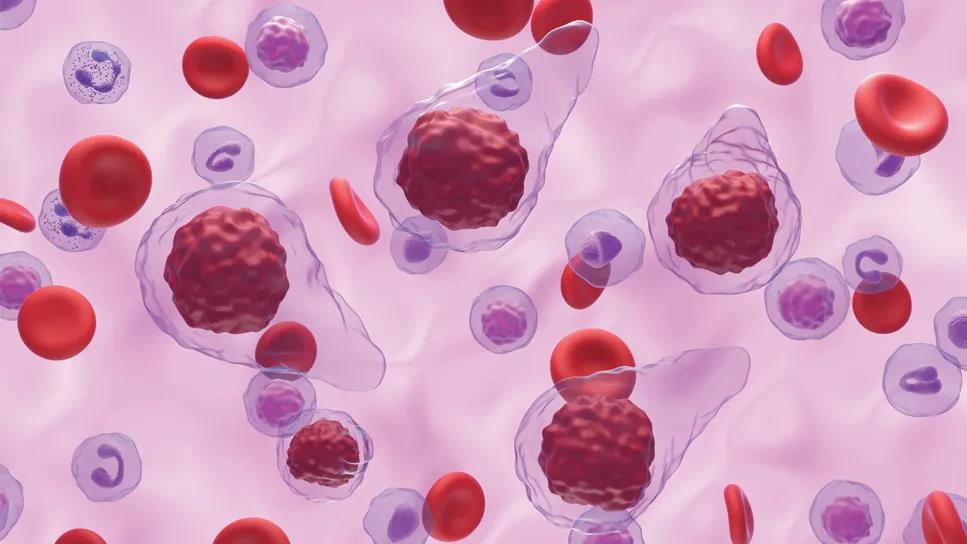
Image content: This image is available to view online.
View image online (https://assets.clevelandclinic.org/transform/770733be-413b-4f01-8c82-dd945a083e76/treating-anemia-in-myelofribosis-1637356040)
Myelofibrosis cells
Final results of the PERSIST-2 phase 3 trial have been published in JAMA Oncology, confirming and expanding the striking results presented at the 2016 American Society of Hematology Annual Meeting. Many assumed the story of pacritinib (PAC) for patients with myelofibrosis had ended when the FDA placed it on hold in 2016, but the release of the hold in early 2017, the publishing of PERSIST-2’s phase 3 results, and the enrolling PAC203 trial show that the story of this Janus kinase (JAK) inhibitor is far from over.
Advertisement
Cleveland Clinic is a non-profit academic medical center. Advertising on our site helps support our mission. We do not endorse non-Cleveland Clinic products or services. Policy
Findings from the PERSIST-2 phase 3 trial showed that two dosing regimens of PAC both led to greater spleen volume reduction (SVR) than the best available treatment (BAT), which included ruxolitinib, for myelofibrosis patients with platelet counts of less than 100,000/μL.
“The fact that we were able to see these types of spleen responses is a big deal. I believe these are pretty striking results,” says hematologist Aaron T. Gerds, MD, MS, staff in Cleveland Clinic’s Department of Hematology and Medical Oncology. “About one in five patients experienced a large reduction in their spleen volume despite having low platelets, which is indeed very meaningful.” Dr. Gerds was an investigator in the study and one of its authors.
The PERSIST-1 phase 3 study demonstrated that PAC was well tolerated by patients with myelofibrosis and more effective for reducing spleen volume and controlling symptoms than BAT. PERSIST-2 was conducted to further explore the efficacy of pacritinib and hone in on patients with low platelet counts.
Researchers evenly randomized 311 patients with myelofibrosis and platelet counts of <100,000/μL to pacritinib BID (107), pacritinib QD (104) or BAT (100) for 24 weeks. The co-primary efficacy endpoints were the percentage of patients achieving ≥ 35 percent SVR and ≥ 50 percent reduction in total symptom score (TSS), and the primary objective was to compare the efficacy of pooled PAC to BAT.
Results indicated that a significantly higher percentage of patients in the pooled PAC arm achieved a SVR ≥ 35 percent [18 percent (27/149)] than the BAT arm [3 percent (2/72)], while 25 percent of the PAC arm displayed a ≥ 50 percent TSS reduction compared to 14 percent of BAT patients.
Advertisement
Secondary analyses revealed that pacritinib BID and pacritinib QD each demonstrated significant improvements in both endpoints when compared independently to BAT. There were no significant differences in overall survival across all treatment arms, and the most common treatment-emergent adverse events associated with PAC were gastrointestinal and hematologic, which were generally less frequent with BID than QD dosing.
“The side effects that occurred were common but controllable, and I would say that the profiles between pacritinib and ruxolitinib are comparable but different,” Dr. Gerds says.
The FDA placed a full clinical hold on pacritinib in February 2016, before the publication of this data, due to concerns over excess deaths and cardiac and hemorrhagic complications in PERSIST-1. Fortunately, a mechanism for an access protocol opened by the FDA shortly thereafter did allow patients benefitting from PAC to get back on it. Dr. Gerds and colleagues studied the 33 patients approved for compassionate use and published their findings in Annals of Hematology.
The study found modest improvement in splenomegaly but no significant change in hematologic profile in the 19 patients followed for a median of eight months. “This study gives us more information on the long-term use of PAC since these were all patients benefiting from its use previously,” says Dr. Gerds. “It also paints a picture of how we might use this if commercially available in the future.”
While PERSIST-2 established the overall safety and efficacy of PAC for patients with myelofibrosis refractory to ruxolitinib and low platelets, PAC’s ideal dosing schedule is still under study.
Advertisement
“Part of getting PAC off of FDA hold was designing a study examining different dosing strategies,” says Dr. Gerds. “PERSIST-2 seemed to indicate that 200 mg twice daily is the better dosing strategy, but PAC203 will study this more closely.”
Cleveland Clinic is a leader among several sites enrolling patients in the study. For myelofibrosis patients with low platelets, Dr. Gerds says there are limited treatment options. “Patients whose platelet counts exclude them from eligibility for other drugs, and who are highly symptomatic and have splenomegaly, can experience significant benefit from pacritinib,” he says. “With PAC203, we’ll know exactly the safest and most efficacious dosing strategy to further refine this treatment for maximum patient benefit.”
To refer a patient for enrollment at Cleveland Clinic, call 866.223.8100, or view a full list of sites here.
Advertisement
Advertisement

Understanding expanding treatment options and potential advances

Adding 177Lu-PSMA-617 to ADT plus an ARPI cut the risk of radiographic progression or mortality by 28%

New program will help patients improve fitness and manage weight after cancer treatment

Cleveland Clinic hematologist highlights new guidelines and treatment advances in immune thrombocytopenia
NIMBLE replaces weekly tumor board delays with same-day multidisciplinary recommendations

Cleveland Clinic study provides validation for the test, which combines AI and pathological data to predict outcomes in postoperative patients

Advanced imaging technology catches metastases much earlier, allowing treatment with fewer side effects

Reduced radiation for lymph node areas reduces side effects
 Search