Locations:





Insights on bringing Cleveland Clinic even closer to becoming the best transplant enterprise in the world
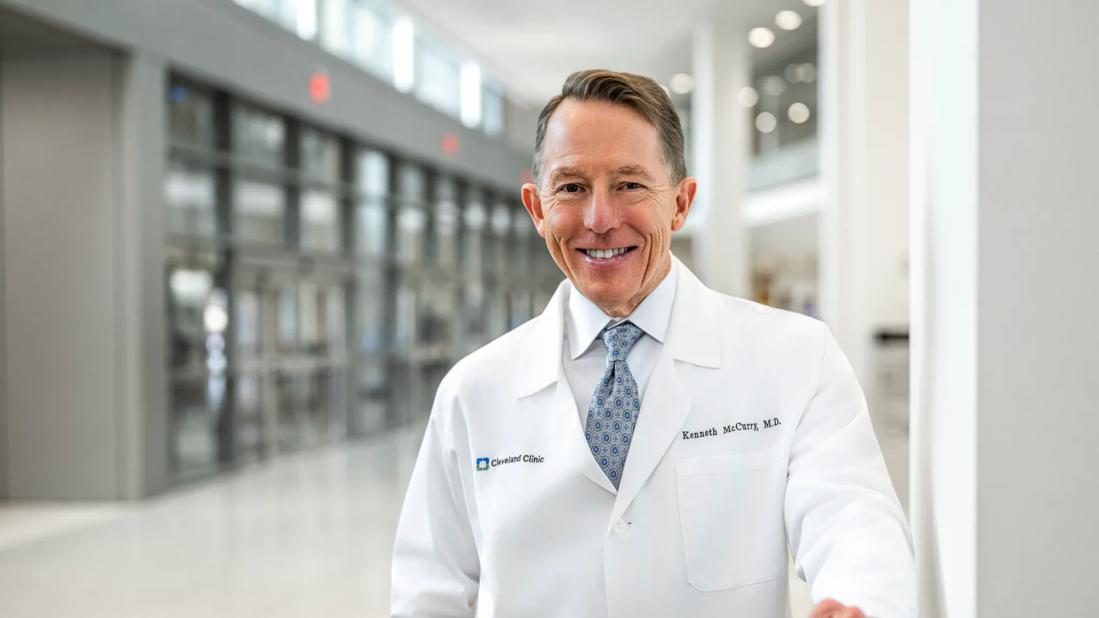
Image content: This image is available to view online.
View image online (https://assets.clevelandclinic.org/transform/41c8dde4-3269-4e82-9ecc-682fbe0044cb/DDI_7266508_11-14-25_034_MLC)
Kenneth McCurry, MD, PhD
Kenneth R. McCurry, MD, has been appointed as Director of the Cleveland Clinic Enterprise Transplant Center. Dr. McCurry brings more than three decades of experience in cardiothoracic surgery, transplant innovation and academic leadership.
Advertisement
Cleveland Clinic is a non-profit academic medical center. Advertising on our site helps support our mission. We do not endorse non-Cleveland Clinic products or services. Policy
He has served as Program and Surgical Director for Lung and Heart-Lung Transplantation at Cleveland Clinic since 2009 and as OPTN/UNOS Surgical Director for both heart and lung programs. He also leads the Respiratory ECMO Program and the Ex Vivo Lung Perfusion (EVLP) Program, and he co-directs the Organ Perfusion Center.
A nationally recognized expert in thoracic organ transplantation, Dr. McCurry has helped shape clinical practice through pioneering work in EVLP, donor lung evaluation and transplant immunobiology.
Dr. McCurry recently sat down with ConsultQD to discuss his new position and his vision for Cleveland Clinic’s Transplant Center.
Dr. McCurry. I grew up in a small town in Florida, and from a young age, I had a strong interest in and aptitude for the physical sciences and mathematics. I never really thought about medicine as a career and set my sights on engineering. As a junior in college, I began to feel, right or wrong, that something would be missing from a career as an engineer and searched for an alternative that would fill the void. When I realized that the missing element for me was the human connection, I decided to pursue medicine, believing that the physician-patient relationship would fill that void.
I attended medical school at the University of Florida, followed by residency in general surgery and critical care at the University of Michigan. During that time, I became interested in transplantation and transplant biology as well as cardiothoracic surgery. I developed a plan for post-general surgery training to spend two years at Duke in xenotransplantation research, followed by cardiothoracic residency at the University of Michigan, and then a one-year fellowship in mechanical cardiac support and cardiothoracic transplantation at the University of Pittsburgh – then one of the largest cardiothoracic transplant programs in the U.S. I was fortunate to be offered a faculty position and to learn from – and be inspired by - some true visionary thinkers in transplantation at the University of Pittsburgh — Tom Starzl, MD, PhD, the father of liver transplantation, John Fung, MD, PhD, and Bartley Griffith, MD, who is a pioneer in heart and lung transplantation. It was in these formative early years of my career that I truly embraced the impact of organ transplantation on patients’ lives and the potential for future innovation and progress in such a young field.
Advertisement
I came to Cleveland Clinic in January 2009 after I was recruited by Bruce Lytle, MD, to lead the lung transplant program and perform cardiac surgery. Our lung transplant team has done an outstanding job. We've been consistently between No. 1 and No. 3 in the U.S. on a year-to-year basis in the number of patients that we help with lung transplantation. We pursue some of the most complex cases — about 20-25% of our transplant patients are declined by other centers — with outstanding outcomes, offering hope to many patients who otherwise have no option. Our goal with building the clinical volume of the program was not only to help as many patients as we can, but to leverage that clinical volume for innovation and to build a robust clinical research program to begin to help answer some of the difficult biological and surgical issues in the field. To really push the field forward and improve outcomes and access. We have been very successful at that – in large part due to the dedication of all our team members. Transplantation is a wonderful endeavor, and I feel very fortunate to have chosen the field as an area of focus in my career.
A. So many of our transplant programs at Cleveland Clinic have been and continue to be successful — not only in the number of patients they help but also in advancing their respective fields through innovation and research. That includes not only our main campus, but our enterprise-wide locations as well, including Cleveland Clinic Florida and Cleveland Clinic Abu Dhabi. As I have reflected on these achievements and what is needed to help move us to a higher level, I believe the driving reasons for the successes of so many programs have been our culture at Cleveland Clinic — always putting patients first — and, perhaps most importantly, the passion and dedication of our team members. Nearly every day, I hear stories of team members who have extended themselves above and beyond to help patients in need. It is truly inspiring and is why I feel so fortunate and humbled to assume the position of Enterprise Director of Transplantation. I look forward to working with these great people.
Advertisement
A. The growth of transplantation and evolution of the transplant culture at Cleveland Clinic over the last 15 years or so under the leadership of Dr. John Fung and subsequently Charlie Miller, MD, has been tremendous.
Just in the last decade, overall transplant volume at main campus has grown from 481 transplants in 2014 to 845 transplants in 2024 — making Cleveland Clinic main campus the fourth largest hospital by transplant volume in the U.S. Our kidney and liver transplant programs doubled in volume from 2017 to 2023, our lung transplant program has been amongst the largest in the world since 2009, our heart transplant program has consistently maintained excellent outcomes, and our intestine transplant program is one of the largest in the U.S.
Additionally, the first face transplant in the U.S. was performed at Cleveland Clinic in 2008, and there have been six live births following uterine transplants performed at Cleveland Clinic. We have also established very successful transplant programs at Cleveland Clinic Florida and Cleveland Clinic Abu Dhabi, with significant growth in volume and excellent outcomes.
These are tremendous achievements and have been made possible by our people through their determination, purpose-driven efforts and their innovative culture. There is so much more possible and so much good yet to come, I believe.
A. As I mentioned, one of the things that attracted me to transplantation is the relative infancy of the field and the opportunity to make a very meaningful impact through research and innovation. There are several areas where there is a significant opportunity.
Advertisement
From a technical and surgical standpoint, all our programs are very interested in minimally invasive approaches to transplantation to minimize patient discomfort and enhance recovery. Our kidney and liver transplantation programs at main campus have been at the forefront of these approaches using laparoscopic techniques and have recently extended their use of robotics.
Indeed, our kidney transplant program recently performed its 100th robotic kidney transplant in 2025 alone, and our liver transplant program recently completed its first complete robotic deceased donor liver transplant — both donor and recipient, which is perhaps the first in the U.S. The lung transplant program at Cleveland Clinic Abu Dhabi has also performed two robotic lung transplants. Several other programs across the enterprise are initiating robotic programs as well. We collectively see this approach as providing value to our patients and improving outcomes and the patient experience.
The other big development from a technological standpoint is the perfusion strategies that are being used by both the lung and liver programs. The liver program has been using a normothermic perfusion device to perfuse livers ex vivo, which has allowed them to significantly increase the use of marginal and/or DCD organs while maintaining excellent outcomes. This has contributed significantly to their growth in clinical volume and their ability to help more patients. They've also been quite engaged with studies in hypothermic oxygenated machine perfusion [HOPE], and they plan to expand that within about a year or so. This will really provide some advantages, I believe, and help them to better evaluate organs so they can provide good quality organs to recipients.
Advertisement
Similarly, the lung perfusion program has greatly aided the lung transplant program in using more marginal and questionable organs to help more patients. Active since 2017, the Cleveland Clinic EVLP program is the largest in the U.S. and has contributed approximately 25-30% of our transplant volume. Both perfusion programs will grow, and it is likely that such perfusion technology will be expanded to other organs and make more organs available for transplantation, improve the quality of the organs and potentially provide opportunities to modify the organs while they are being perfused — gene therapy, pharmacologic therapy, etc., — to further improve patient outcomes.
Xenotransplantation — the transplantation of organs between species — in this circumstance, from pigs to humans — is another exciting area in which I hope that our programs can be involved. Long touted as the “future of transplantation”, significant progress in achieving clinical feasibility has been made with both heart and kidney xenotransplantation. Indeed, a kidney xenotransplantation trial was just initiated in the United States.
A. In addition to offering more opportunities to transplantation for more patients, one of my goals is to build out a more robust research infrastructure for transplantation across our enterprise. I’d like to increase the level of involvement of Cleveland Clinic Florida and, hopefully, Cleveland Clinic Abu Dhabi, as well, to support the translational research efforts and innovation. Working collaboratively across our organization, we can pursue these big ideas and increase the stature of the Cleveland Clinic Transplantation in doing so. Our goal is to become the most patient-centric, innovative and premier destination for patients with end-stage organ failure. We're quite close to that, but there are some things that we can do to improve patient access, improve operational efficiencies and grow our research and innovation. These are achievable, and I believe we have the best people and the best teams to do so.
Advertisement
Transplant centers vary substantially in how they assess, document and follow patients after allogeneic transplantation
Pre-operative SMA balloon occlusion helped reduce intraoperative blood loss in a high-risk procedure
Consensus statement aims to increase use of the perfusion technology and raise transplant volumes
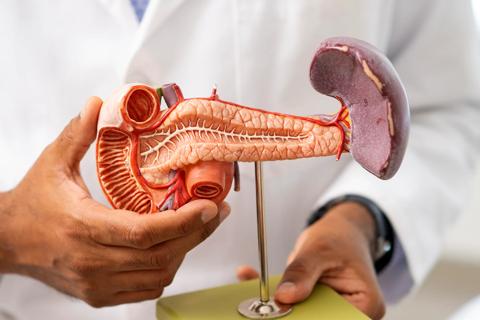
Minimally invasive pancreas-kidney replacement reduces patient’s pain, expedites recovery
AHA recommendations for pretransplant evaluation, peritransplant and long-term management
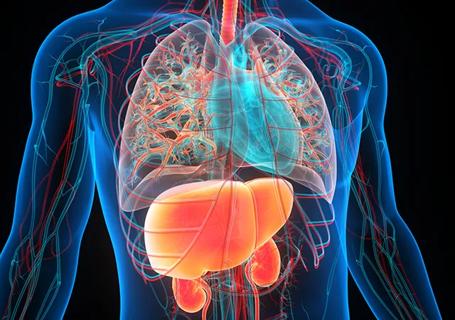
First-ever procedure restores patient’s health
The agent-based model aims to improve prediction accuracy
New guidelines expand on psychosocial, sexual health, cognitive and other issues
 Search