Locations:





A recent clinical trial tested neoadjuvant therapies
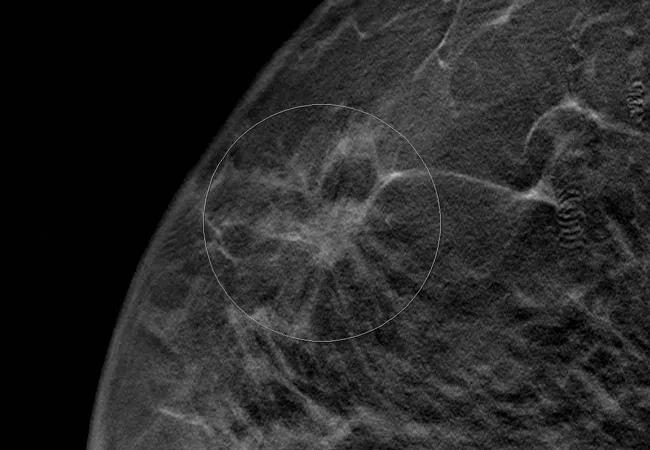
Image content: This image is available to view online.
View image online (https://assets.clevelandclinic.org/transform/1bda85dd-1935-470a-8720-74a31ce8d15d/breast-cancer_650x450_jpg)
breast-cancer_650x450
Neoadjuvant drug therapy can produce a pathologic complete response (pCR) in breast cancer patients, but success varies depends on the type of breast cancer present. Investigators are refining treatments in the hopes of reducing this variability.
Advertisement
Cleveland Clinic is a non-profit academic medical center. Advertising on our site helps support our mission. We do not endorse non-Cleveland Clinic products or services. Policy
During a recent clinical trial, the results of which were published in the Journal of Clinical Oncology, researchers gave women with estrogen-receptor (ER) positive breast cancer endocrine therapy preoperatively. After two weeks, the enrollees underwent a biopsy, and based on the level of Ki67 protein in that test, either continued to receive endocrine therapy or were switched to chemotherapy.
The use of Ki67 level turned out to be a good predictor of who might do well on endocrine therapy alone, but it was not as effective for predicting those who might do well on chemotherapy, if the endocrine therapy failed.
“In some patients treatment with endocrine therapy alone is sufficient and gives a good outcome, and this study helped define such a group of patients,” says G. Thomas Budd, MD, staff physician in Cleveland Clinic Cancer Center and one of the authors on the paper. “What this study was not so good at, however, was predicting who responds to chemotherapy.”
The study enrolled 245 postmenopausal women with clinical stage II or III ER–positive breast cancer. The women were randomly assigned to 16 to 18 weeks of neoadjuvant endocrine therapy which consisted of one of three aromatase inhibitors (AI): exemestane 25 mg once daily, letrozole 2.5 mg once daily or anastrozole 1 mg once daily.
After two weeks of endocrine therapy, all the patients had a breast biopsy. Of the 245 enrollees, 165 (69.9 percent) had a Ki67 value of less than 10 percent, while 49 (20.8 percent) had a Ki67 value of greater than 10 percent. Twenty-two (9.3 percent) had insufficient tumor to make a Ki67 determination.
Advertisement
Most of the women with a low Ki67 value responded well to endocrine therapy and had low relapse rates. After 5.5 years of median follow-up, for instance, only four of the 109 patients with a Preoperative Endocrine Prognostic Index (PEPI) score equal to zero relapsed. PEPI is a tool based on factors such as tumor size, nodal status and Ki67 levels that can predict reoccurrence of breast cancer.
The majority of women with a Ki67 value of greater than 10 percent and who were switched to chemotherapy, however, did not respond well to either treatment.
“I think this study indicates that there are a group of patients who need treatment in addition to endocrine therapy and are not that responsive to chemotherapy and may need alternative approaches,” says Dr. Budd. “Future studies will need to look at the role of those alternative approaches.
Dr. Budd says the study was surprising because investigators hypothesized that 20 percent of patients with Ki67 values of greater than 10 percent would respond to chemotherapy and achieve pCR, but the data showed only 5. 5 percent of that group responded.
He says another neoadjuvant trial, which is ongoing, is experimenting with adding fulvestrant, a selective ER degrader, to endocrine therapy, while an upcoming study will examine the role of CDK4/6 in the neoadjuvant setting.
“There may be other agents that can be investigated in those patients who require more than simple endocrine inhibitors,” Dr. Budd says. “There are new approaches, other than chemotherapy, that seem to augment the effectiveness of endocrine treatment.”
Advertisement
Advertisement

Understanding expanding treatment options and potential advances

Adding 177Lu-PSMA-617 to ADT plus an ARPI cut the risk of radiographic progression or mortality by 28%

New program will help patients improve fitness and manage weight after cancer treatment

Cleveland Clinic hematologist highlights new guidelines and treatment advances in immune thrombocytopenia
NIMBLE replaces weekly tumor board delays with same-day multidisciplinary recommendations

Cleveland Clinic study provides validation for the test, which combines AI and pathological data to predict outcomes in postoperative patients
Advanced imaging technology catches metastases much earlier, allowing treatment with fewer side effects

Reduced radiation for lymph node areas reduces side effects
 Search