Locations:





Findings show significant energy savings and no association with increased surgical site infection, mortality or ICU admission
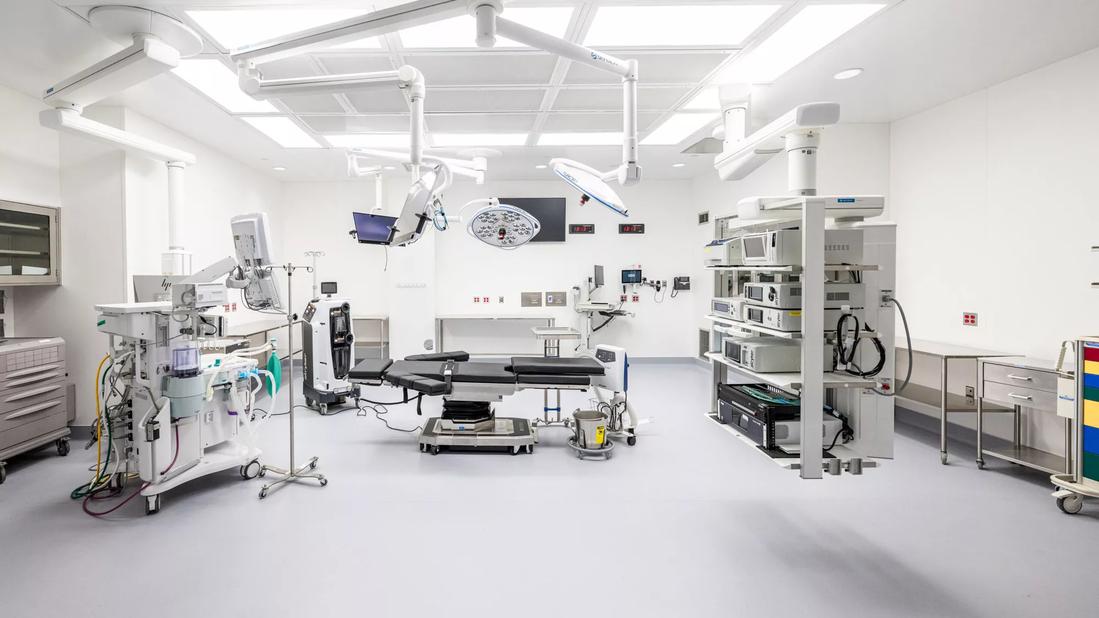
Image content: This image is available to view online.
View image online (https://assets.clevelandclinic.org/transform/1a86f06e-87ab-4cc3-b9c2-ac557a1ebc9f/SEM_3797162_06-24-23_071_MLC-scaled-jpg)
Empty operating room
Reducing operating room (OR) air turnover in unoccupied rooms can significantly decrease electricity use and costs without negatively affecting clinical outcomes, according to findings from a recently published research letter in JAMA Surgery.
Advertisement
Cleveland Clinic is a non-profit academic medical center. Advertising on our site helps support our mission. We do not endorse non-Cleveland Clinic products or services. Policy
When occupied, OR air is turned over 21 times per hour in accordance with American Society of Heating, Refrigerating and Air-Conditioning Engineers (ASHRAE) Standard 170, which is a standard adopted by The Joint Commission. Although unoccupied rooms are permitted to have lower turnover rates, many ORs remain at occupied levels even when empty.
“When they're unoccupied, the air change rate or the air turnover rate can be decreased to four to six times an hour,” says Benjamin Miller, MD, a general surgeon at Cleveland Clinic and corresponding author on the paper. “Historically, there has been some concern that even turning the air change rate down when rooms are unoccupied may introduce negative clinical outcomes like increased wound morbidity to surgical patients, even though it falls within ASHRAE guidelines. We wanted to see if that was the case.”
The study grew out of the group’s broader interest in clinical sustainability and resource optimization, particularly in high-energy areas such as ORs.
“Operating rooms are estimated to use between three and five times more energy per square foot than other areas of the hospital,” he says. “The HVAC contributes to around 90% of the energy use, and air change rate is one of the major drivers of HVAC energy use. So, if you're going to make a change anywhere to reduce the energy and costs, the first place to look is in the operating room.”
The researchers wanted to determine if morbidity was impacted by reducing air change rates from 21 per hour when ORs were occupied to four to six turnovers per hour when they were unoccupied.
Advertisement
To evaluate that question, the researchers conducted a retrospective pre-post study of surgical cases across 55 ORs before and after the implementation of automated ventilation setbacks. The pre-implementation period ran from June 1, 2023, to May 31, 2024, and the post-implementation period ran from June 1, 2024, to May 31, 2025.
The primary outcome was surgical site infection (SSI). Secondary outcomes included intensive care unit (ICU) admission, mortality and length of stay.
The study included 127,878 surgical cases: 58,742 before setback implementation and 69,136 after. In unadjusted analyses, superficial SSIs were observed in 5,123 cases before setback implementation and 5,396 cases after implementation (8.7% vs 7.8%; P < .001). Deep SSIs were observed in 447 and 379 cases, respectively (0.8% vs 0.5%; P < .001).
Thirty-day mortality was 1.7% before setback implementation and 1.5% after implementation (P = .001). Ninety-day mortality was 3.2% and 2.9%, respectively (P < .001), while median length of stay was similar across the two periods.
After adjustment, setbacks were not associated with SSI (odds ratio, 0.96; 95% CI, 0.87-1.05; P = .33), 30-day mortality (odds ratio, 0.82; 95% CI, 0.63-1.07; P = .15) or ICU admission (odds ratio, 0.96; 95% CI, 0.88-1.06; P = .44).
The setbacks also produced measurable energy and cost savings. Across the 55 ORs, reduced air turnover lowered electricity usage by 1,349,205 kWh annually, equating to $134,915 in annual cost savings.
Advertisement
“Beyond the finding that there was not a difference in wound morbidity rates after implementing the air setbacks, there were also real environmental savings and real cost savings for the hospital, without clinical downsides,” says Dr. Miller.
Together, the findings suggest that automated setbacks can be both clinically and operationally feasible in ORs already equipped to support them. The primary practical limitation, Dr. Miller notes, is that not every room has that capability.
One reason the study was limited to 55 ORs is that not all of Cleveland Clinic’s operating rooms are optimized to adjust air turnover rates. Retrofitting older ORs could expand the potential savings, he says, but the upfront cost would likely delay the return on investment.
“We've been talking about retrofitting the older operating rooms for years so that we can decrease the air changes in those rooms,” says Dr. Miller. “If all our ORs could lower the air turnover rates, we could save maybe $150,000 to $200,000 a year on energy savings. But to retrofit them would probably cost a few million dollars, so those savings wouldn’t be seen for a few years.”
From an operational standpoint, once the infrastructure is in place, returning an OR to full ventilation appears to be relatively quick.
“If the OR air change rate is reduced, and you need to get it back online for an emergent case or something, it only takes three minutes for the air changes, the temperature and humidity to all get back in range,” he says.
While the current study focused on unoccupied OR setbacks, Dr. Miller says future research could examine whether current occupied-room ventilation standards are also higher than necessary.
Advertisement
“We plan to retrospectively look at whether air changes higher than 20 are better than air changes at 20,” says Dr. Miller. “Or if they're worse — maybe air changes cool the patient, and we know that cooling patients in the operating room can actually lead to higher wound morbidity.”
Dr. Miller says the group is also interested in a prospective study to further evaluate safety, noting that the current standard of 20 air changes per hour isn’t necessarily based on clinical outcomes.
“The 20 air changes per hour is based on particle modeling in the operating room around the surgical field and operating table,” he explains. “But we don’t have clinical evidence supporting this air change rate of 20 an hour. So, the next question is, can we turn this down safely? If we could make this adjustment safely, you could save healthcare millions of dollars annually in energy savings.”
Separate from those future research questions, the current study also points to a potentially large national impact. Based on the electricity reductions observed across the 55 ORs, the researchers estimate that similar per-OR reductions nationwide could reduce electricity use by more than 1.5 billion kWh annually — approximately $150 million in annual electricity costs.
Advertisement
Advertisement

Three-day program focuses on leadership, safety, operations and change management

Connecting interactions adds clarity to the full patient story

Building a cohesive data structure delivers trusted insights, inspires innovation

Structured interventions enhance sleep, safety and caregiver resiliency in high-acuity units

Automating routine medical coding tasks removes unnecessary barriers

Digital “tripwires” detect and respond to malicious activity, boosting cybersecurity maturity

Thoughtful collaboration, data-driven decisions and effective change management lead to significant savings

Input from these central stakeholders is leading us to design for healing and hope
 Search