Locations:





Does tumor location matter?
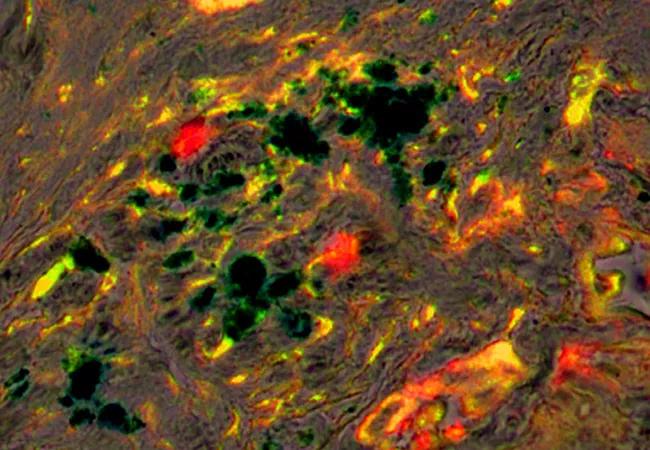
Image content: This image is available to view online.
View image online (https://assets.clevelandclinic.org/transform/66e6895b-779c-4efb-a6e5-7d462f45f2b9/nci-vol-11238_650x450_jpg)
nci-vol-11238_650x450
Adjunctive therapy appears to benefit only pancreatic head tumors and not body and tail tumors after surgical resection, a new study by Cleveland Clinic investigators suggests. Davendra Sohal, MD, MPH, staff in the Department of Hematology and Medical Oncology, collaborated with colleagues including Alok Khorana, MD, FASCO, Director, Gastrointestinal Malignancies Program, to evaluate a potential relationship between tumor site and benefit from adjuvant, neoadjuvant and perioperative therapies for pancreatic cancer. Results appear in Surgical Oncology.
Advertisement
Cleveland Clinic is a non-profit academic medical center. Advertising on our site helps support our mission. We do not endorse non-Cleveland Clinic products or services. Policy
Multi-agent chemotherapy regimens are one of the few developments supporting improved overall survival (OS) in pancreatic adenocarcinoma. Oncologists are beginning to agree that early systemic therapy can improve outcomes, but most evidence supporting adjunctive therapy for resected pancreatic cancer focuses on head tumors. “We wanted to know if tumor location matters,” says Dr. Sohal, “so that we can better pinpoint which patients benefit from adjunctive therapies.”
The team completed a comprehensive analysis of patients (N = 27,930) with resected pancreatic adenocarcinoma in the National Cancer Database. The study population included patients diagnosed with stage I and II pancreatic cancer between 2003 and 2013 who underwent resection of the pancreatic primary and whose records mentioned tumor site (head, body or tail).
The median age of patients was 66 years; 51 percent were male, and 86 percent were white. Most of the tumors were head (74.4 percent), followed by tail (16.3 percent) and body (9.3 percent). More than three-fourths of cancers were stage II, and 81 percent had negative margins. Median OS was 24 months (21.6 for head, 34.5 for body and 42.5 for tail).
In univariable testing, the use of adjunctive therapy was associated with worse OS for tail and body tumors. Multivariable analysis confirmed a clear interaction between the site of the primary tumor and treatment. Multivariable models separated by tumor site showed a significant association between treatment and pathologic stage for head tumors but not for body and tail. The benefit was greatest with perioperative therapy. Another univariable analysis showed that adjunctive therapy was only beneficial for clinical stage II head tumors.
Advertisement
“Our analysis also showed that tail and body tumors are associated with significantly better survival,” says Dr. Khorana. “We of course need prospective studies to further examine this association, but our study offers the most statistically robust evidence to date.”
Image: This image shows magnetic iron nanoparticles that target cells with IGF-1R receptors, and are conjugated to a chemotherapy drug (dark blue). In the tumor stroma of a mouse model of pancreatic cancer, the nanoparticles delivered the chemotherapy to tumor-associated macrophages expressing IGF-1R (red) and CD68 (green). Source: National Cancer Institute.
Advertisement
Advertisement

Understanding expanding treatment options and potential advances

Adding 177Lu-PSMA-617 to ADT plus an ARPI cut the risk of radiographic progression or mortality by 28%

New program will help patients improve fitness and manage weight after cancer treatment

Cleveland Clinic hematologist highlights new guidelines and treatment advances in immune thrombocytopenia
NIMBLE replaces weekly tumor board delays with same-day multidisciplinary recommendations
Cleveland Clinic study provides validation for the test, which combines AI and pathological data to predict outcomes in postoperative patients
Advanced imaging technology catches metastases much earlier, allowing treatment with fewer side effects
Reduced radiation for lymph node areas reduces side effects
 Search