Locations:





Results based on early data from clinical trial
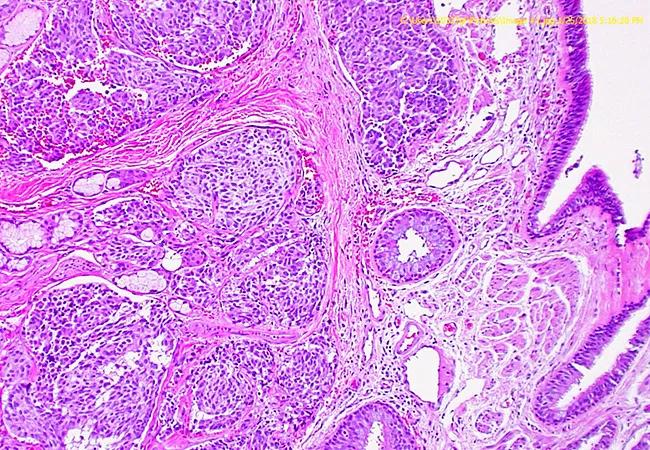
Image content: This image is available to view online.
View image online (https://assets.clevelandclinic.org/transform/579c7168-6670-460e-a326-1ffaa88f42d9/PrimaryPulmonaryCarcinoid_jpg)
PrimaryPulmonaryCarcinoid
Thirty percent of patients with metastatic non-small cell lung cancer (mNSCLC) do not have enough tumor tissue for molecular testing at diagnosis, so oncologists have begun to look elsewhere in the body for biomarkers that might shape how they select therapies.
Advertisement
Cleveland Clinic is a non-profit academic medical center. Advertising on our site helps support our mission. We do not endorse non-Cleveland Clinic products or services. Policy
Two recent retrospective studies showed that blood tumor mutation burden (bTMB), might be a promising noninvasive biomarker. The phase 2 POPLAR training set showed a longer progression-free survival (PFS) rate in patients with a TMB of 16 mutations or higher, and the phase 3 OAK study independently validated those results.
Now researchers have preliminary data from the first prospective clinical study, 1L NSCLC phase 2b F1RST, evaluating bTMB as a predictive biomarker of response with the immunotherapy drug atezolizumab in patients with mNSCLC.
“This is an early look at the data,” says Vamsidhar Velcheti, MD, Associate Director for Immuno-Oncology Research, Cleveland Clinic Cancer Center . “It has shown so far that if the patient has more mutations circulating in their bloodstream, the immune system seems to recognize the cancer better.”
Dr. Velchiti recently presented the data at the 2018 American Society of Clinical Oncology meeting.
For the preliminary assessment of the trial, Dr. Velcheti and colleagues looked at 78 patients, of which 58 had adequate blood samples with sufficient detection of circulating tumor DNA. These patients became the biomarker evaluable population (BEP).
Patients in the BEP were then divided into two groups, those with a bTMB of greater than 16 (11 patients) and those with a bTMB of less than 16 (47 patients).
With a minimum follow-up of six months, the median PFS was 9.5 months for the bTMB high group versus 2.8 months for the bTMB low group.
Overall survival in the BEP was 12.1 percent (seven of 58 patients) and disease control was 25.9 percent (15 of 58 patients). Overall survival in the bTMB high group was 36.4 percent (four of 11 patients), and 6.4 percent in the bTMB low group (three of 47 patients). Overall, patients tolerated the drug well with no new safety signals observed.
Advertisement
“The results show that this is an advance in the sense that we can use a blood-based biomarker to help identify patients who could potentially benefit from treatment with atezolizumab,” says Dr. Velcheti.
The preliminary data support the bTMB selection of patients in the ongoing phase 3 BFAST study. The BF1RST trial has completed enrollment at 153 patients and is ongoing.
Advertisement
Advertisement

Understanding expanding treatment options and potential advances

Adding 177Lu-PSMA-617 to ADT plus an ARPI cut the risk of radiographic progression or mortality by 28%

New program will help patients improve fitness and manage weight after cancer treatment

Cleveland Clinic hematologist highlights new guidelines and treatment advances in immune thrombocytopenia
NIMBLE replaces weekly tumor board delays with same-day multidisciplinary recommendations

Cleveland Clinic study provides validation for the test, which combines AI and pathological data to predict outcomes in postoperative patients
Advanced imaging technology catches metastases much earlier, allowing treatment with fewer side effects

Reduced radiation for lymph node areas reduces side effects
 Search