Locations:





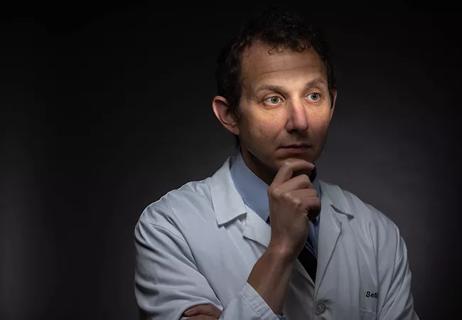
Introducing Prajwal Rajappa, MD, MS, Director of Pediatric Precision Oncology
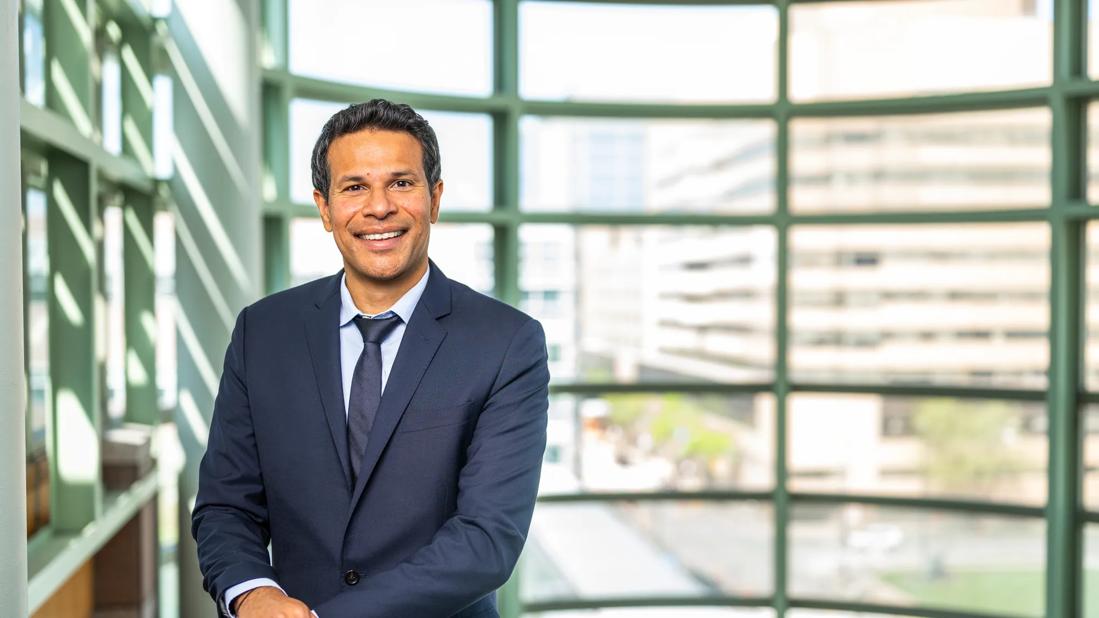
Image content: This image is available to view online.
View image online (https://assets.clevelandclinic.org/transform/b89aa7f0-31f0-4ba0-a7bc-89ca5417a0ef/rajappa-portrait)
Dr. Rajappa
As a pediatric neurosurgery research fellow, Prajwal Rajappa, MD, MS, observed the care of children and adolescents with brain tumors. What he saw in both the clinic and the operating room underscored a major unmet need in pediatric neuro-oncology.
Advertisement
Cleveland Clinic is a non-profit academic medical center. Advertising on our site helps support our mission. We do not endorse non-Cleveland Clinic products or services. Policy
“We had little to offer them,” he says. “Resection wasn’t curative. Even with chemotherapy and radiation therapy, recurrent and malignant brain tumors would come back and become more aggressive.”
That experience combined with additional postdoctoral training in molecular biology, brain tumor modeling and immuno-oncology led Dr. Rajappa to focus on the molecular profiling of pediatric brain tumors.
“I began to understand the potential for designing treatments targeting a specific mutation in molecularly annotated brain tumors,” he says. “The realization that we could tailor treatment based on a patient’s molecular readout set me on course for a career in precision oncology.”
In parallel with his postgraduate training, Dr. Rajappa completed additional graduate studies and a precision medicine fellowship centered on developing a precision medicine program for pediatric and young adult patients with central nervous system (CNS) tumors at Weill Cornell Medicine. Today he is developing the next generation of this program, for all types of pediatric cancer, at Cleveland Clinic.
In late 2025, Dr. Rajappa was recruited to Cleveland Clinic as Director of Pediatric Precision Oncology. He now is working to integrate molecular diagnostics and next-generation sequencing into the standard of care for Cleveland Clinic’s pediatric and young adult patients with cancer. He also continues to lead a laboratory research program on immune regulation in glioma malignant progression, next-generation cellular immunotherapies and personalized medicine approaches. His work has been supported by multiple National Institutes of Health and foundation grants.
Advertisement
Consult QD recently spoke with Dr. Rajappa about his clinical and research efforts, as well as his vision for Cleveland Clinic’s new pediatric precision oncology initiative.
Q: As a physician-scientist, you have both clinical and research responsibilities. Let’s start with your clinical work, including developing Cleveland Clinic’s pediatric precision oncology program. What will that entail?
A: My clinical focus in precision oncology at Cleveland Clinic is on children and young adults with primary and high-risk, relapsed and diagnostically ambiguous solid tumors and CNS tumors, which represent a significant unmet need. These are the patients who can especially benefit from a precision oncology service line.
However, my goal is to make precision oncology available to all young patients with cancer from the time of their first visit. We aim to improve diagnostic accuracy and refine prognostic assessment by incorporating each tumor’s molecular profile into clinical care.
This program offers advanced tumor profiling — and soon will include methylation profiling in collaboration with our molecular pathology colleagues — to comprehensively diagnose tumors in a more refined way.
We also are establishing a pediatric and young adult molecular tumor board to review patient tumor profiles in a multidisciplinary setting. This unique forum will bring together key stakeholders to interpret molecular findings and collectively determine the most appropriate treatment options. Ultimately we want to provide a personalized standard of care based on actionable tumor alterations.
Advertisement
In addition, the program will include family-centered genetic counseling to address hereditary disease and germline cancer predisposition throughout the care continuum.
Q: How specifically can molecular profiling affect clinical management of cancer tumors?
A: Molecular profiling can improve diagnostic accuracy by identifying genetic, transcriptomic and epigenetic alterations, which is especially important for tumors with overlapping or ambiguous histopathologic features.
In my prior work, we performed DNA methylation profiling on pediatric brain tumors initially classified as medulloblastoma based on histopathology alone. In one case, methylation analysis revealed that the tumor was instead pineoblastoma, subgroup B. That revised molecular diagnosis had important implications for treatment and overall clinical management.
Also, as with many cancers, there are different subtypes of medulloblastoma, some higher risk, some lower or standard risk. Molecular profiling can help us subgroup a tumor, which also has treatment implications. For example, treatment is more aggressive (with high-dose chemotherapy or radiotherapy) for a high-risk, molecular subgroup 3 medulloblastoma compared with a lower-risk, WNT-activated medulloblastoma.
Selecting the right treatment intensity is important for all patients, but it is critical in children and young adults, given the potential long-term effects of therapy on physical, cognitive and neurologic development.
Q: What do you think is your most significant research work in precision oncology to date?
Advertisement
A: In 2022, my team published a prospective observational proof-of-concept study in Neuro-Oncology Advances. It evaluated the clinical utility of whole-exome (DNA) sequencing, RNA sequencing and methylation array profiling in children and young adults with brain and spinal tumors. At the time, we were probably one of the only groups assessing the combined value of these approaches in clinical care.
The study showed that integrated molecular profiling can improve diagnostic accuracy and risk stratification. In selected cases, the findings informed treatment decisions and supported the use of targeted therapies, several of which resulted in robust clinical responses.
In addition, translational research from my laboratory, published in Cell Reports, focused on immune suppression in glioma. Our work found that specific myeloid cell populations drive this immune suppression and may be therapeutically reprogrammed. In preclinical models, we showed that engineered myeloid cells can cross the blood-brain barrier, remodel the tumor immune microenvironment and prolong survival. These findings suggest a potential new therapeutic strategy for glioma, a disease with few effective options. Based on this work, we are in discussions with sponsors to develop an early-phase, investigator-initiated clinical trial.
Q: What is your vision as Director of Pediatric Precision Oncology at Cleveland Clinic? Are there specific plans you can share yet?
A: My vision is to build on the precision oncology model first developed for patients with CNS tumors and expand it to all pediatric and young adult patients with cancer across Cleveland Clinic. We will begin with solid tumors, including sarcomas and CNS tumors, where the need is especially high, and then extend the program to other cancer types.
Advertisement
Our goal is for every child and young adult with cancer seen at Cleveland Clinic to have access to comprehensive molecular profiling, including DNA sequencing, RNA sequencing and methylation profiling. These data will be integrated into the pediatric cBioPortal database so clinicians and researchers can access and visualize the data. We also plan to provide a unified report for the care team, patients and families that highlights clinically relevant findings.
Cleveland Clinic already offers standardized sequencing for adult cancers, but our integration of methylation diagnostics will be pivotal. We expect to offer this in-house soon in collaboration with our molecular pathology colleagues. Currently, methylation profiling is available at only a limited number of academic centers and specialized laboratories nationwide.
These genomic tests are already orderable through Cleveland Clinic’s electronic medical record, allowing providers to use them in routine care. My role is to standardize and scale this approach across Cleveland Clinic, including building the team, coordinating biobanking and developing the operational infrastructure needed to support the program.
Q: What future research do you look forward to pursuing?
A: AI, machine learning and large language models are increasingly being used in precision oncology to extract clinically relevant information from the electronic medical record, including unstructured clinical notes, pathology, imaging and genomic reports. These tools may help streamline molecular tumor boards, reduce clinician burden and improve real-time clinical decision-making. They may also improve interpretation of variants of uncertain significance by integrating genomic findings with clinical outcomes and real-world evidence. We are working to develop this as an additional component of our precision oncology program.
We also need a better understanding of tumors at diagnosis and of how they evolve during treatment. To support this, we are exploring approaches that incorporate circulating tumor DNA (ctDNA) monitoring for longitudinal surveillance. Although ctDNA is already well established in leukemia, there is significant opportunity to expand its use in pediatric solid tumors and CNS tumors.
Another area I am particularly eager to explore is how the immune system evolves during cancer treatment. Cleveland Clinic is uniquely positioned to lead in this area, as few centers are studying it systematically. In routine clinical care, we do not yet consistently profile immune cell populations or track how they respond to surgery, chemotherapy and radiation therapy. Yet tumors exist within a complex microenvironment that includes immune and other cell populations that can be co‑opted and educated by the tumor to promote growth and therapeutic resistance. Our long-term goal is to develop clinically deployable immune-profiling panels that can help predict tumor progression, treatment response and mechanisms of resistance.
Advertisement
Despite safety concerns and mixed trial results, experts see potential for this indication

Key themes and insights into the family-caregiver experience

A preview for radiation oncologists
First-of-its-kind clinic for immune-related adverse events supports oncologists in managing severe side effects

Palliative and Supportive Care Teams offer comprehensive care to improve the lives of patients facing cancer
Early communication between oncologists and ophthalmologist warranted
Variables affect nuances of the conversation
Driving advances in cancer care
 Search