Locations:
Search IconSearch

Cerebrovascular

head CT scan showing subarachnoid hemorrhage
October 18, 2024/Neurosciences/Case Study

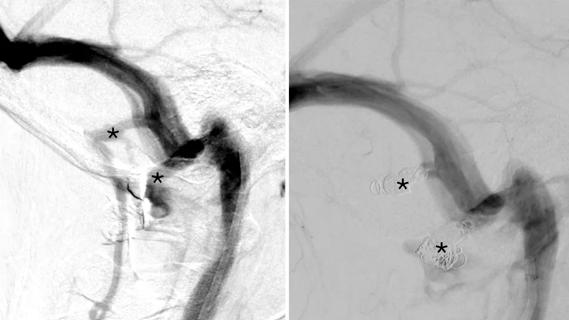
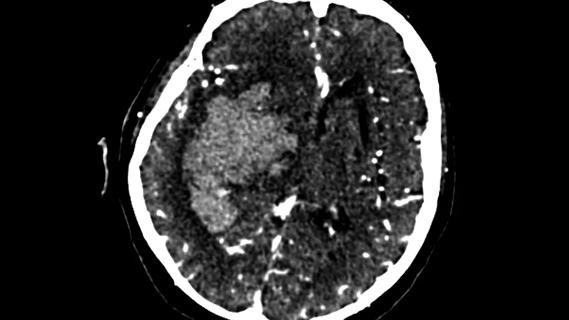
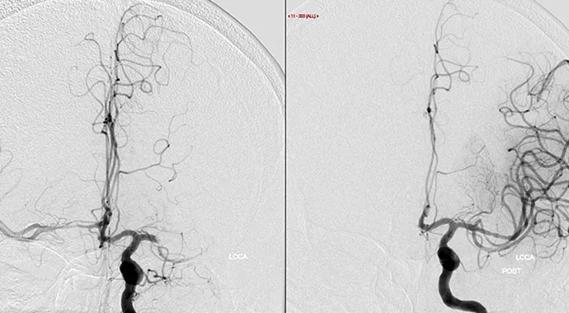
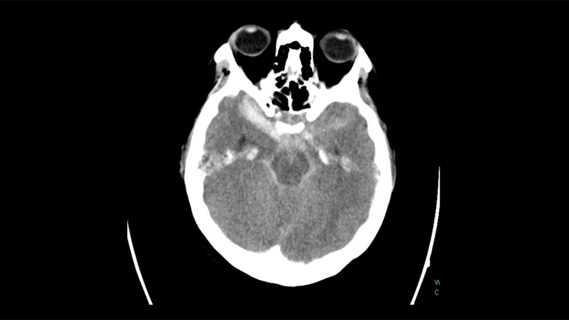
Ruptured Grade 5 Brain Aneurysm: Case Study of a Patient Who Beat the Odds

Quick and aggressive responses to multiple complications have led to remarkable recovery

ambulance on rural road
September 6, 2024/Neurosciences/Cerebrovascular

Study Sheds Light on the Process Metrics Driving Barriers to Rural Stroke Care

Findings from large cohort analysis can guide ongoing quality improvement initiatives

mobile stroke ambulance in front of a house

What We’ve Learned and Gained From 10 Years of Mobile Stroke Care

Insights and what’s next for the first U.S. mobile stroke unit to treat patients

brain vessels in primary angiitis of the CNS

Differentiating Primary CNS Angiitis From Atherosclerosis as a Cause of Stroke

Combining quantitative vessel wall MRI metrics, CSF abnormalities and neurologic symptoms can be highly predictive

Advertisement

Cleveland Clinic is a non-profit academic medical center. Advertising on our site helps support our mission. We do not endorse non-Cleveland Clinic products or services. Policy

woman on stationary exercise cycle
July 1, 2024/Neurosciences/PM&R

New Trial to Assess Forced Exercise for Subacute Stroke Recovery

Research to test clinical efficacy and cost-effectiveness versus standard-of-care rehab

platelets flowing through blood vessel

Early Therapeutic Anticoagulation After Cranial Surgery Raises Risk of Intracranial Hemorrhage

Case series links catastrophic outcomes to therapy initiation within 48 hours post-procedure

deep brain stimulation of dentate nucleus

Deep Brain Stimulation After Stroke: What Underlies Improved Motor Function?

EDEN analysis investigates electrophysiological changes after continuous dentate nucleus stimulation

inflammation on a brain scan with a podcast button overlay
April 2, 2024/Neurosciences/Podcast

Diagnosis and Management of Cerebral Amyloid Angiopathy-Related Inflammation (Podcast)

New research sheds light on a potentially devastating condition that is reversible when properly managed

brain scan showing perimesencephalic subarachnoid hemorrhage

Study Supports Less-Strict Monitoring for Nonaneurysmal Perimesencephalic SAH Without Hydrocephalus

Digital subtraction angiography remains central to assessment of ‘benign’ PMSAH

BackPage 2 of 4Next

Advertisement

Ad