Locations:





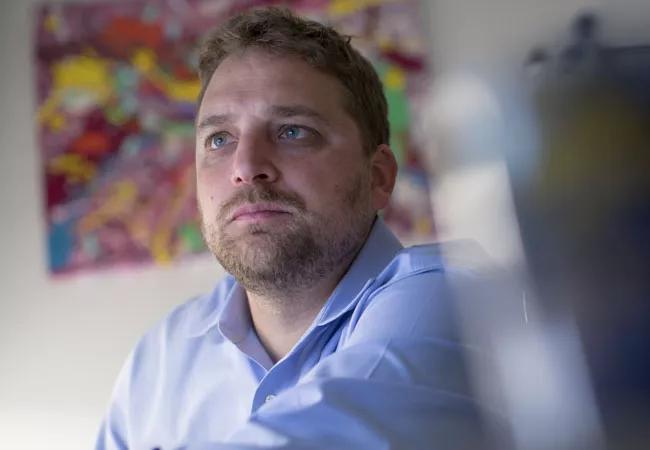
Image content: This image is available to view online.
View image online (https://assets.clevelandclinic.org/transform/c9364a1b-fa4a-4865-99d3-3a9388176d57/DrScott_650x450_jpg)
DrScott_650x450
Jacob Scott, MD, thinks we may already have all the drugs we need to treat most cancers. We just need to be smarter about how we use them.
Advertisement
Cleveland Clinic is a non-profit academic medical center. Advertising on our site helps support our mission. We do not endorse non-Cleveland Clinic products or services. Policy
That’s a bold statement, considering entire divisions of academic medical centers are devoted to novel therapeutics and drug development, and the global cancer drug market is expected to balloon by 50 percent from about $80 billion this year to $120 billion by 2020.
Then again, consider that many new targeted therapies measure their successes in months of additional survivorship — not years or decades. And, some of the most difficult cancers invariably acquire resistance to designer biologics of molecular precision.
“The fundamental problem of targeted therapies is that cancer is a disease of evolution,” says Dr. Scott, a physician-scientist in the Department of Translational Hematology and Oncology Research at Cleveland Clinic. “Tumors are dynamic organisms that adapt rapidly and ruthlessly to their environments — it’s survival of the fittest in the tumor environment, and when the fittest means the least likely to respond to chemotherapy, that inevitably leads to drug resistance and eventually a need for new treatment.”
In short, when a targeted therapy destroys most of a tumor, some of it survives. As it recovers, it propagates from cells that didn’t respond to treatment during the first course. Further complicating things, each cell has its own constellation of mutations and molecular alterations. After several courses of different therapies, the result can come out as a tangled mess of invasive tissue with a vexing and resilient mutational landscape.
Sounds bleak, right? Dr. Scott doesn’t think so — at least not if we look at cancer through the lens of long-term strategy, rather than short-term gains.
Advertisement
“I’m a hopeless optimist,” says Dr. Scott. “If we can shift our thinking away from a step-by-step approach toward a more strategic game, I believe we can make some significant improvements in our approach to precision medicine.”
Dr. Scott and a growing number of like-minded cancer researchers are leading the charge in this refined approach to cancer research.
“We’ve been playing whack-a-mole with cancer for the past 40 years,” says Dr. Scott. “We can hit them faster and with more accuracy now than we could in 1977, but no matter how many we knock down, another invariably pops up.”
Rather than continuing to stuff quarters into a carnival game, the new cancer strategists have taken up chess.
To test the viability of this approach, Dr. Scott and collaborators at University of Oxford and Moffitt Cancer Center started with a notoriously resilient cancer, ALK-mutated non-small cell lung cancer (NSCLC).
Through repeated exposure to ALK-targeted therapies, the team conditioned a series of independent NSCLC cell lines to acquire drug resistance.
They then began experimenting with drug holidays (or treatment interruptions) of varying intervals and eventually ALK-targeted therapies after a battery of chemotherapies that are generally considered inferior as first-line treatments.
Results of the study were published recently in Nature Scientific Reports and are among the first to report on the combined dynamic of drug holidays and acquired resistance.
Study results show that cancers resistant to ALK-targeted treatments often respond better after exposure to collateral drugs and radiation generally considered inappropriate for first-line therapy.
Advertisement
The collateral drugs appeared to affect the cancers in such a way as to take advantage of a weakness that had once been inaccessible because of tumor evolution.
“The observations and method of understanding drug sequencing presented here represent a novel way to utilize existing drugs to regain the upper hand in the clinics against drug resistance, without the need for costly new drugs,” the team wrote.
Like a chess grandmaster baiting opponents into exposing weaknesses, researchers are using drug resistance patterns as a way to strategize treatment. “The end goal of our research is to understand and predict the changes tumors experience during treatment so we can better plan second-line therapy when the unavoidable drug failures occur,” says Dr. Scott. “However, collateral sensitivity is highly dynamic and truly represents a ‘moving target.’”
Much more study of this approach is needed before such practice becomes routine. And, the profound complexity of tumor heterogeneity will continue to pose hurdles for individual practitioners.
However, no two cancers are the same. They evolve and adapt rapidly, and they do so differently in every patient. Why should we treat the average when no such thing exists?
“Researchers have known that avoiding cross-resistance is key; this investigation tells us we also need to start considering drug holidays as well,” said Dr. Scott. “We hope our work informs future similar studies across a variety of cancer types, and eventually results in more tailored treatment plans for patients.”
Advertisement
Photo Credit: ©Russell Lee
Advertisement
Advertisement
Adding 177Lu-PSMA-617 to ADT plus an ARPI cut the risk of radiographic progression or mortality by 28%

New program will help patients improve fitness and manage weight after cancer treatment
Cleveland Clinic hematologist highlights new guidelines and treatment advances in immune thrombocytopenia
NIMBLE replaces weekly tumor board delays with same-day multidisciplinary recommendations
Cleveland Clinic study provides validation for the test, which combines AI and pathological data to predict outcomes in postoperative patients
Advanced imaging technology catches metastases much earlier, allowing treatment with fewer side effects

Reduced radiation for lymph node areas reduces side effects
Large Cleveland Clinic analysis may help resolve a longstanding question over optimal fractionation
 Search