Locations:





Results also show eagerness to learn more
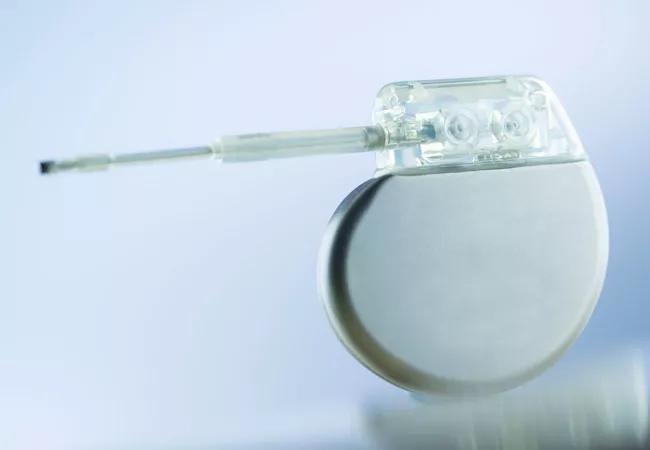
Image content: This image is available to view online.
View image online (https://assets.clevelandclinic.org/transform/9c050ad8-c47b-4f9d-893c-1977d57bbaee/19-HRT-6548-CIED-650x450_jpg)
19-HRT-6548-CIED-650×450
When asked to answer seven basic questions about their cardiac implantable electronic device (CIED), a majority of patients completing a Cleveland Clinic questionnaire came up short on at least two questions. At baseline, most patients felt they had a good understanding of their CIED (i.e., permanent pacemaker, defibrillator or biventricular device) but expressed a desire to be able to access additional data provided by the device. .
Advertisement
Cleveland Clinic is a non-profit academic medical center. Advertising on our site helps support our mission. We do not endorse non-Cleveland Clinic products or services. Policy
The prospective survey study was published in Pacing and Clinical Electrophysiology: PACE (2019 Nov 28 [Epub ahead of print]).
“Although the majority of patients with a CIED believe they are knowledgeable about their device, most actually struggle with basic information that electrophysiologists would want their patients to know,” says Cleveland Clinic electrophysiologist Khaldoun Tarakji, MD, MPH, senior author of the study.
CIEDs have become more common at the same time that digital technology has allowed patients to access ever-increasing amounts of data from them. Devices can store information and transmit it via cellular networks, enabling patients to bypass visits with their cardiologist for device evaluations and be monitored from home instead. More recent advances allow CIEDs to transmit data directly to patients’ tablets and smartphones, which can then be forwarded to a physician.
“The prospect of patients having access to ever more detailed health data begs the question of whether they know what the information means and whether they even want it,” notes study co-author Oussama Wazni, MD, Section Head of Cardiac Electrophysiology and Pacing at Cleveland Clinic.
Other studies have assessed patients’ understanding of and attitudes toward their CIEDs, and have generally found that patients feel they are knowledgeable and want data from their device. However, no previous published study has directly tested patients’ understanding of their devices.
The study screened 400 patients with either a permanent pacemaker, an implantable cardioverter defibrillator (ICD) or a biventricular device who presented to Cleveland Clinic’s outpatient device clinic for routine device interrogation between July and December 2018. All were offered a two-page questionnaire to complete independently in 15 minutes.
Advertisement
The questionnaire covered demographics and patients’ perceived knowledge of their device and contained multiple-choice questions to assess basic knowledge of their device. Investigators compared survey responses to individual device interrogation reports.
A total of 344 patients completed the questionnaire and were included in the analysis. Key findings are highlighted below.
Demographics. Mean patient age was 62.9 + 12.8 years; 64% of the sample were men. All but 6% had graduated from high school, with 53% graduating from college or achieving a master’s or doctoral degree.
Perceived knowledge. Most agreed (47.3%) or strongly agreed (15.9%) with the statement, “I feel that I am knowledgeable about my device,” while only 7.2% disagreed and 3.8% strongly disagreed.
Actual knowledge. The multiple-choice knowledge test covered seven areas and had the following results:
Overall, 85.5% of patients answered one or more questions incorrectly, 51.2% answered at least two incorrectly, 23.0% answered at least three incorrectly and 9.3% answered at least four incorrectly.
Advertisement
Desire to know more. Patients were also asked which among 11 content areas they agreed or strongly agreed it would be useful to know about. All 11 were deemed useful by a majority of patients, and some of the highest levels of interest were in battery life, activity level, atrial arrhythmia burden, current heart rhythm and heart rate trend.
“Arrhythmia care is undergoing a transformation as patients gain more access to their CIED data,” observes Dr. Wazni. “But whether more information will lead to better outcomes is still uncertain.” He notes that it could promote better self-care, as has been shown in some studies when patients are better informed of their cardiac risk factors. On the other hand, more access to electrophysiology data could lead to increased confusion, anxiety and unnecessary demands on healthcare resources.
“New technologies are increasingly making patients active drivers in their healthcare management,” adds Dr. Tarakji. “It is incumbent upon physicians and device manufacturers to not only provide patients with health-related data but help them understand it.”
Advertisement
Advertisement
Integrating research and clinical care can yield reciprocal rewards

AHA statement details nuanced, evidence-based strategies
The benefits of multiarterial grafting are possible without opening the chest
Collaborative citywide initiative reshapes protocols to boost cardiac arrest survival
For severe cases, complete unroofing of the bridge is imperative
Lower threshold expanded revascularization candidacy without raising early complication rates

Elevated levels of the gut microbial metabolite predict prevalence and adverse outcomes in community-based study

They generally depend on the mutated gene, clone size and clinical setting
 Search