Locations:





Practice implications for donor selection and timing
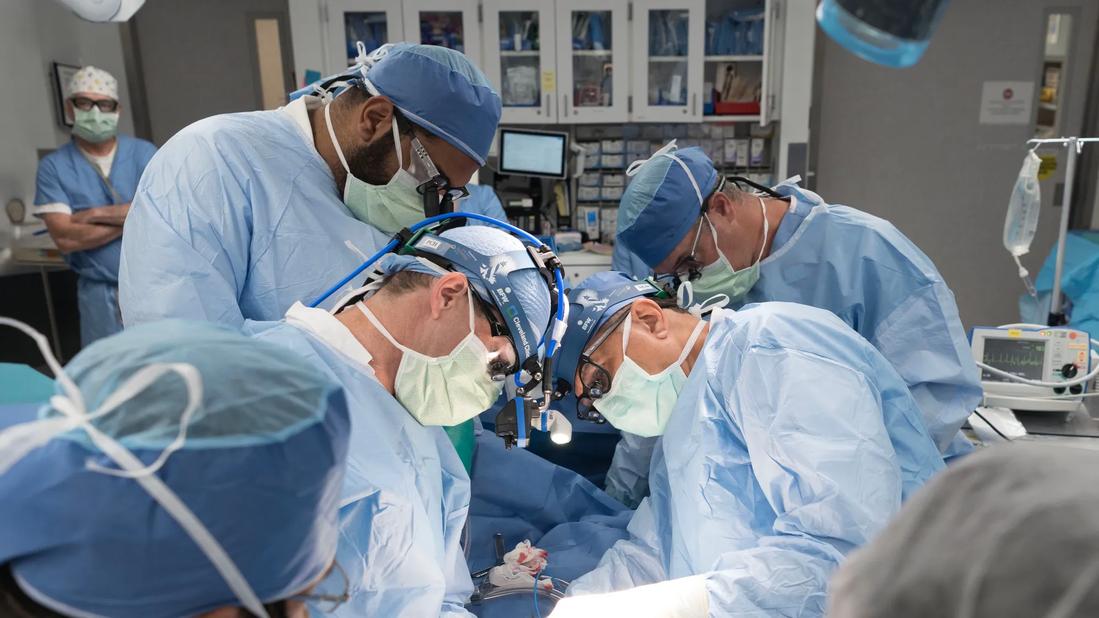
Image content: This image is available to view online.
View image online (https://assets.clevelandclinic.org/transform/86f2e63a-be22-4cf6-bf30-ab7accaa51a3/pediatric-cardiac-transplant)
Surgeons in operating room performing heart transplant
For heart transplant teams, an elevated donor troponin has long been a warning sign. But a new retrospective study of more than 4,500 pediatric heart transplant donors suggests the more useful signal may be the peak troponin value, not whether the number rises or falls on repeat testing.
Advertisement
Cleveland Clinic is a non-profit academic medical center. Advertising on our site helps support our mission. We do not endorse non-Cleveland Clinic products or services. Policy
That distinction could matter in a field where pediatric heart transplant candidates face the highest wait-list mortality among solid organ recipients, says Shahnawaz Amdani, MD, Section Head of Pediatric Heart Function and Transplant at Cleveland Clinic. At the same time, about 40% of donor hearts are discarded.
“Elevated donor troponin is often one of the reasons donor hearts get turned down,” Dr. Amdani says.
That practice has largely been shaped by older, sometimes very small pediatric studies, he notes. The new analysis of donors in the Organ Procurement and Transplantation Network registry, recently published in the Journal of the American Heart Association, offers more contemporary pediatric-specific evidence and is among the largest national studies on the topic.
“The findings suggest that repeat troponin testing to document a downtrend may not add much decision-making value,” says Dr. Amdani, the study’s lead author. “If that is confirmed in practice, it could help speed up the donor heart acceptance process.”
Troponin is a biomarker of myocardial injury. Historically, elevated donor troponin has raised concern that the heart may have sustained damage that could affect transplant outcomes.
“The stakes are especially high for pediatric recipients, whom we hope will live for decades with their donor hearts,” Dr. Amdani says. “That’s why transplant teams are understandably cautious about hearts that may have evidence of prior myocardial injury.”
But in organ donation, especially after brain death, troponin can rise for several reasons, including physiologic stress, catecholamine surge, anoxia and CPR. In the new study, nearly 68% of accepted donor hearts had abnormal troponin values.
Advertisement
“That tells us that abnormal donor troponin is common and, by itself, should not automatically disqualify a heart from being accepted for transplantation,” Dr. Amdani says.
Donors with higher troponin levels were more likely to be older (median age 13), die from anoxia, receive CPR and have lower left ventricular ejection fraction. Recipients of these hearts also tended to be older and sicker, with higher creatinine and bilirubin levels at transplant and more frequent use of implantable cardioverter-defibrillators.
The study examined U.S. pediatric heart transplants performed from 2007 through mid-2020 in patients listed before age 18. Investigators analyzed donor troponin in two ways: by peak troponin level and by troponin trend over time. They then assessed 1-year graft survival, defined as freedom from death or retransplant, and found:
“For us in the transplant community, the peak troponin value appears to be more informative than the trend,” Dr. Amdani says. “But even a higher peak value should not mean automatic discard. It should trigger a careful, broader review of the donor heart.”
That review should include the donor’s cause of death, CPR history, ventricular function, donor-recipient size match and overall clinical context, he says.
Advertisement
The findings also have practical implications for transplant workflows. Many programs request serial troponin measurements and wait for a downtrend before deciding whether to accept a heart.
According to Dr. Amdani, this study suggests that practice may not improve risk assessment and can delay organ recovery.
“Repeated blood draws to watch the troponin trend may not provide additional useful information in many cases,” he says. “Avoiding those delays could help streamline coordination for heart and other organ teams.”
In a field where children may die waiting and many donor hearts are discarded, better interpretation of donor troponin could help support more evidence-based donor selection.
The study was retrospective and included only donor hearts that were ultimately accepted, so it cannot determine how elevated troponin should influence decisions about hearts that are never used. Still, Dr. Amdani says the findings offer an important step toward more informed donor evaluation.
“This study suggests we may not need to rely on troponin trends the way we have in the past,” he says. “Using better evidence to guide donor selection could help increase transplantation opportunities while preserving outcomes.”
Advertisement
Advertisement
The one-stop THRIVE clinic addresses renal, psychosocial, educational and other challenges alongside cardiac surveillance
Largest study to date confirms mortality rates similar to DBD transplant and reveals risk factors
More than 30% of patients die when early dialysis is needed after surgery
Highlights and insights from recent Cleveland Clinic experience

Results from a large registry study provide an updated picture of recurrent rejection

Findings from more than 7,500 donor-recipient pairs
Study validates a noninvasive alternative to invasive coronary angiography

Surgeons can estimate the location of conduction tissue they cannot see
 Search